
Precision Motor Stator and Rotor Core Series
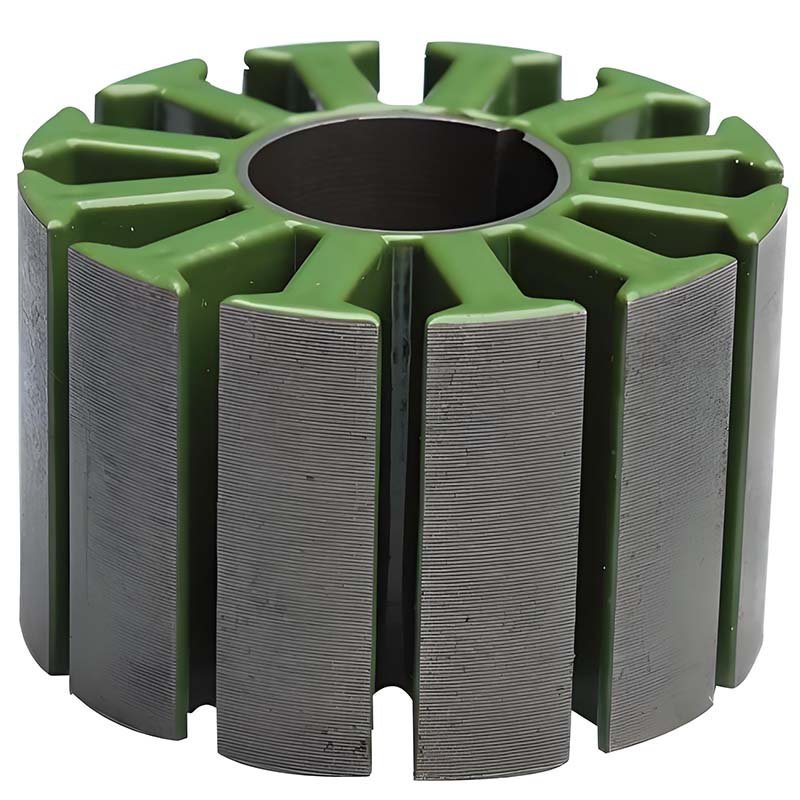
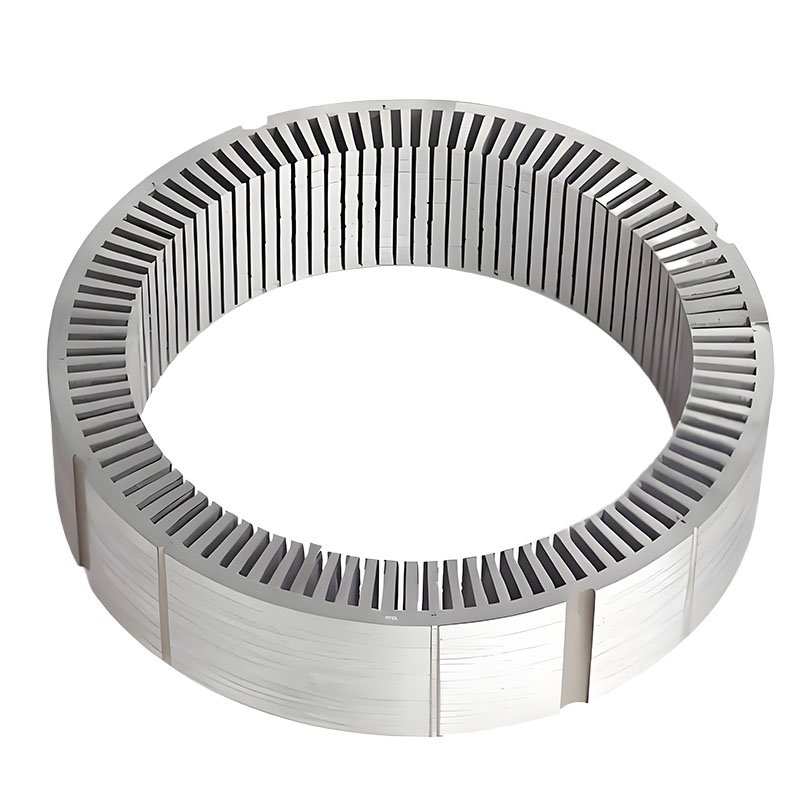
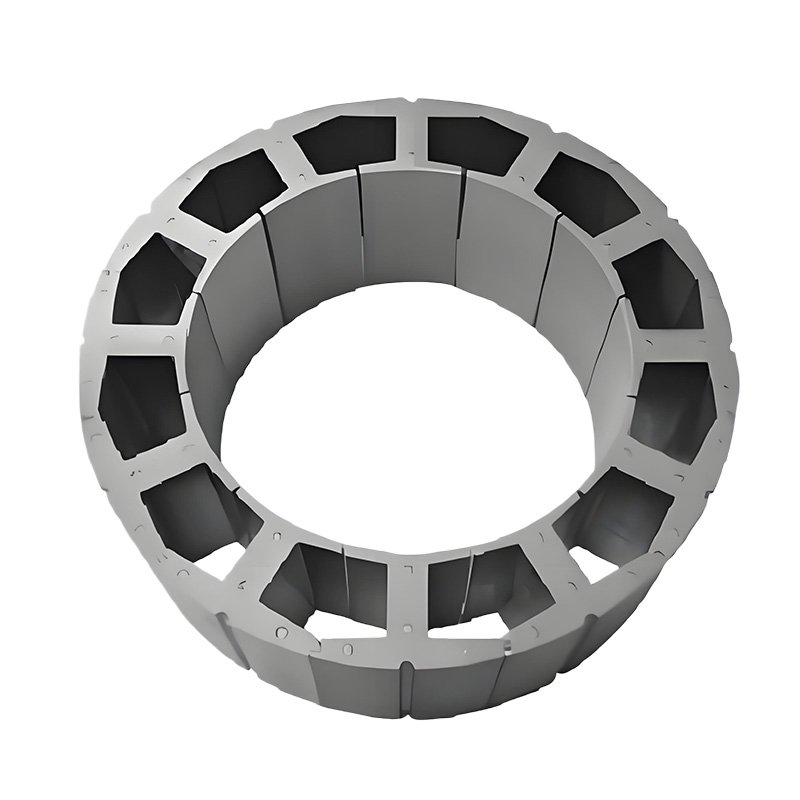
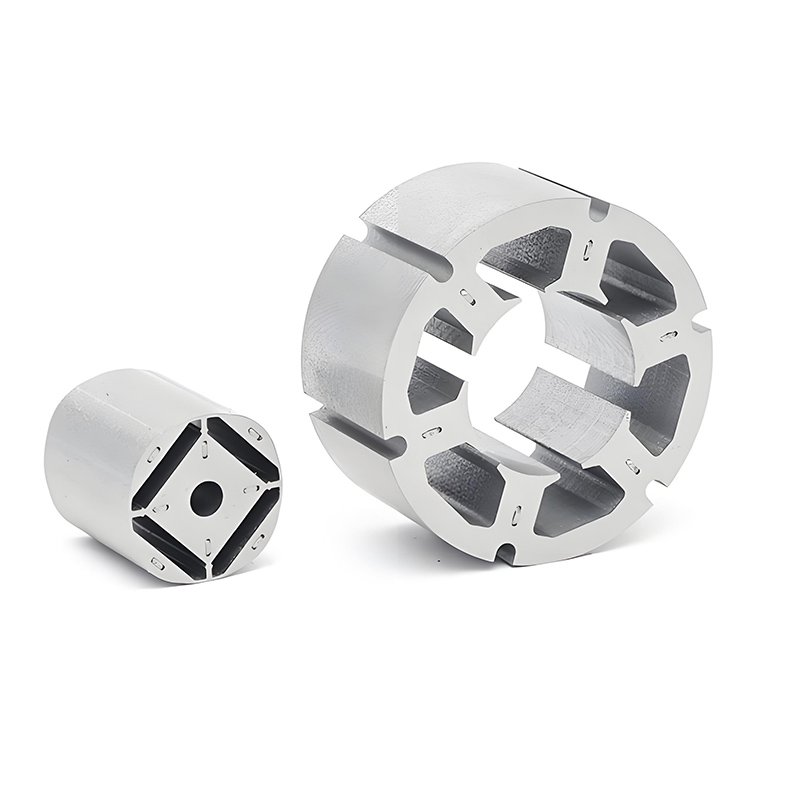
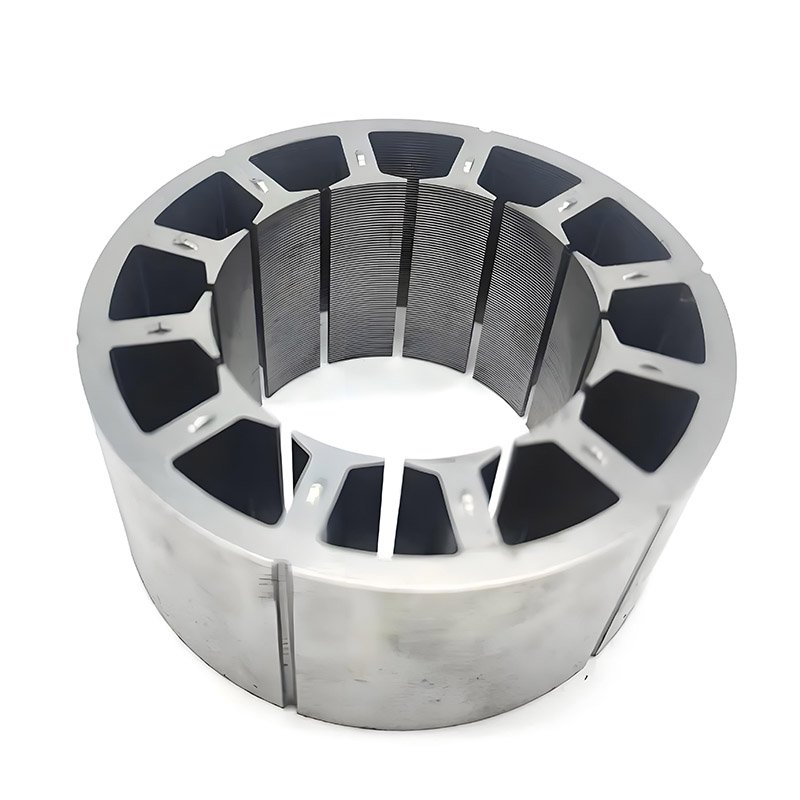
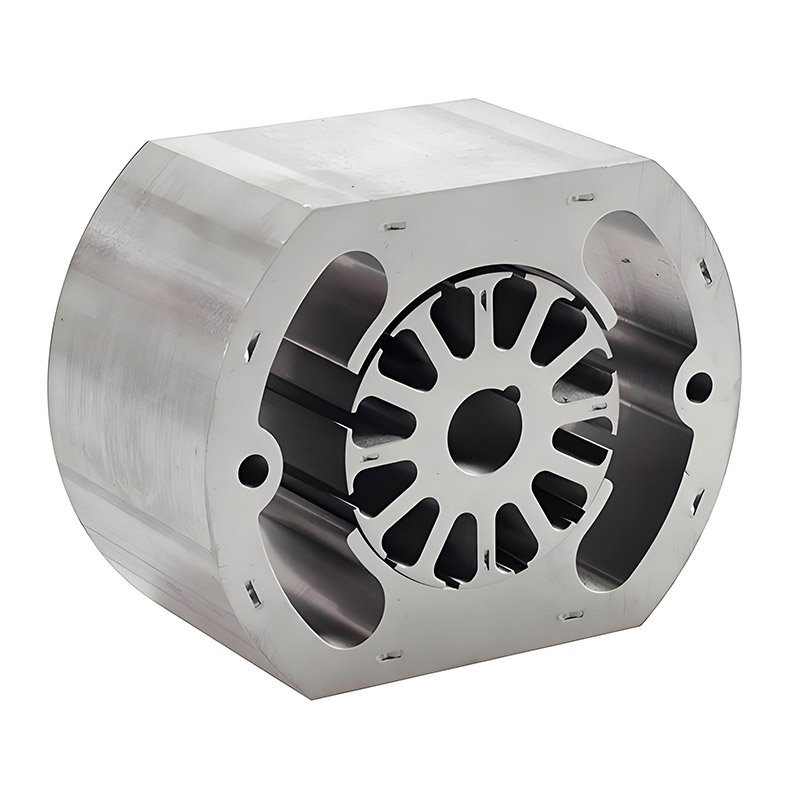
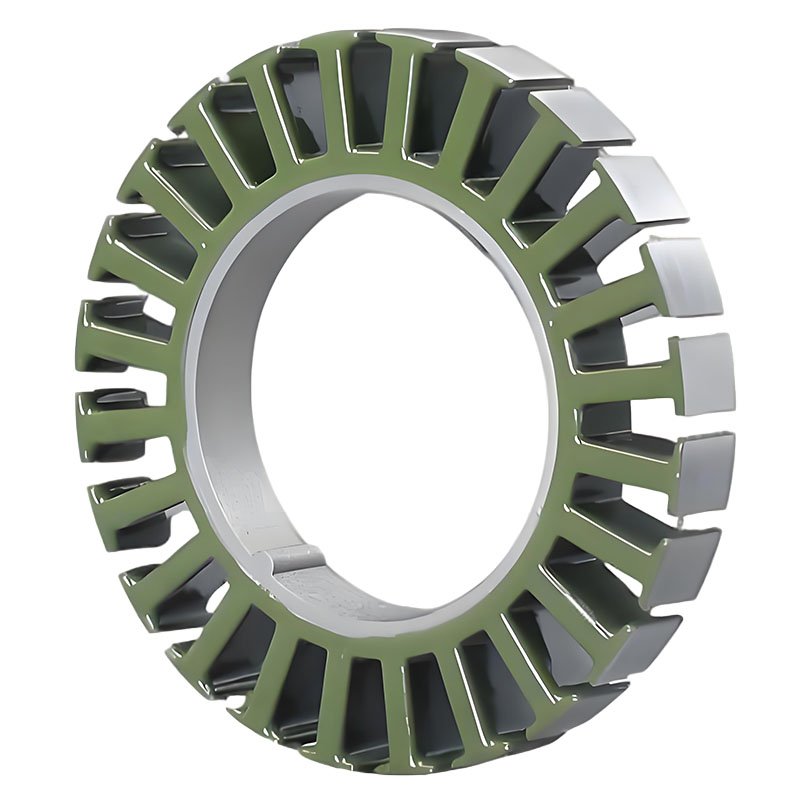
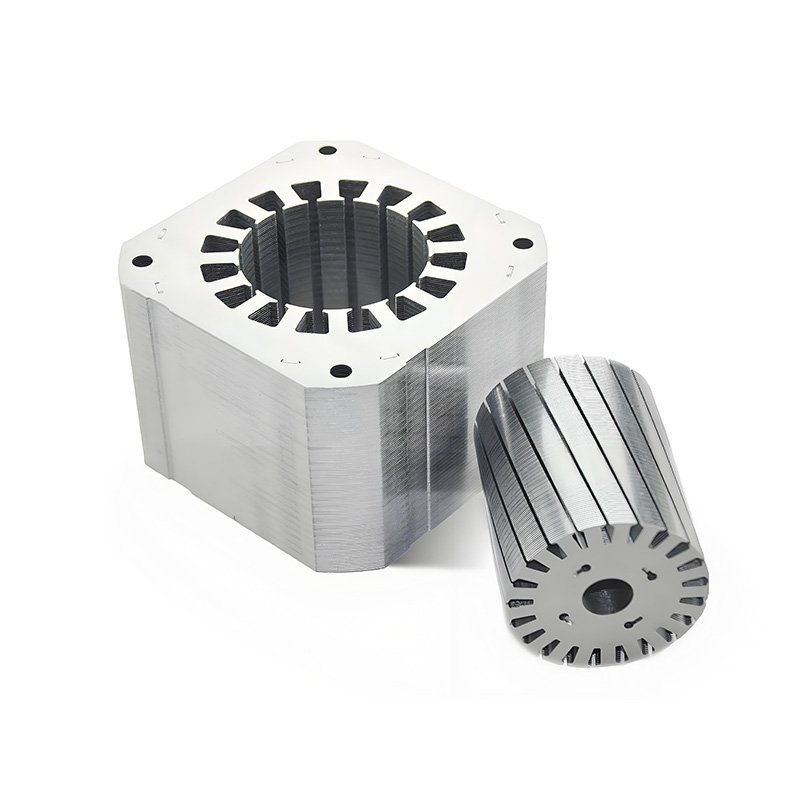
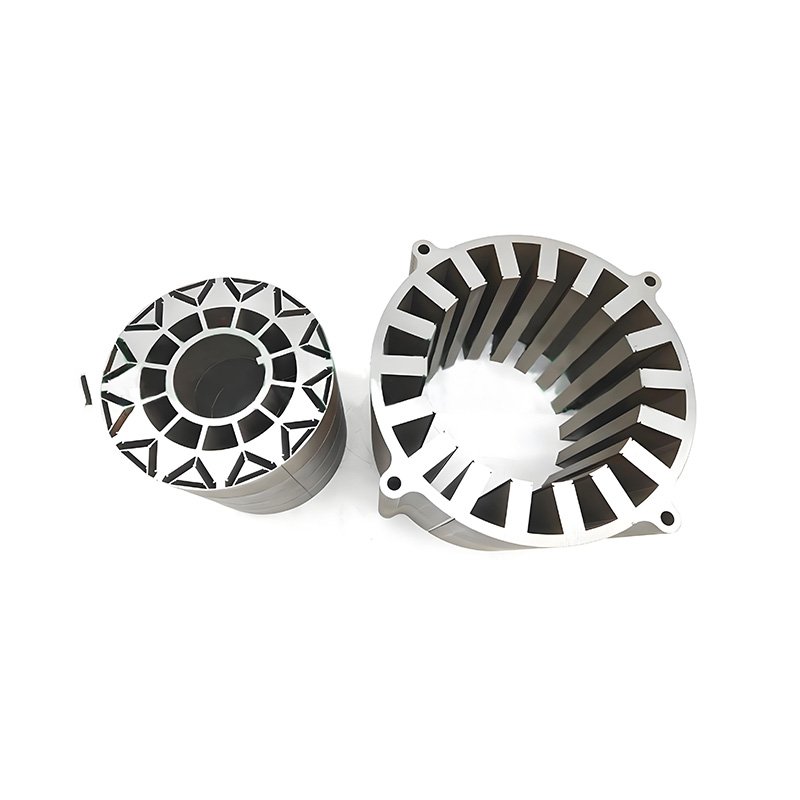
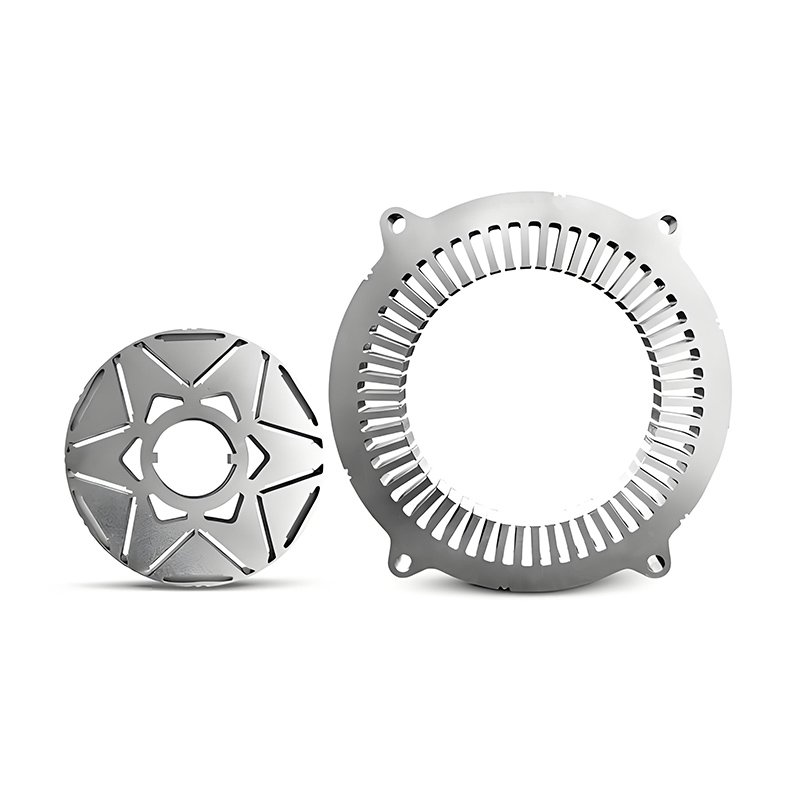
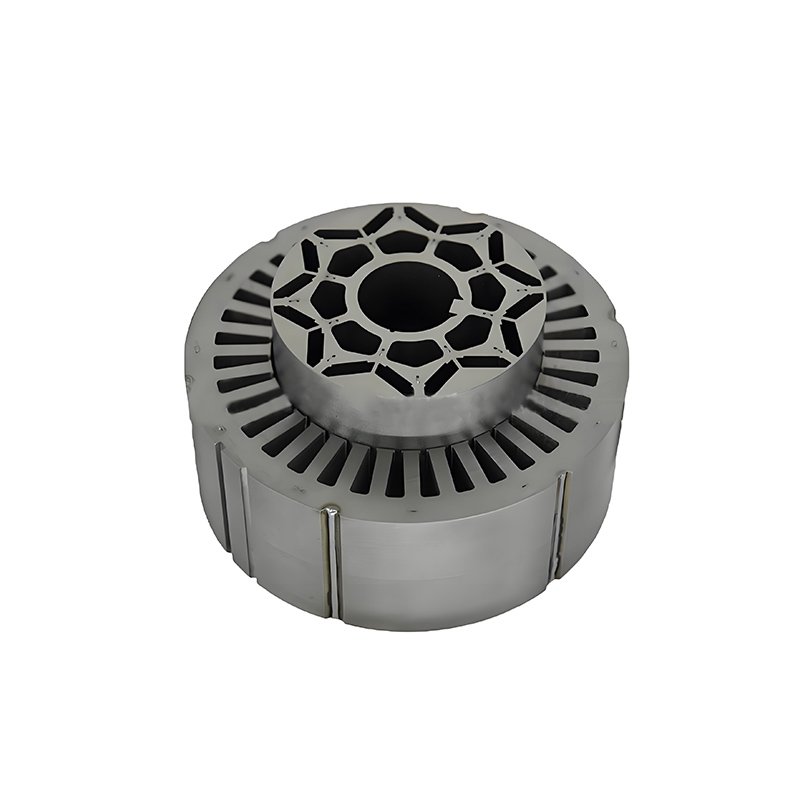
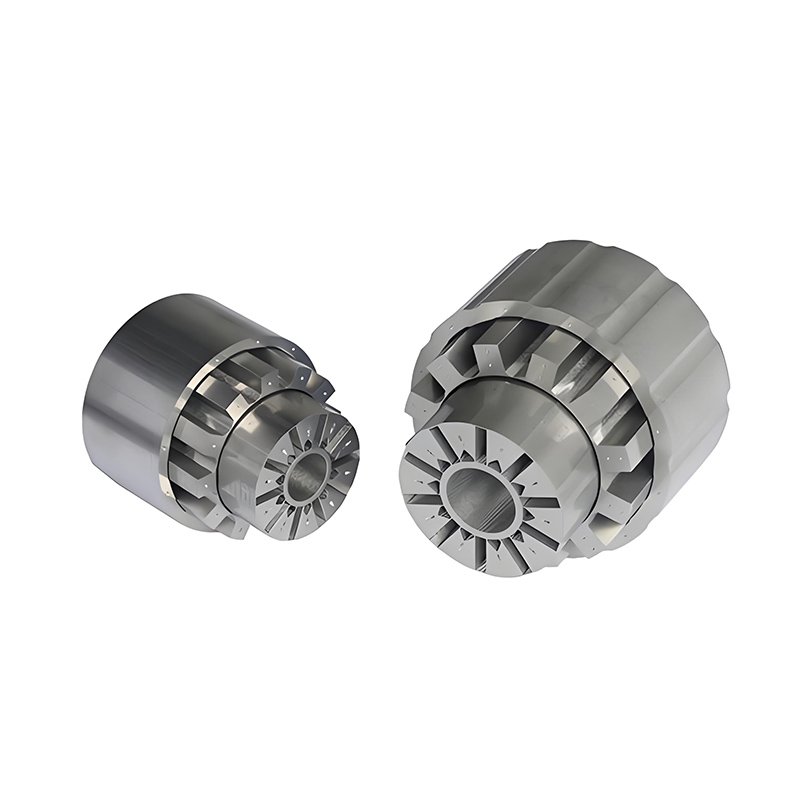
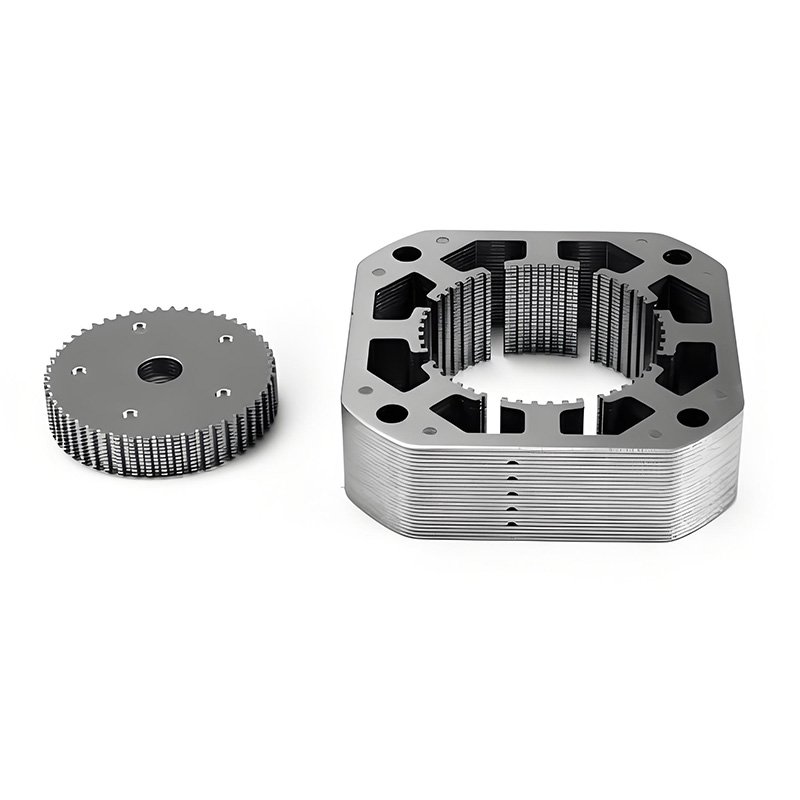
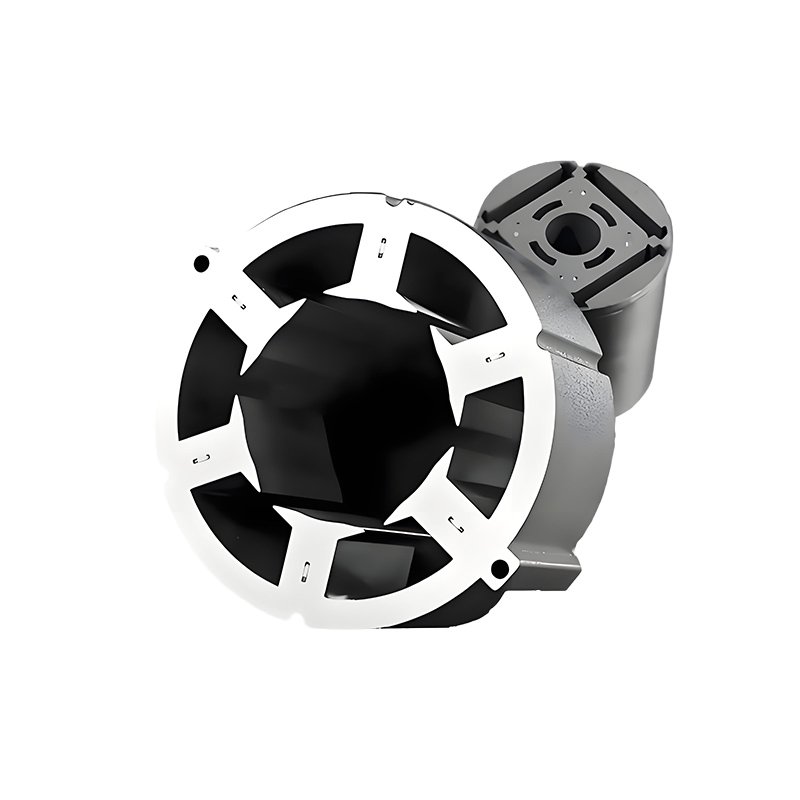
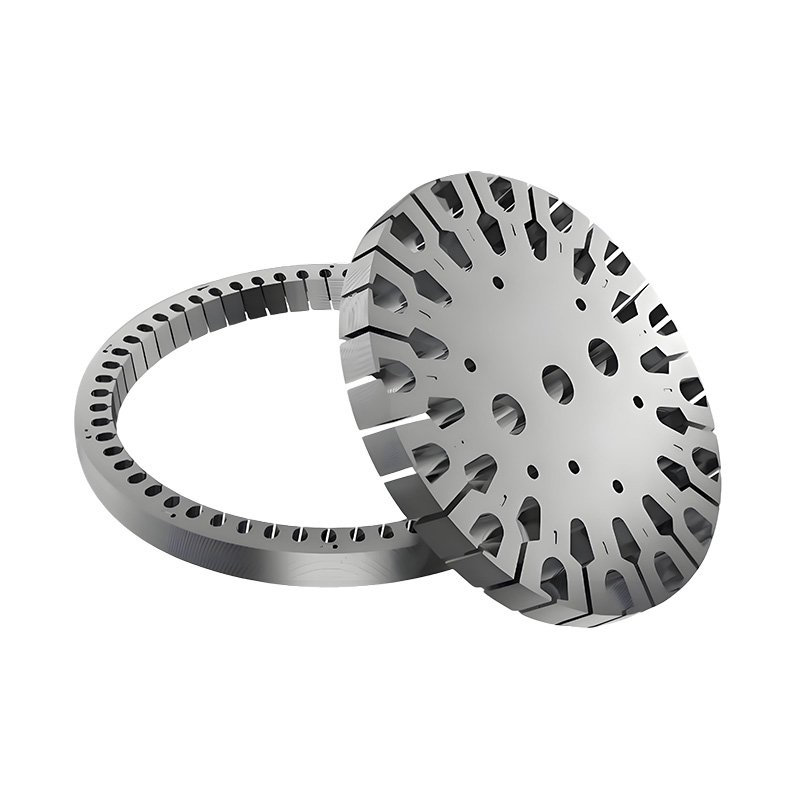
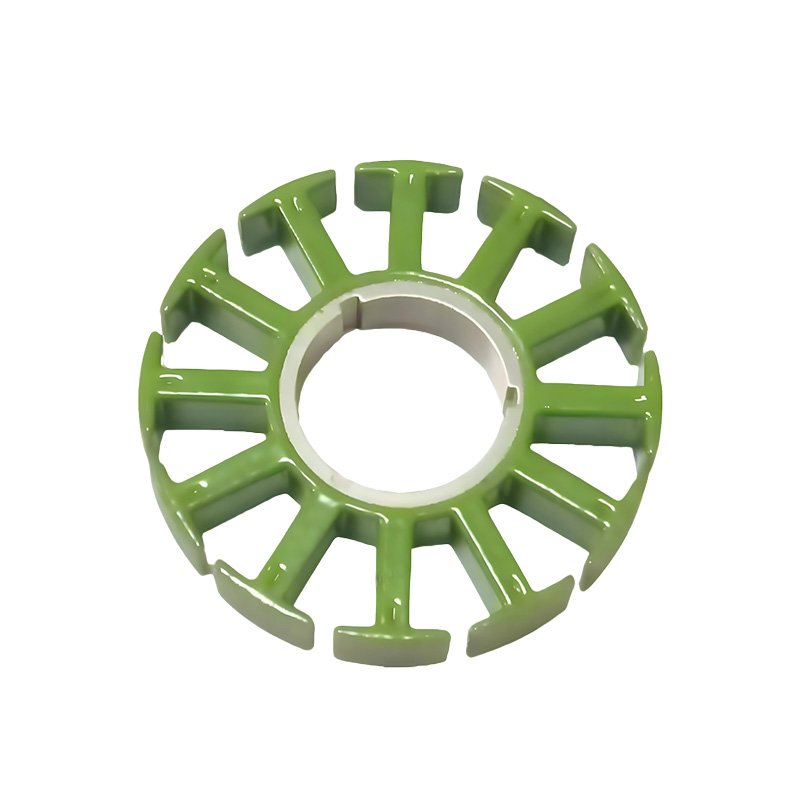
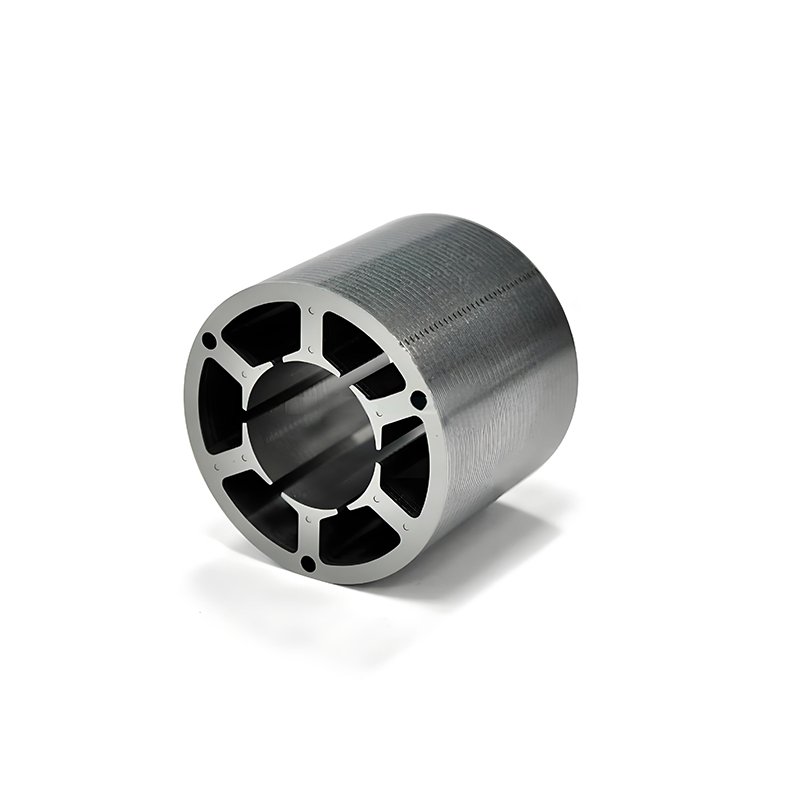
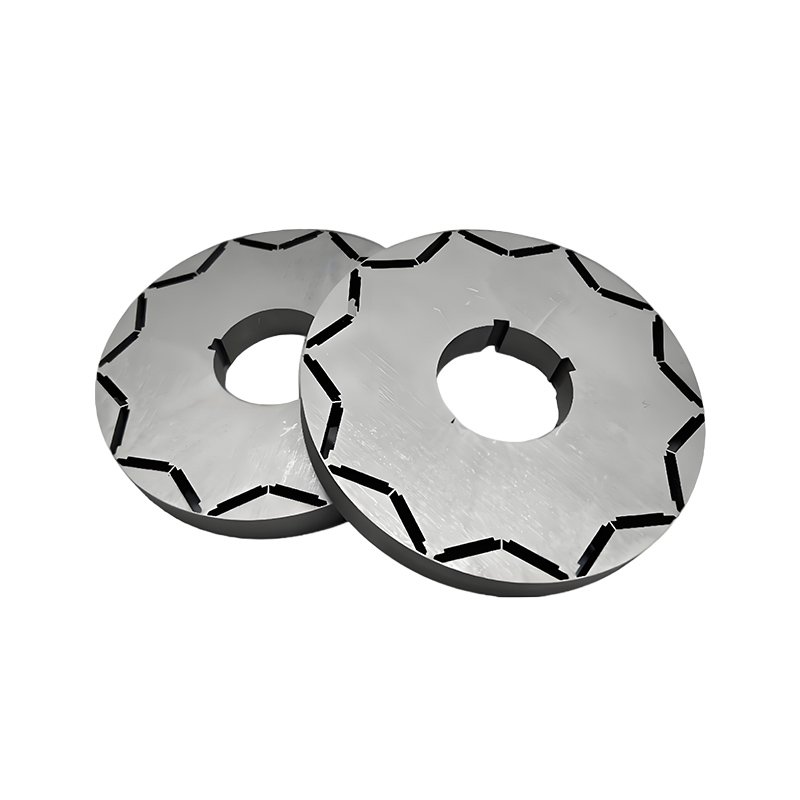
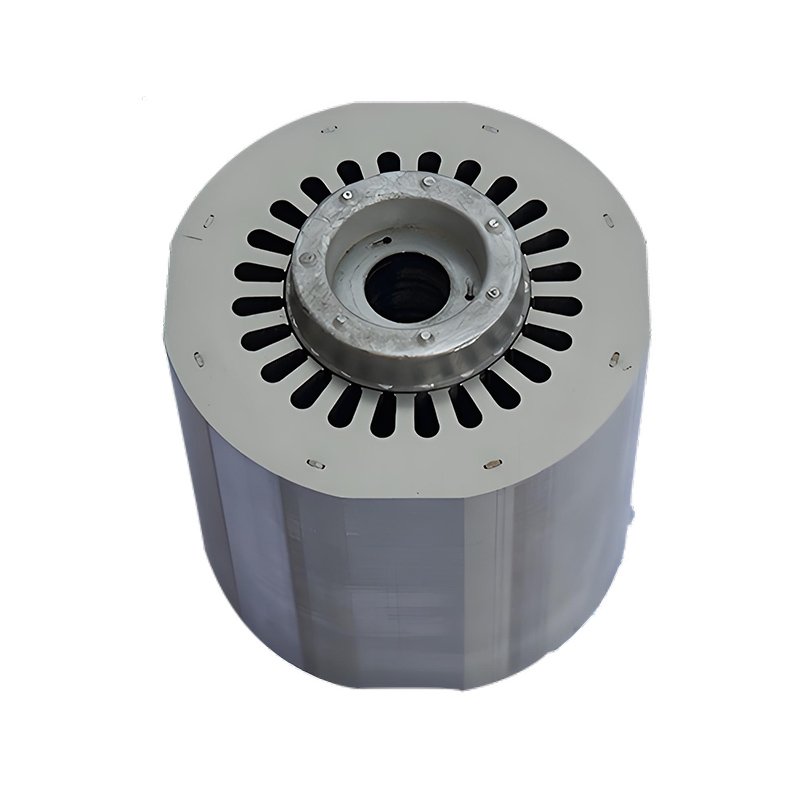
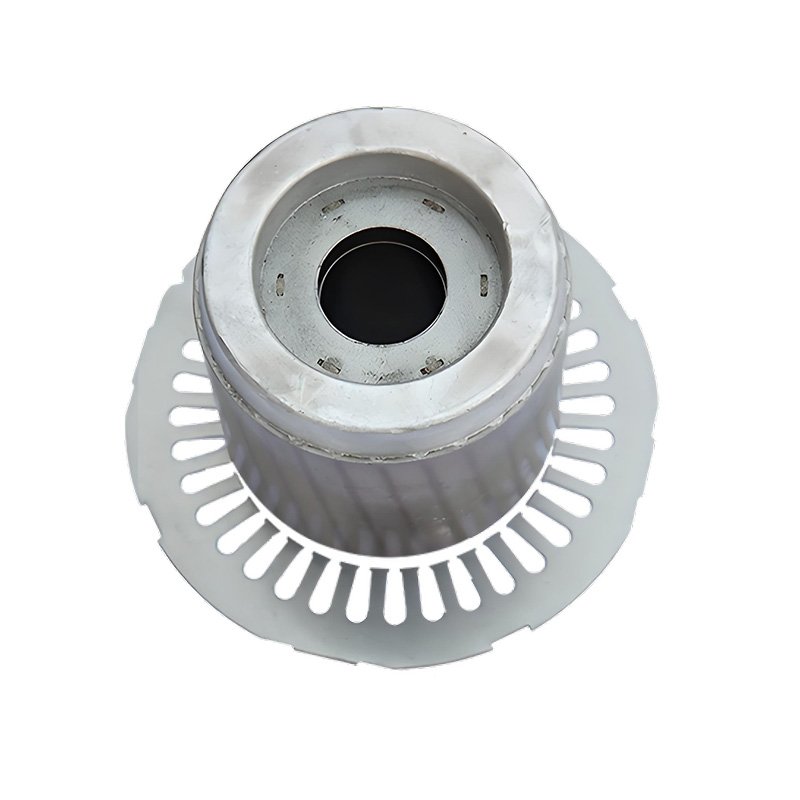
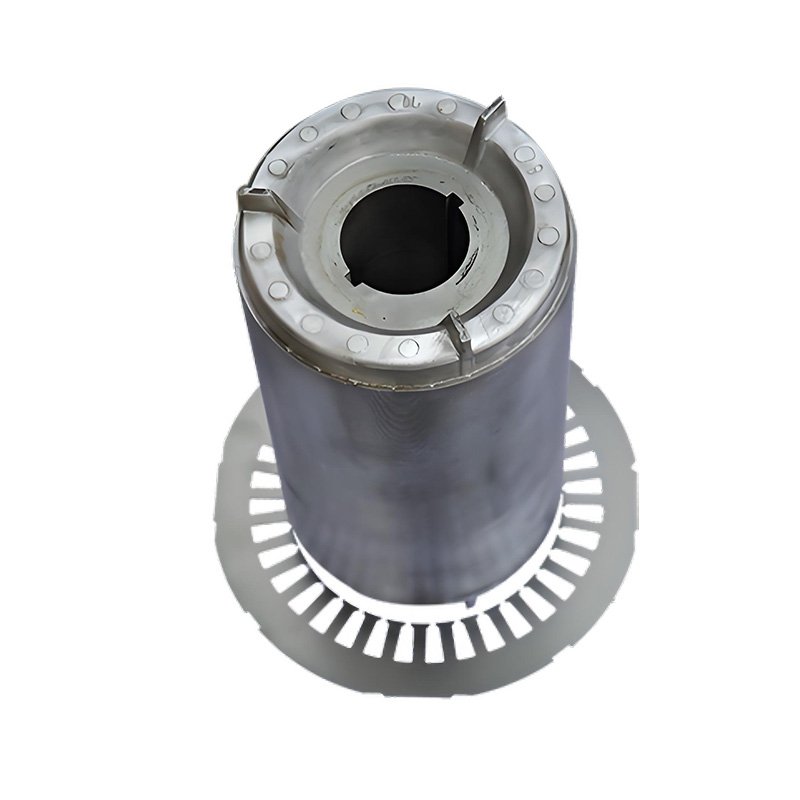
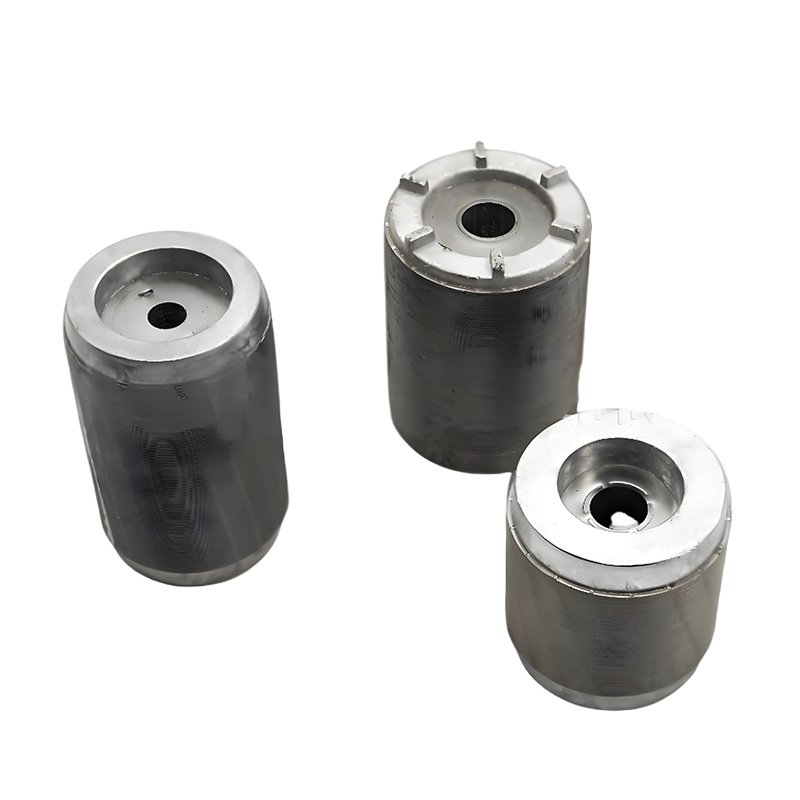
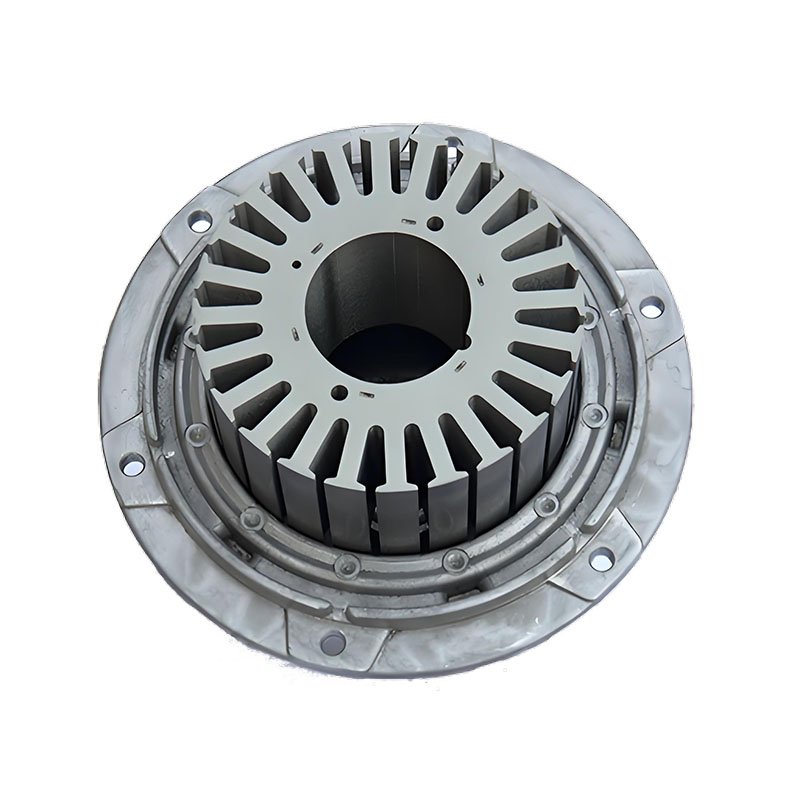
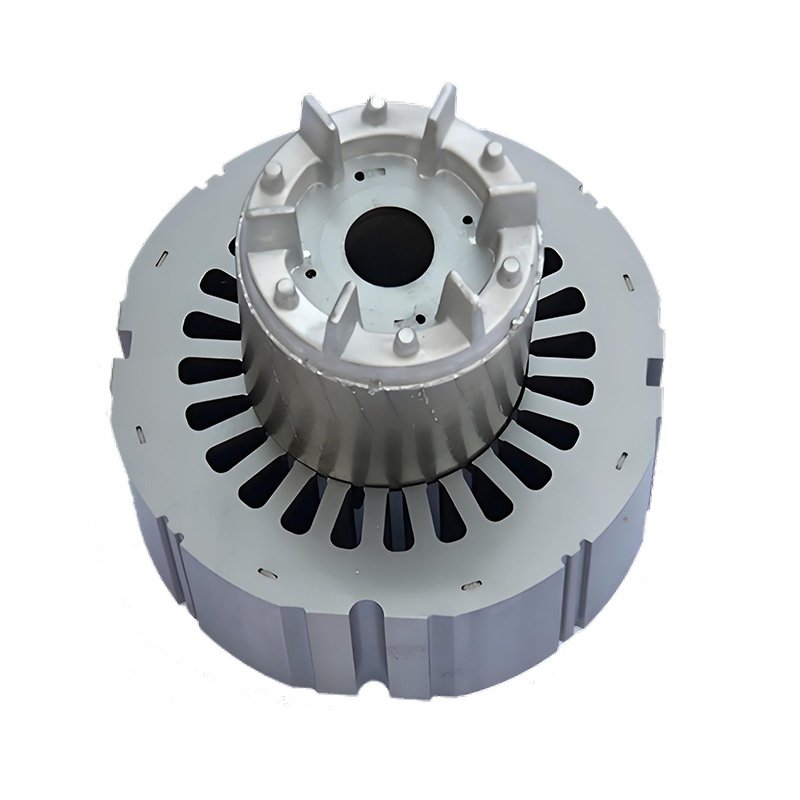
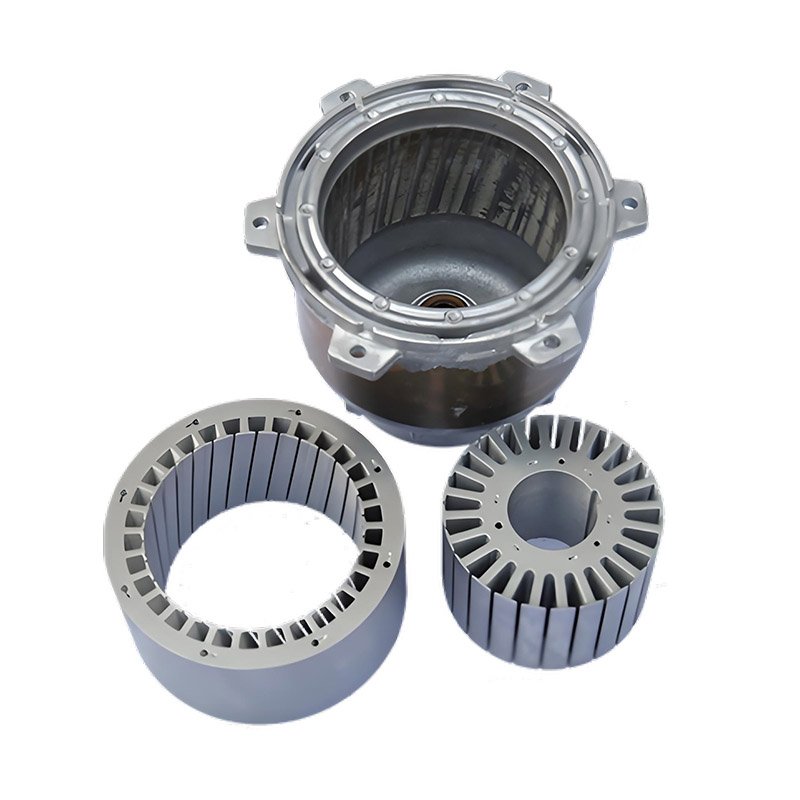
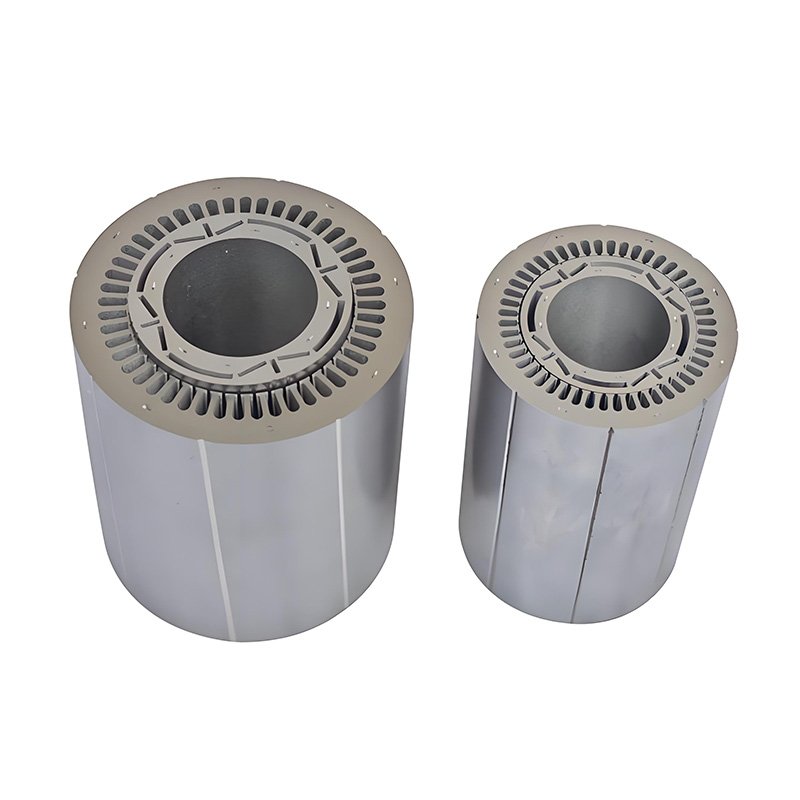
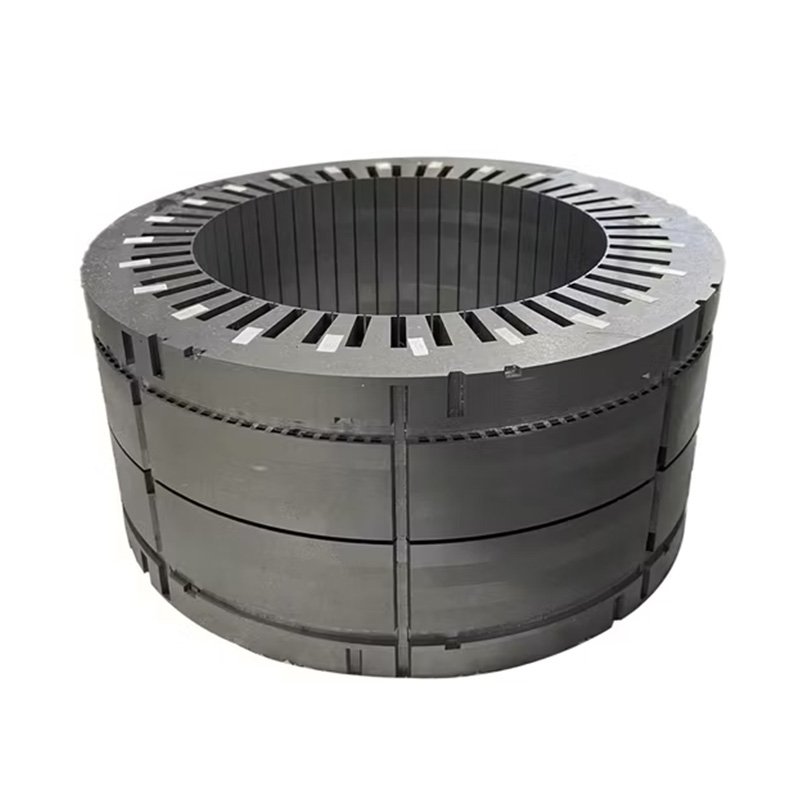
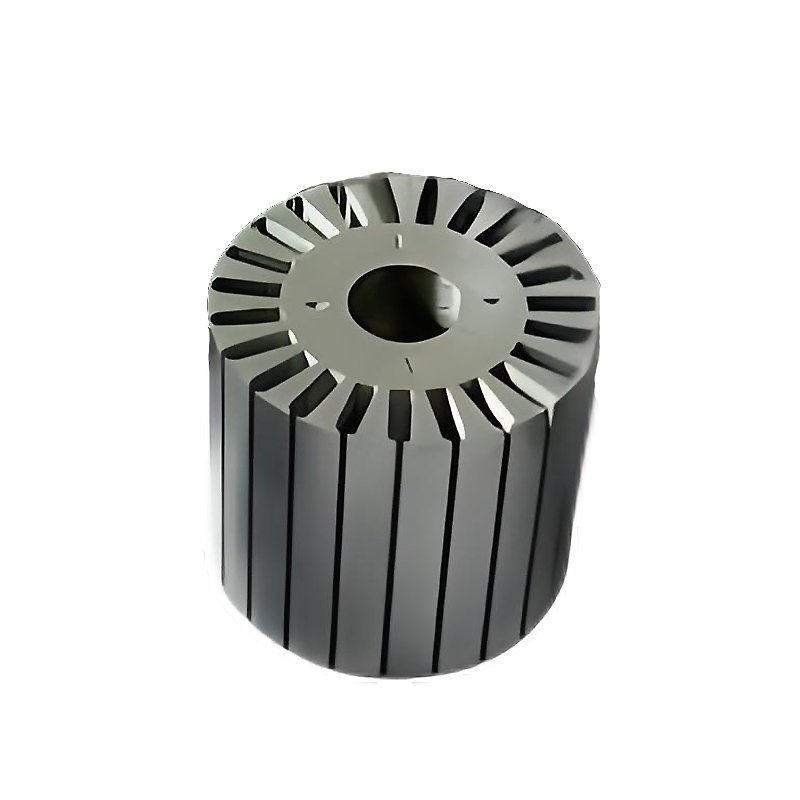
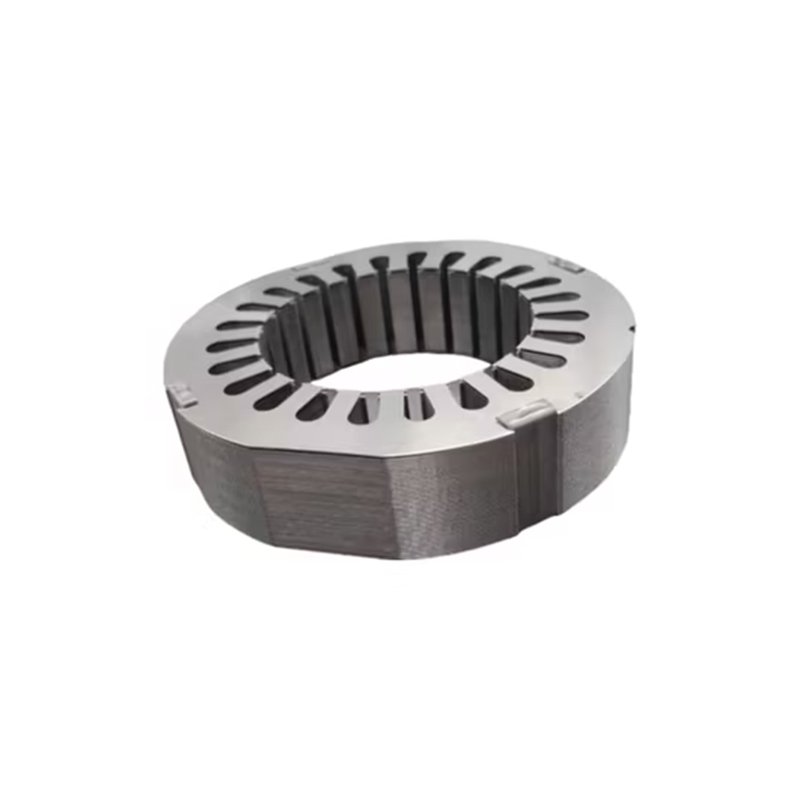
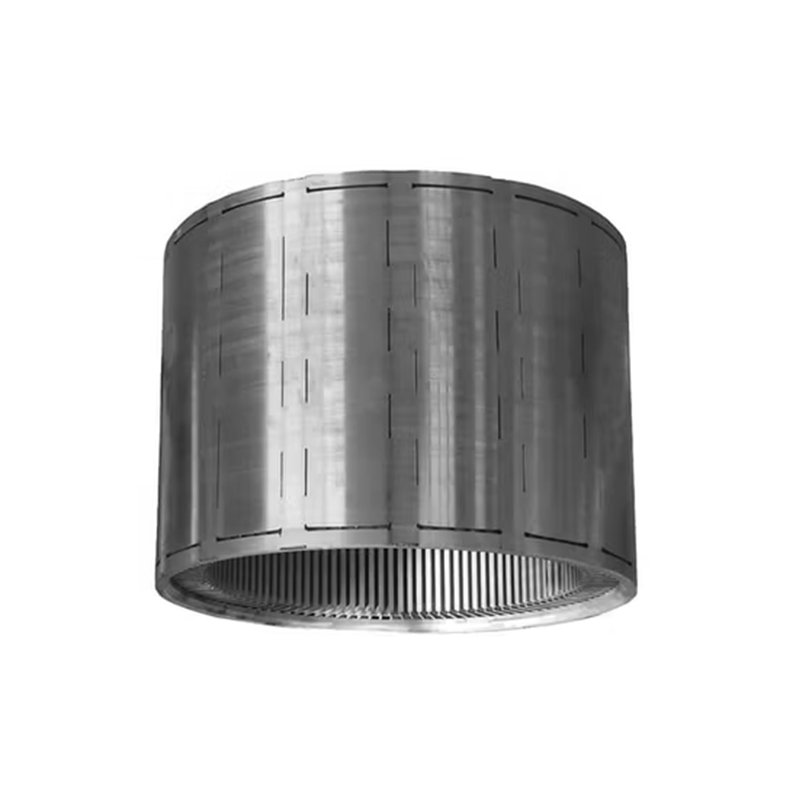
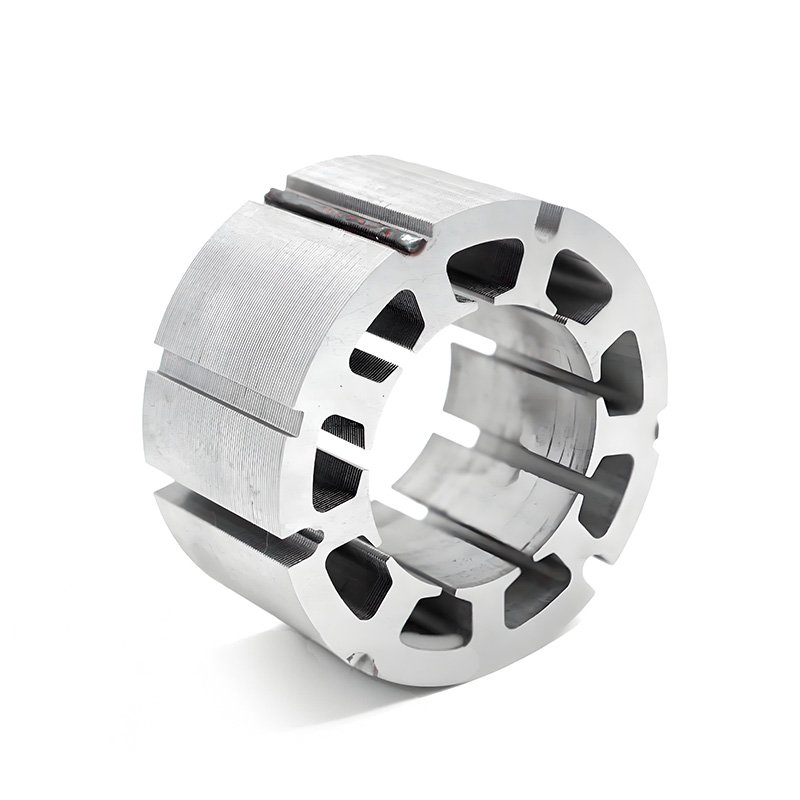
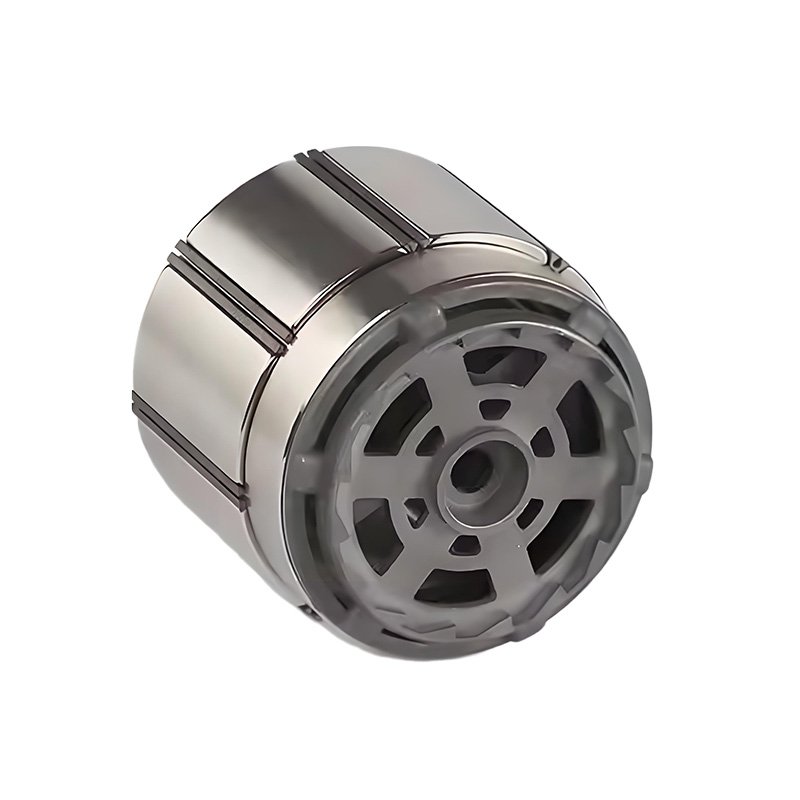
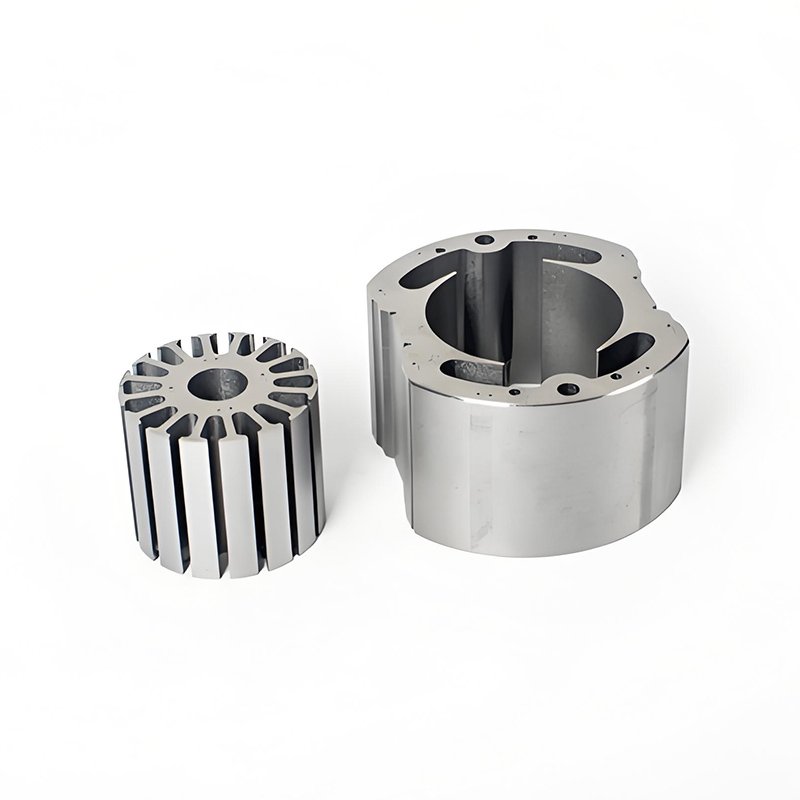
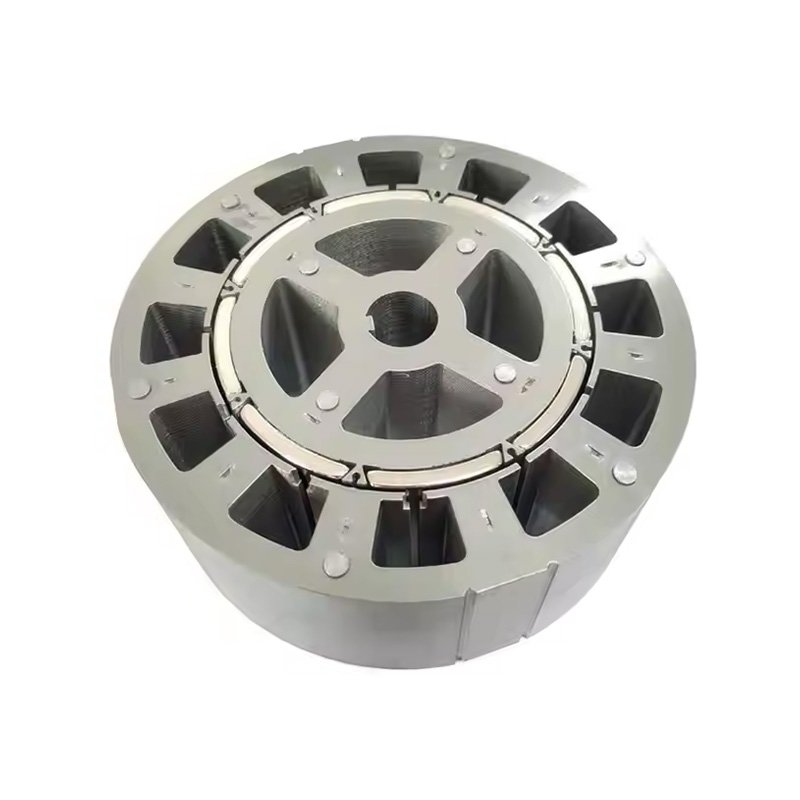
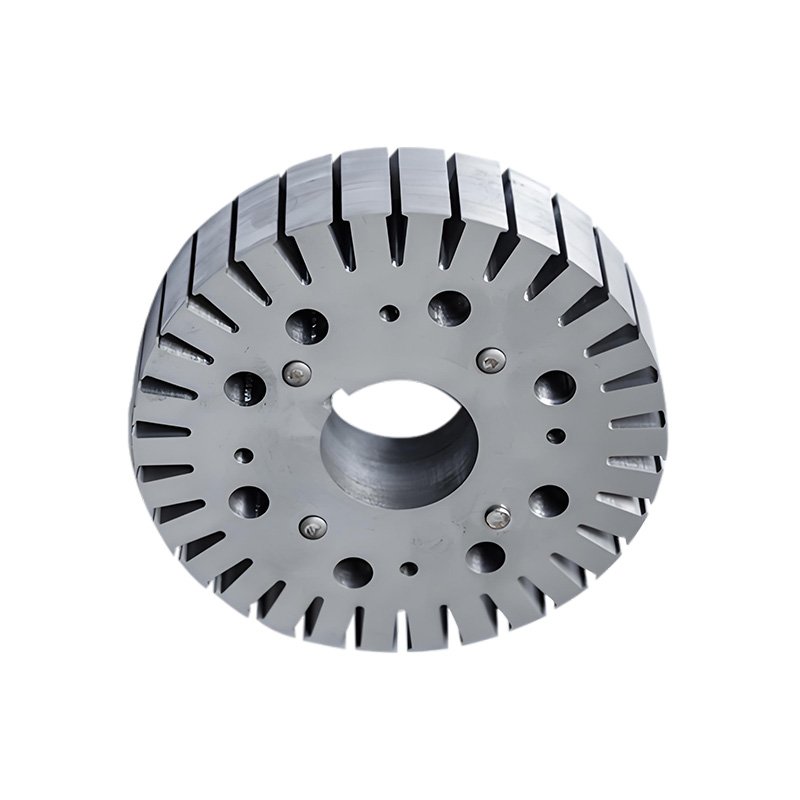
Senbo provide high-quality motor stator and rotor lamination cores manufactured using precision stamping processes and high-permeability silicon steel materials. Our products cover motor stator cores, rotor cores, and various stamped laminated components, widely used in new energy vehicles, industrial motors, servo motors, stepper motors, and other fields. From material selection to production and processing, each process undergoes strict quality control to ensure precise dimensions, optimized magnetic circuits, and lower losses. We support customization in various specifications to meet different motor design requirements, providing reliable guarantees for enhanced motor performance.
Our Lamination Stacks Spotlight
Introduction of Lamination Stacks for BLDC Motor
Brushless DC (BLDC) motors are a key part of today’s electric and automatic systems. They have better efficiency, more power for their size, and better control than old-style brushed motors. The core lamination, which makes up the stator and rotor, is probably the most important part. It directly affects the motor’s magnetic power, how it handles heat, its noise and shaking, and how long it lasts. At Senbo, we are experts in designing and making these complex parts. We know that one single solution doesn’t work for the special jobs they are used for today.
Senbo’s Commitment to Lamination Excellence
At Senbo, we believe that manufacturing superior BLDC motor core lamination products goes beyond just stamping thin steel.
- Precision Tooling: Our investment in high-precision dies and stamping presses ensures dimensional accuracy and repeatability, lamination after lamination. This minimizes inconsistencies that can affect magnetic flux paths and overall motor performance.
- Coating Integrity: We utilize advanced insulation coating technologies and rigorous quality control to ensure complete, durable electrical separation between laminations. This is vital for realizing the full benefit of lamination.
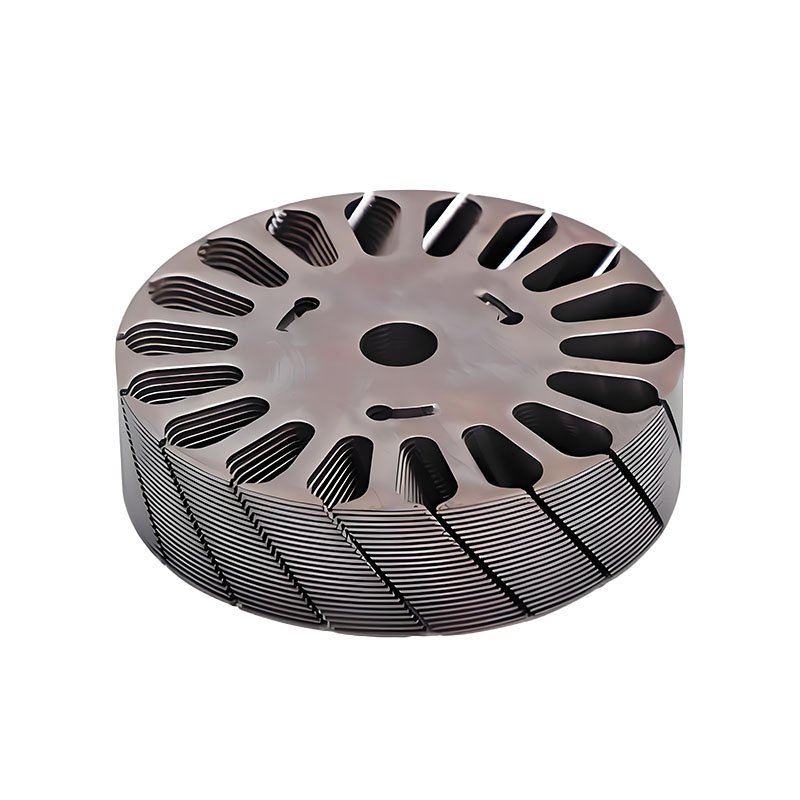
- Customization Capabilities: We understand that one size rarely fits all. Senbo works closely with motor designers and manufacturers to provide custom lamination profiles, slot designs (including skewed slots to reduce cogging torque), and specific material grades tailored to their unique application requirements.
- Interlocking and Stacking Innovations: Whether it’s robust interlocking features that eliminate the need for welding in some designs, or precision robotic welding for maximum structural integrity in high-stress bldc stator lamination stacks, our assembly techniques are optimized for performance and manufacturability.
Our Lamination Stacks Spotlight
Sino’s Material Advantage in Taming Hysteresis
Beyond Basic Iron: How well a motor core works is closely tied to the science of the materials used for its laminations. At Sino, we use our deep knowledge of magnetic, mechanical, and heat-related properties to pick and work with the newest materials. This makes sure our customers get the best results for their different uses.
At Sino, we utilize specialized electrical steels, often referred to as silicon steel. Silicon steel is still the main material for motor core laminations, making up over 80% of the market. Adding a small percentage of silicon (typically ranging from 1% to 4%, though sometimes higher for specific needs) to iron does a couple of wonderful things. Firstly, it significantly increases the material’s electrical resistivity, which gives an extra helping hand in suppressing eddy currents. Secondly, it alters the steel’s crystalline structure, making it easier for those tiny magnetic domains to flip back and forth. This reduced “magnetic friction” directly translates to lower hysteresis losses.
The Grain Game – Oriented vs. Non-Oriented
- Non-Oriented (NO) Electrical Steel: These steels have magnetic properties that are largely uniform in all directions within the plane of the lamination. They’re widely employed in rotating machines like motors and generators where the magnetic flux doesn’t always follow one neat path. Sino produces countless motor core lamination components from various grades of NO steel.
- Grain-Oriented (GO) Electrical Steel: This is the premium stuff. During its production, GO steel is processed to align the crystallographic grains in a specific direction. This gives it exceptionally good magnetic properties (like low hysteresis loss and high permeability) along that “easy” direction of magnetization. It’s the go-to for transformer cores, but also sees employment in certain high-efficiency motor designs where the flux path is highly predictable. Sino has the capability to process GO steels when the scenario demands peak performance along a defined axis.
Our Lamination Stacks Spotlight
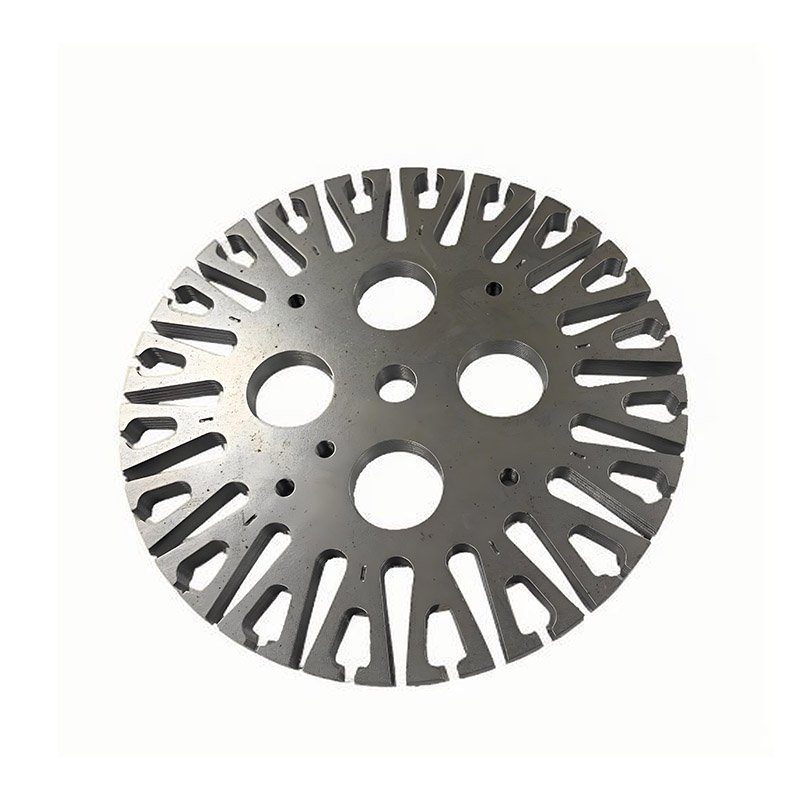
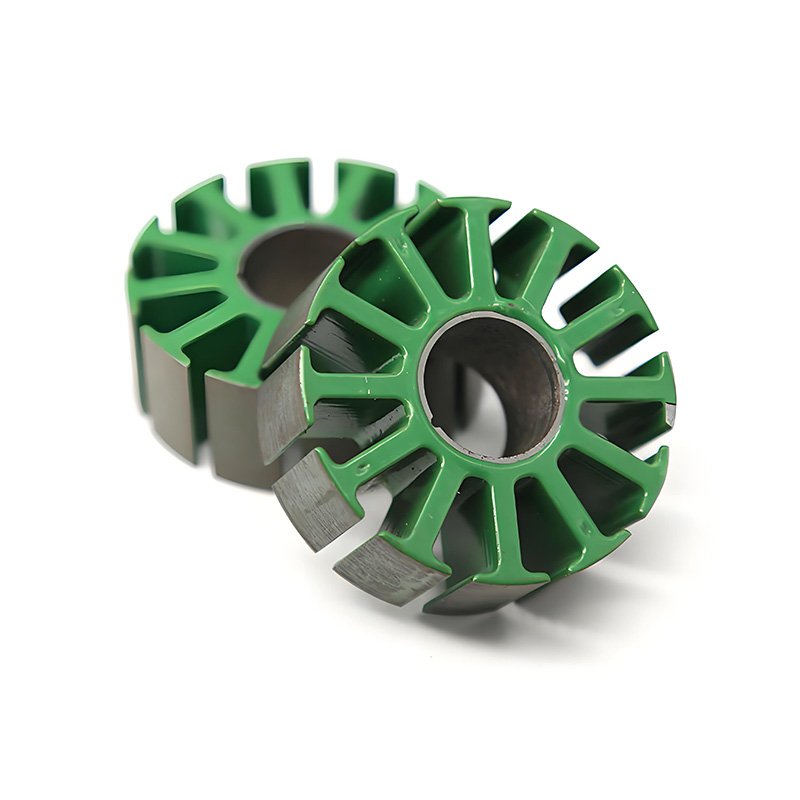
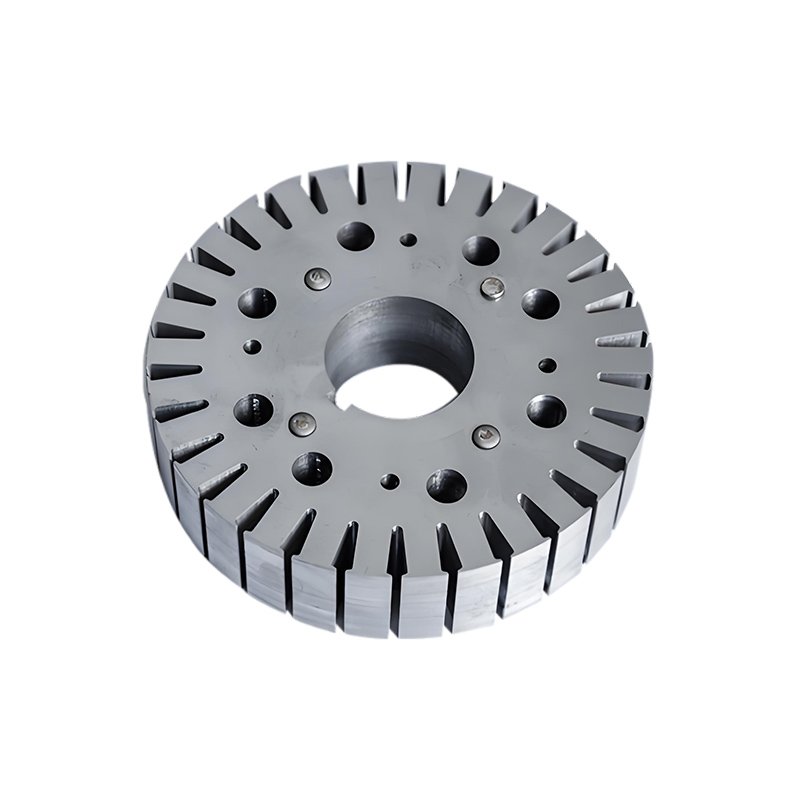
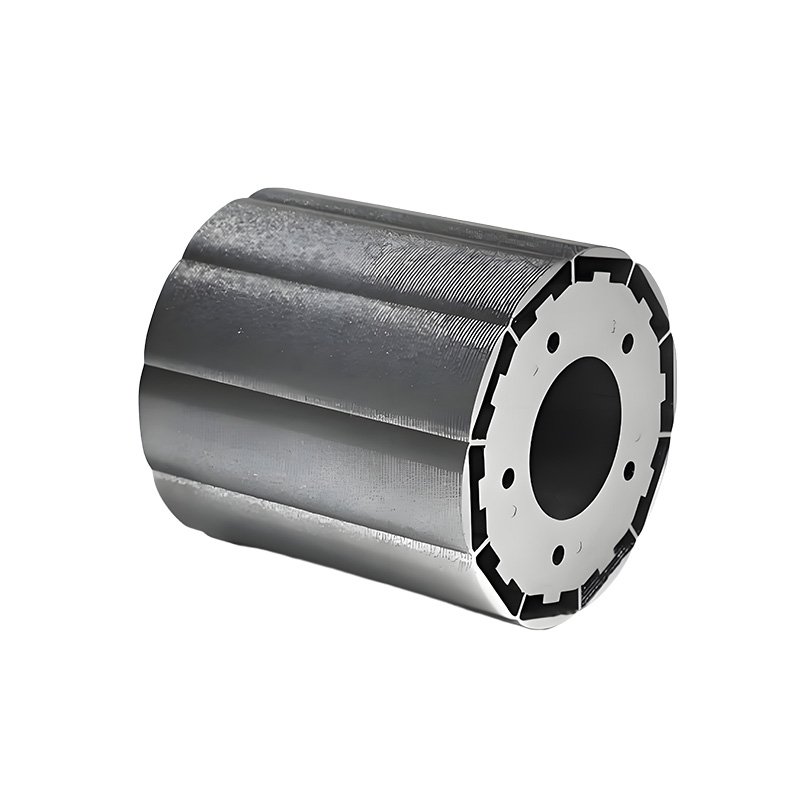
Senbo Rotor Lamination Material Selection
The choice of steel is absolutely fundamental. It directly dictates the magnetic personality of your rotor core (how easily it magnetizes, how much magnetic flux it can carry) and its electrical losses (from both hysteresis and those pesky eddy currents). Get this wrong, and you’re fighting an uphill battle from the start.
Stacking & Joining – Building a Solid Core
Once the individual laminations are ready, they need to be precisely stacked and securely joined to form the final laminated rotor core. Senbo employs several techniques:
- Interlocking (Cleating): Many lamination designs incorporate small, stamped features that interlock with adjacent laminations, providing mechanical integrity without welding. Senbo’s die design ensures these interlocks are robust and align perfectly.
- Welding: For some designs, particularly larger cores, laser or TIG welding along the outer diameter (or sometimes in specific slots) is used. Senbo’s welding processes are carefully controlled to minimize heat input and prevent weld penetration from shorting out multiple laminations.
- Bonding: Applying an adhesive during the stacking process can create an incredibly strong, rigid rotor core with excellent dimensional stability and can even offer an additional layer of inter-laminar insulation. Senbo has experience with various bonding agents suitable for different operating temperatures and mechanical loads.
- Riveting/Bolting: For certain constructions, especially very large rotors or specific designs, riveting or through-bolting might be employed.
Our Lamination Stacks Spotlight
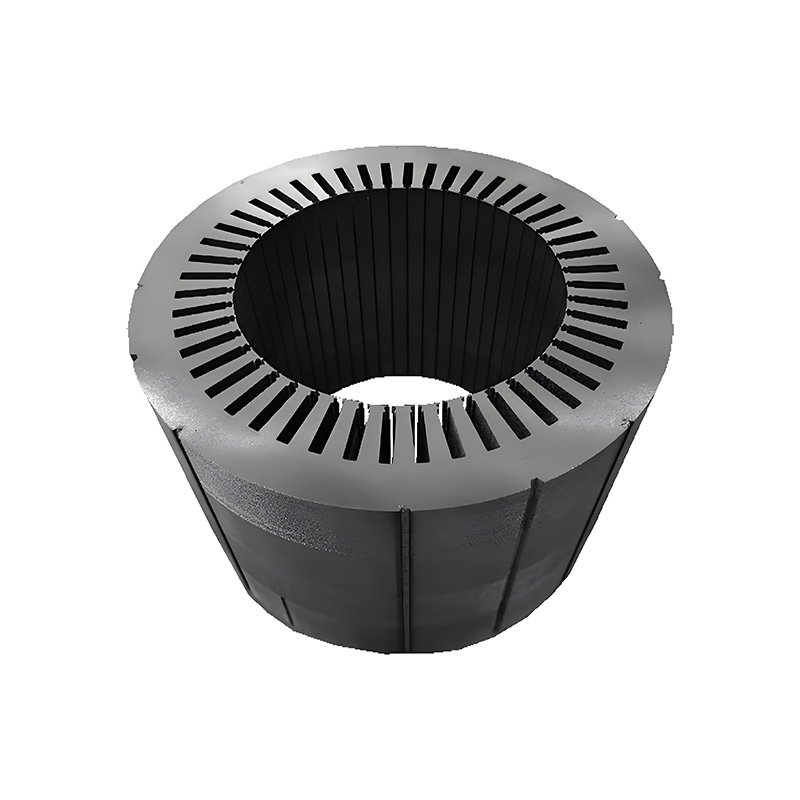
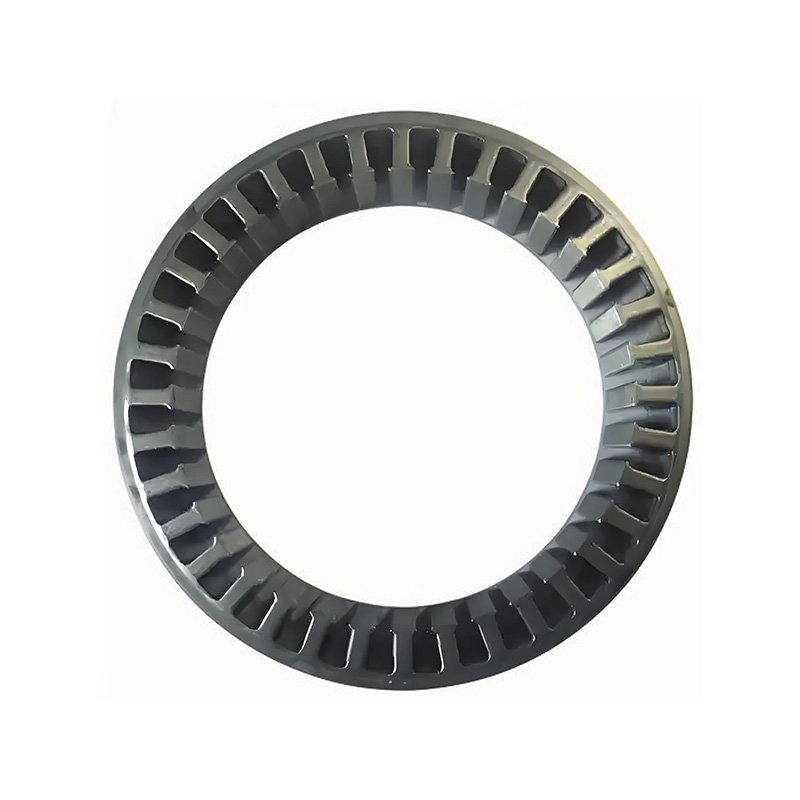
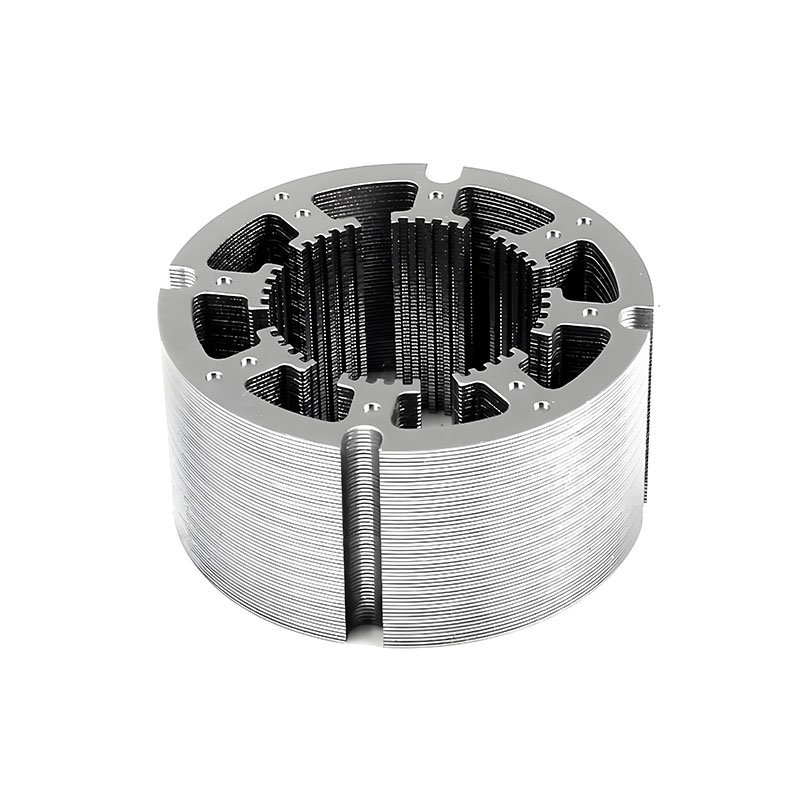
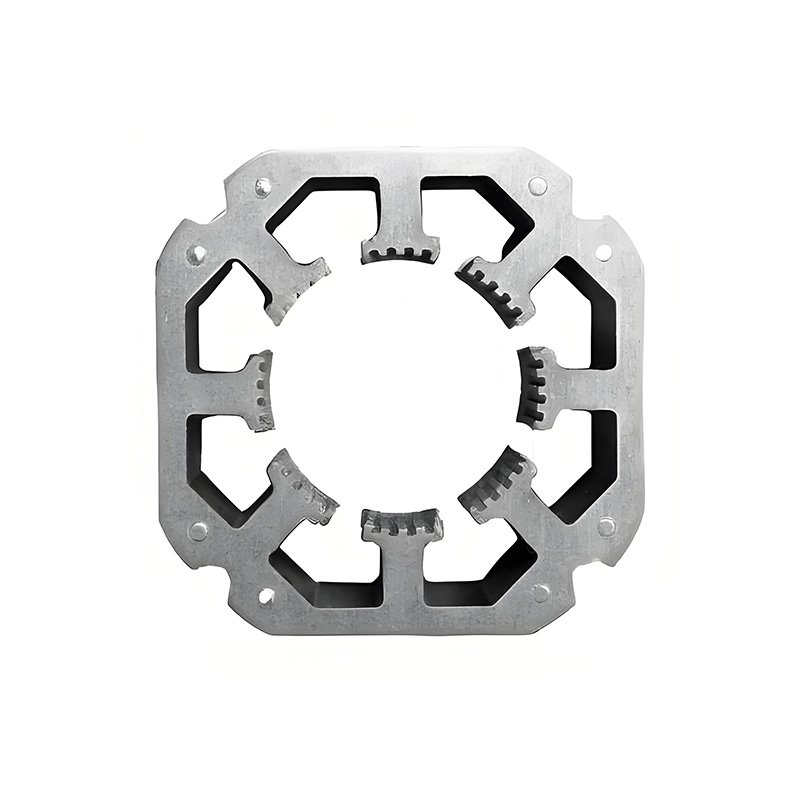
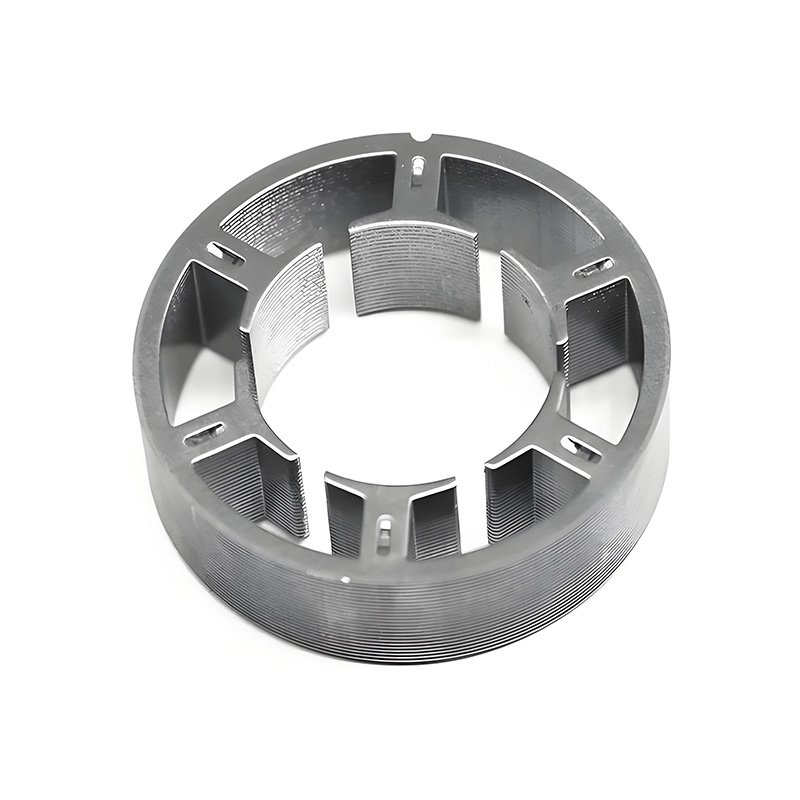
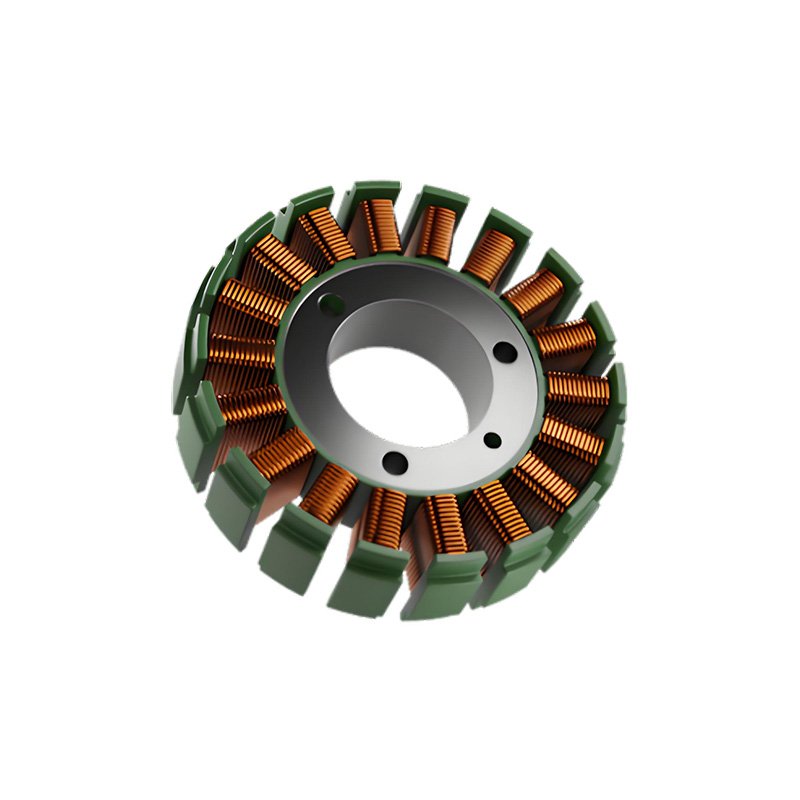
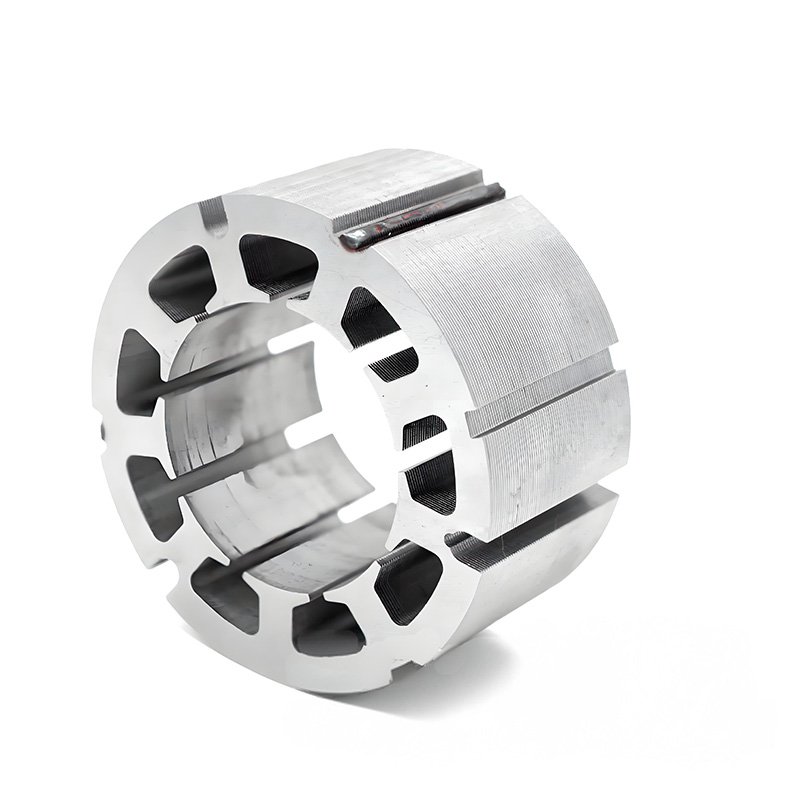
What Are Stator Lamination Stacks and How Do They Work?
Stator laminations are thin, coated sheets of electrical steel, carefully stacked and put together to make the stator core. This core is the non-moving part of an electric motor, and it holds the coils of wire that create or work with the magnetic field. Their main job is to give the magnetic field an easy path to follow, while also cutting down on energy waste that would badly hurt how well the machine works. The main reason for using thin laminations instead of a solid iron core is to fight two main types of energy loss in the core: eddy current losses and hysteresis losses.
Senbo’s Stator Laminations Help You Slash Energy Losses
We meticulously craft our stator laminations from thin, specialized sheets of electrical steel. Each sheet is electrically insulated from its neighbors. This construction effectively slices and dices the paths available for those eddy currents. The thinner the lamination, the more effectively we can choke off these losses.Of course, thinner laminations mean more sheets for a given stack height, which can increase manufacturing complexity and cost. There’s also the “stacking factor” – the ratio of actual magnetic material to the total volume (including insulation). At Sino, we help you navigate this balance. We might advise a customer developing a high-efficiency industrial pump motor that 0.35mm laminations offer the sweet spot for their target IE4 efficiency rating, considering both performance and cost-effectiveness.
Our Lamination Stacks Spotlight
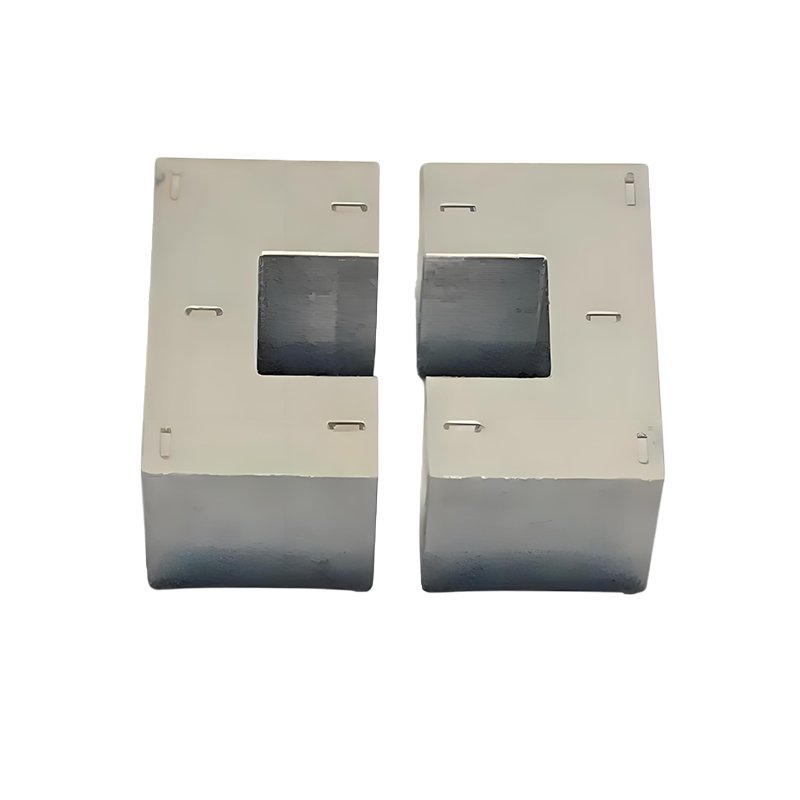
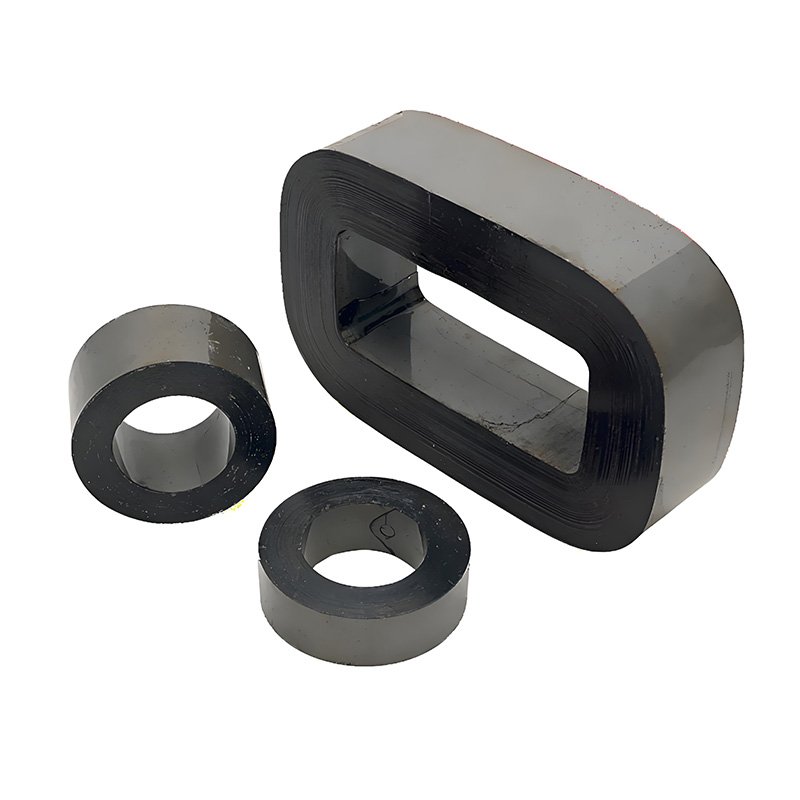
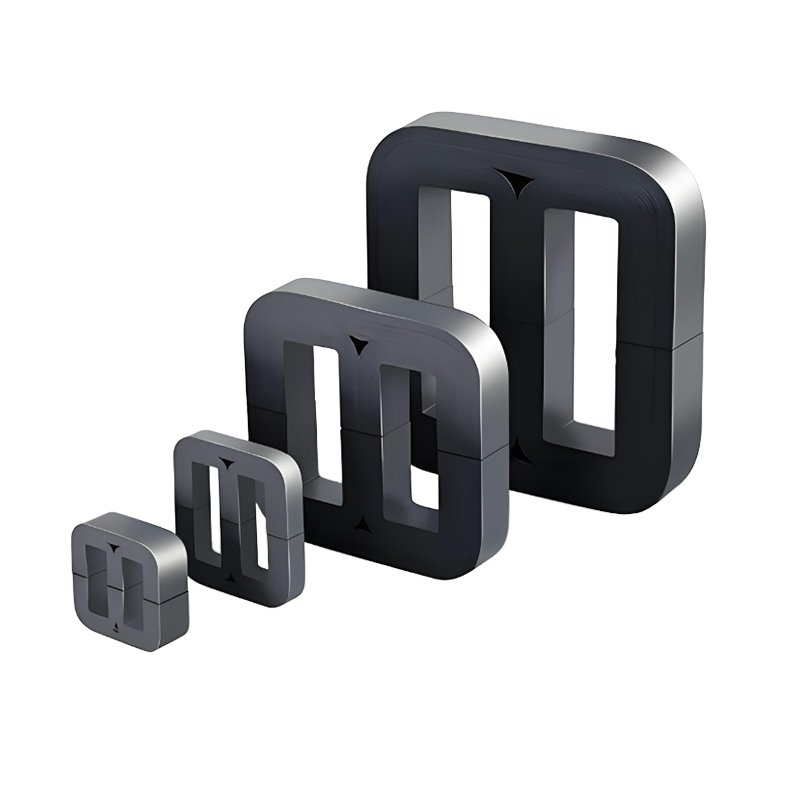
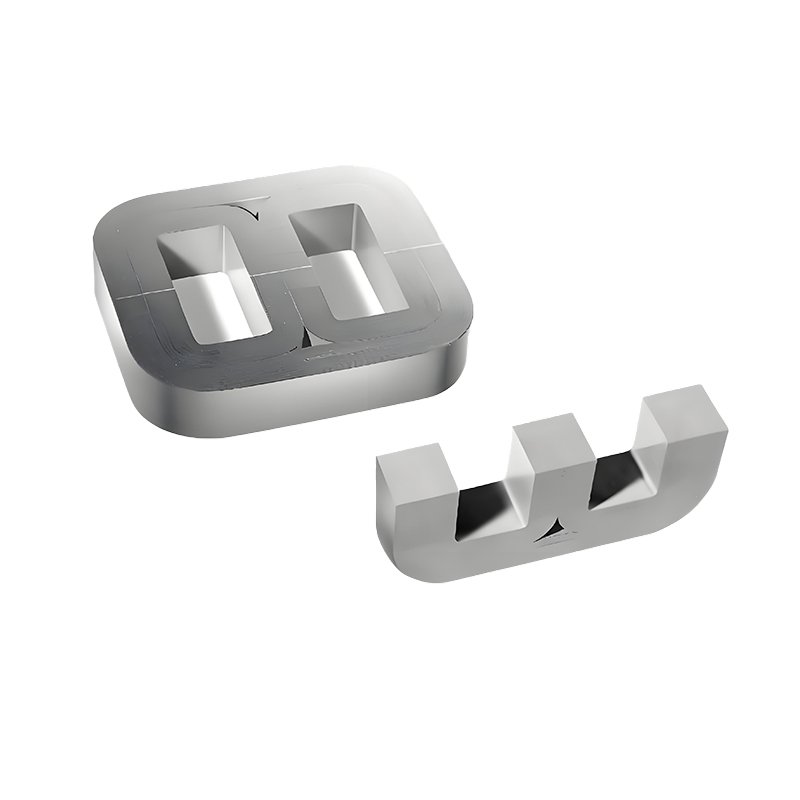
Senbo’s Commitment to Premium Materials
The material choice is absolutely paramount for achieving optimal performance, and at Senbo, we’re uncompromising on quality. We don’t just grab any sheet metal off the shelf. Our transformer laminations are predominantly crafted from high-grade silicon steel. Why silicon steel? It’s the industry standard for very good reasons:
- Boosted Electrical Resistivity: Adding a small percentage of silicon (typically 1-4%) to the steel significantly increases its natural resistance to electrical flow. This gives those eddy currents another hurdle to overcome, further minimizing losses.
- Tackling Hysteresis Losses: Hysteresis loss is the energy consumed as the core material is repeatedly magnetized and demagnetized with each alternating current cycle. Silicon steel, especially the grain-oriented varieties we process at Senbo, possesses magnetic properties that dramatically reduce this wasteful energy expenditure.
- Superior Magnetic Permeability: You want a core material that’s a fantastic conductor of magnetic flux – easy to magnetize and demagnetize with minimal fuss. High-quality silicon steel offers just that, ensuring the magnetic field can do its work efficiently.
Our Lamination Stacks Spotlight
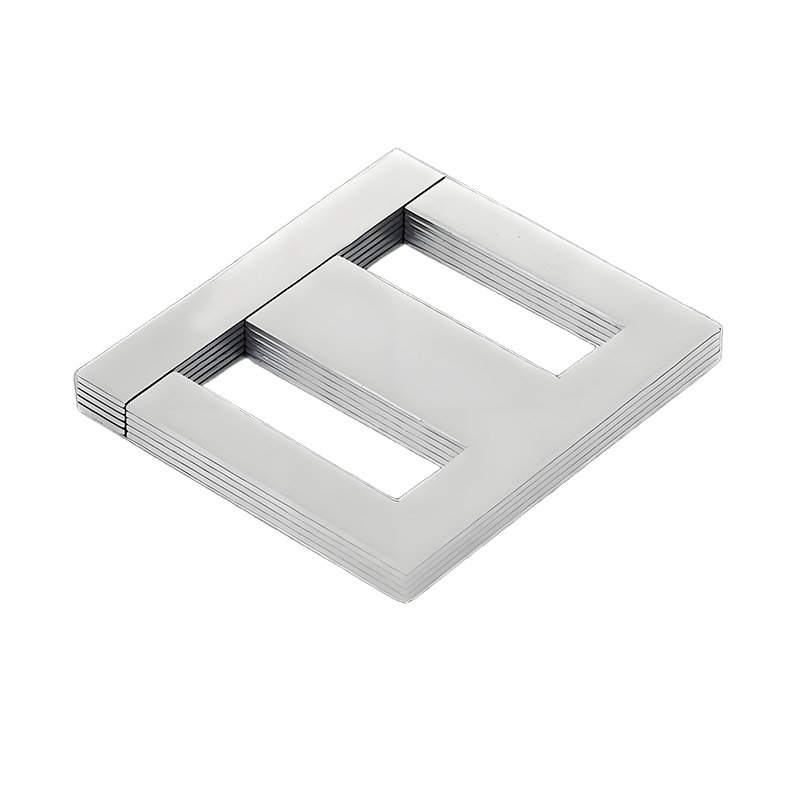
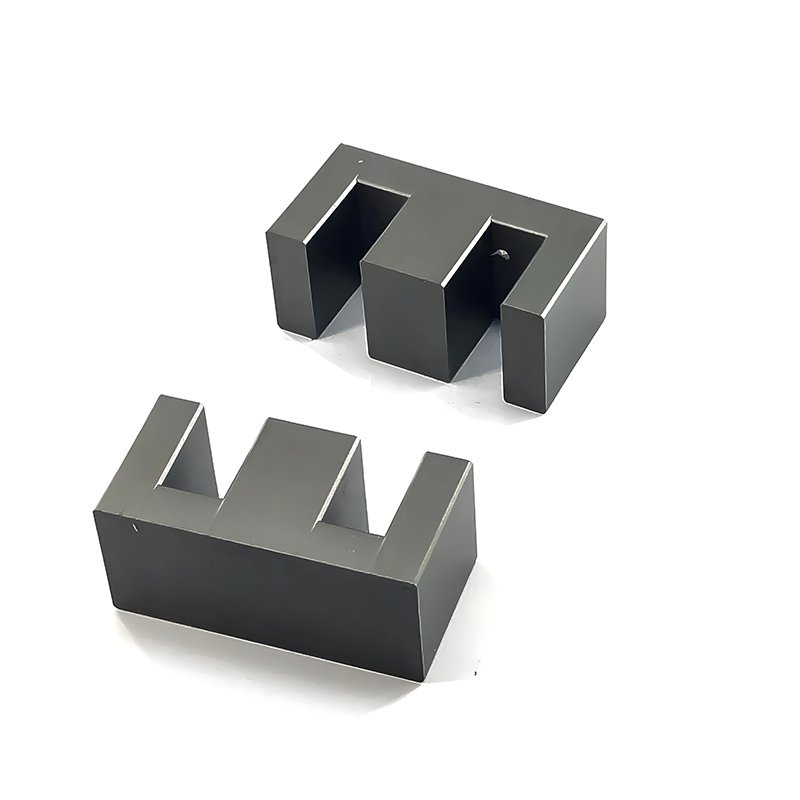
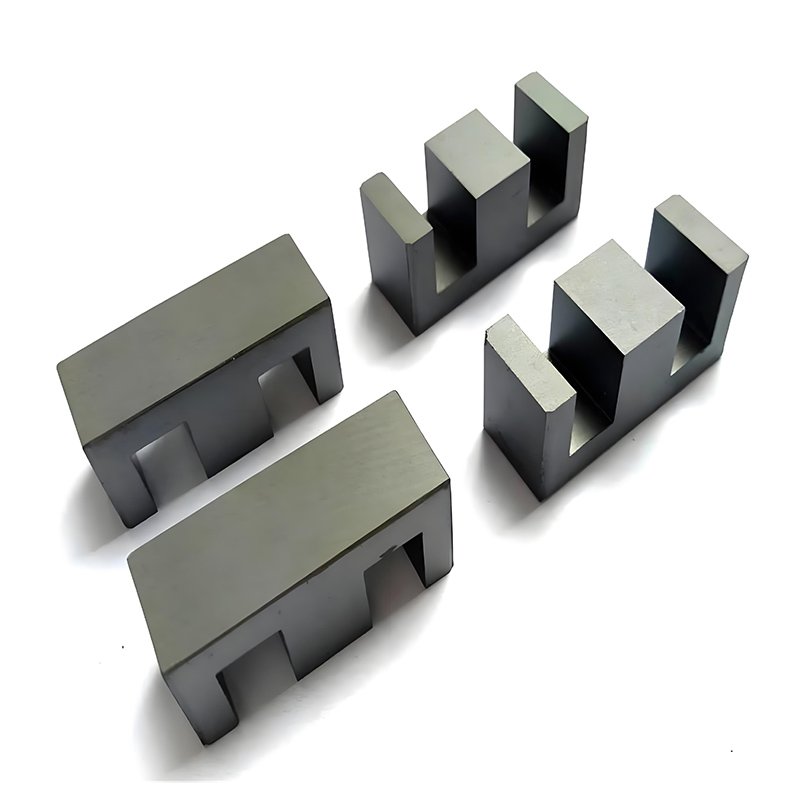
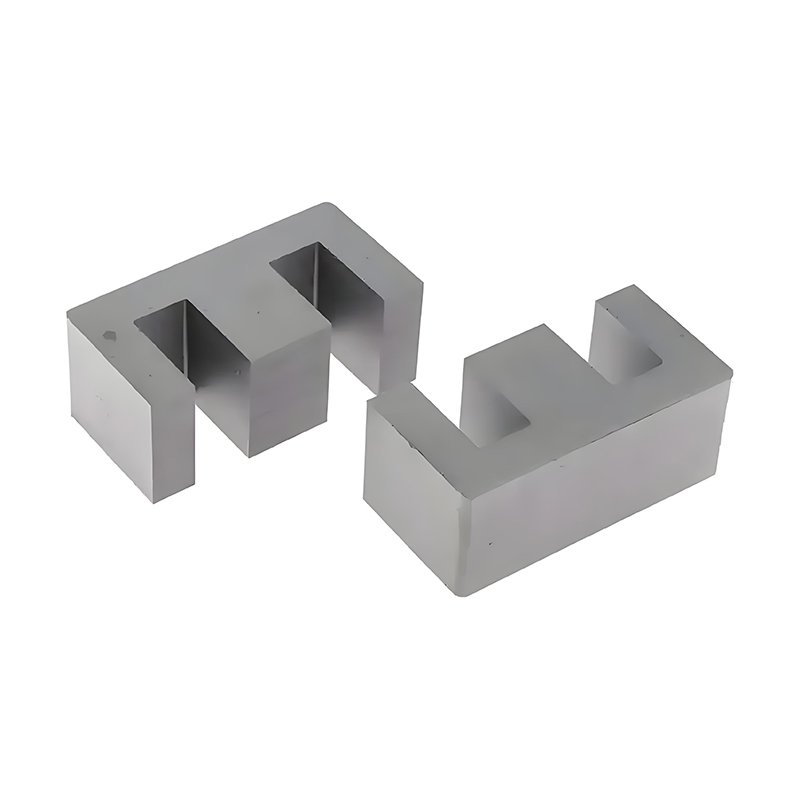
Introduction to EI Lamination Stacks
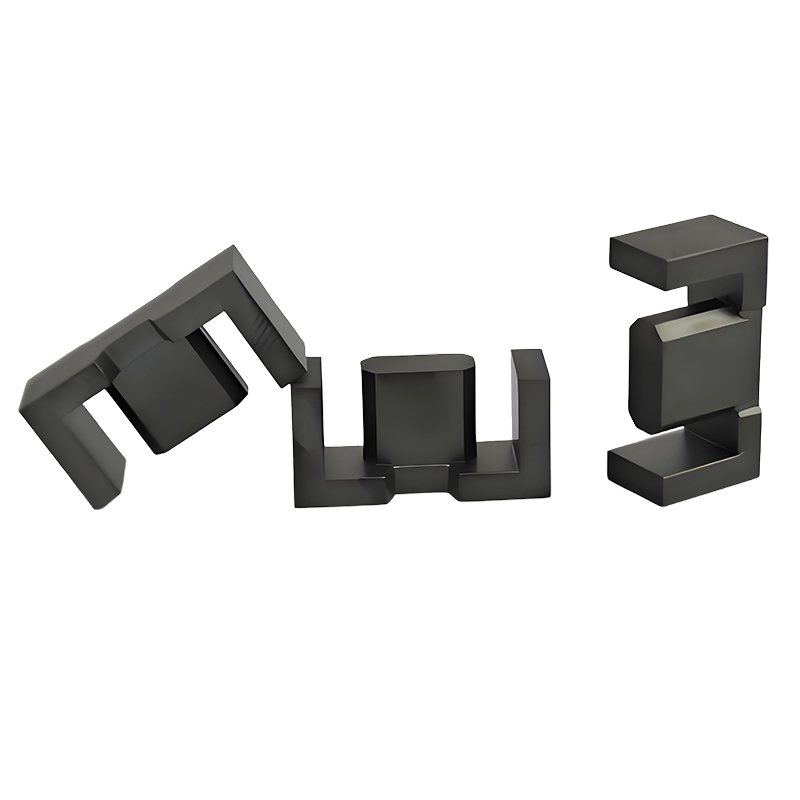
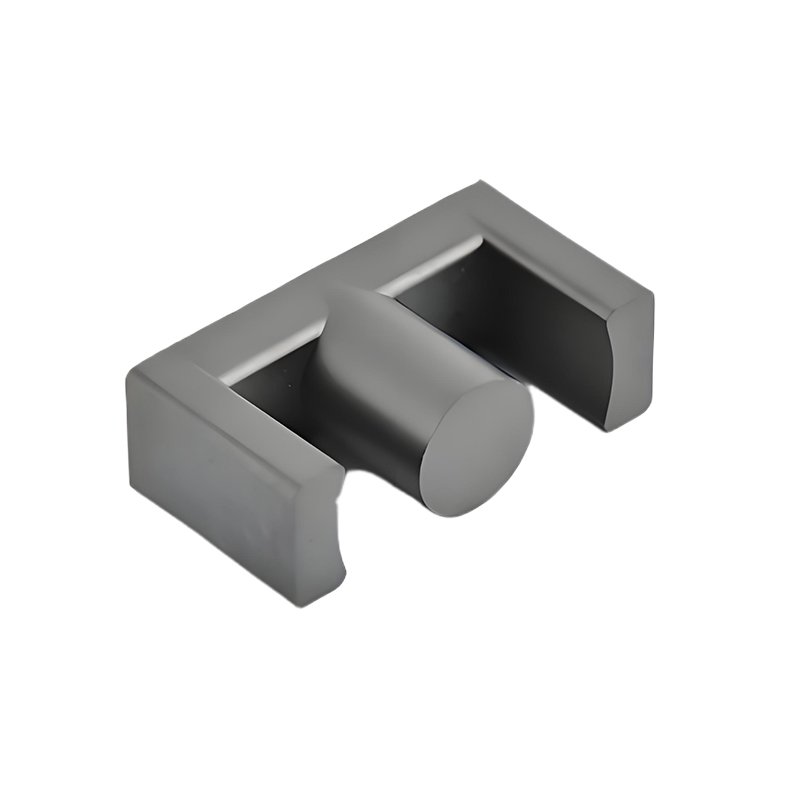
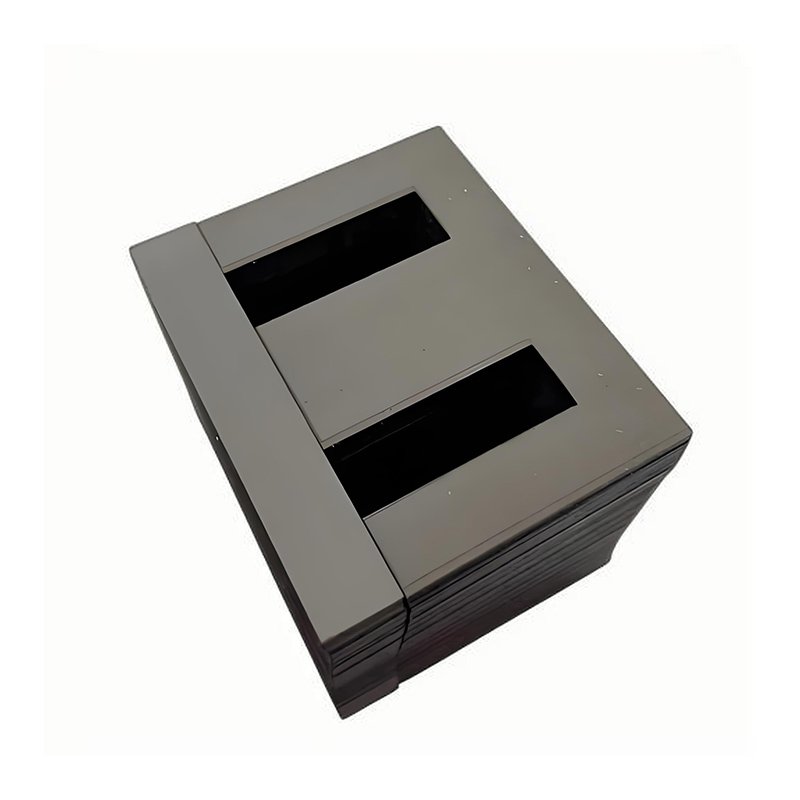
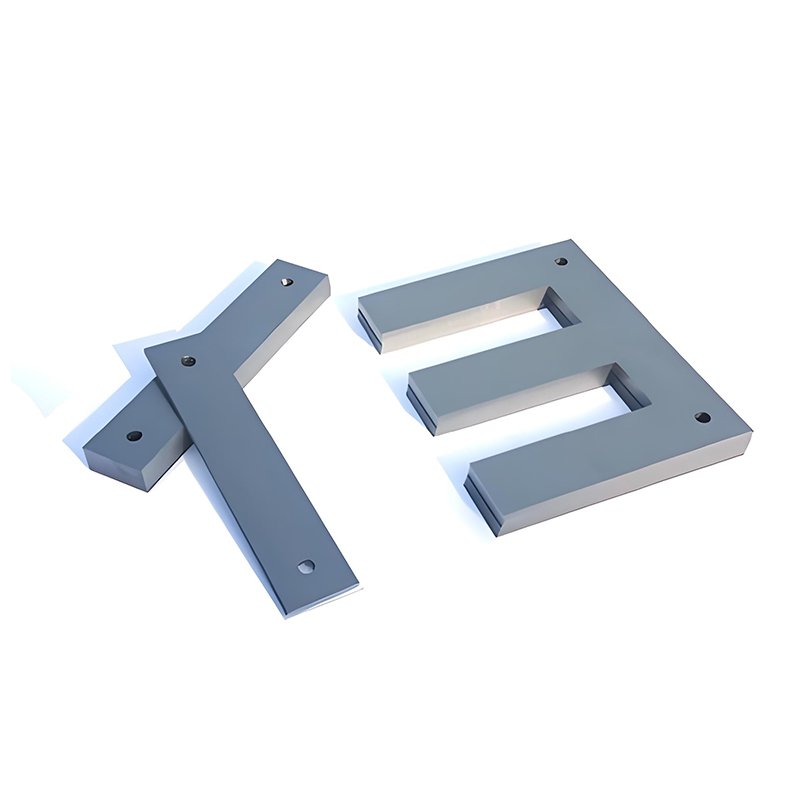
At Senbo, we know that the core is the most important part of any top-quality magnetic component. EI core laminations, named for their special E and I shapes, are a key part of making magnetic circuits work well. Their main job is to reduce energy loss from eddy currents, a big problem that was found in the late 1800s as electrical machines got bigger. Solid iron cores, while good at letting magnetic fields pass through, wasted a lot of energy as heat because of these swirling currents, which greatly reduced how well they worked.
How Senbo’s Laminations Tackle Energy Waste
At Senbo, we offer EI laminations in a variety of standard thicknesses – from 0.35mm (often designated as M36 or similar) to 0.5mm (like M47) and even thinner for specialized needs – allowing you to balance cost against efficiency requirements. We ensure that the insulating coating applied to our steel, or inherent in its mill processing, maintains its integrity even after stamping and stacking. This focus on insulation integrity is critical for an efficient ei transformer core.
The Senbo Material Palette: Choosing the Right Steel
The heart of any EI core lamination is the electrical steel. The silicon content (typically a few percent) increases the electrical resistivity of the steel, which helps to reduce eddy current losses.
At Senbo, we don’t just stamp steel; we partner with you to select the optimal grade and thickness for your specific scenario. Our technical team can discuss your operating frequency, flux density, efficiency targets, and cost constraints to recommend the most suitable material for your ei transformer core or inductor. We source our steel from reputable mills, ensuring consistent quality and adherence to international standards, which is a cornerstone of our product quality.
Our Lamination Stacks Spotlight
Getting to Know UI-Shaped Laminations
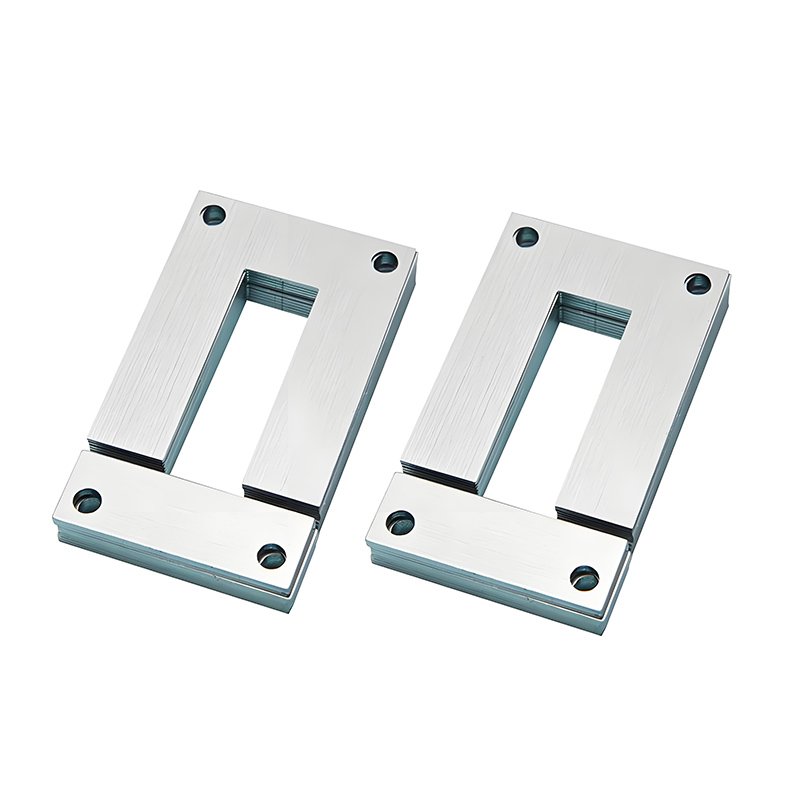
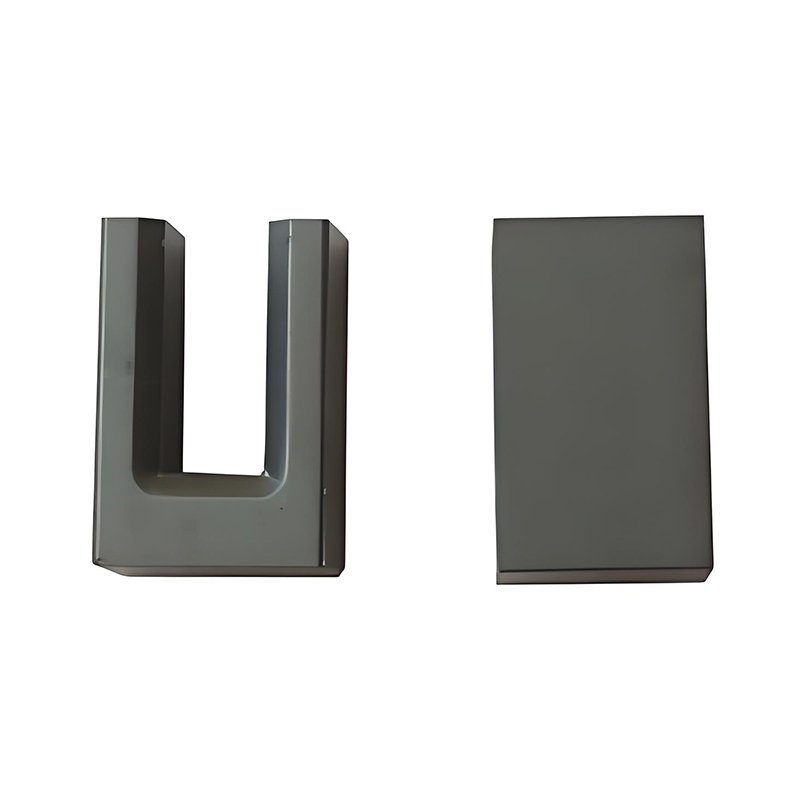
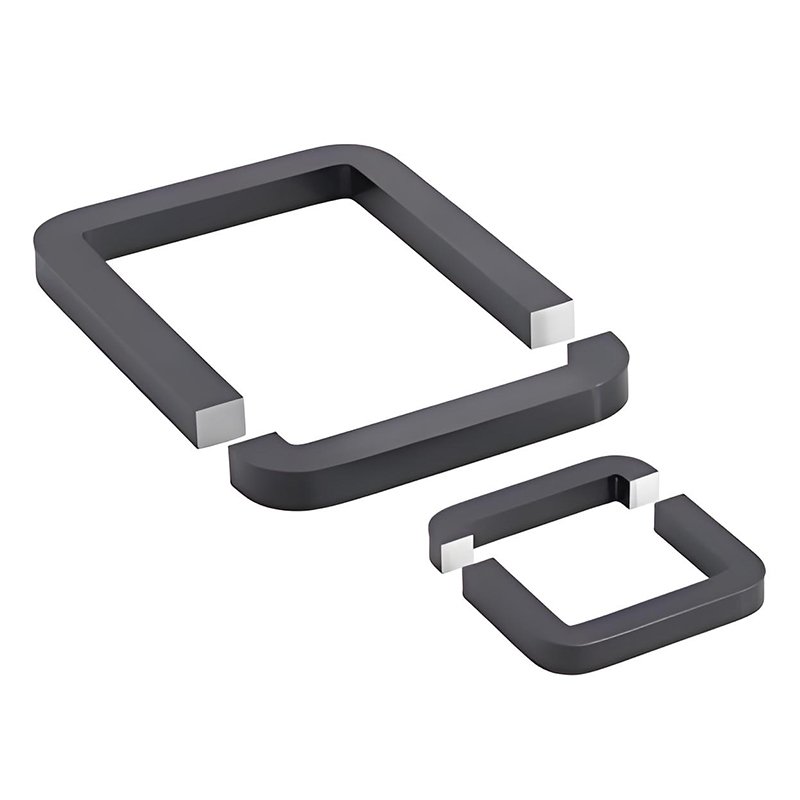
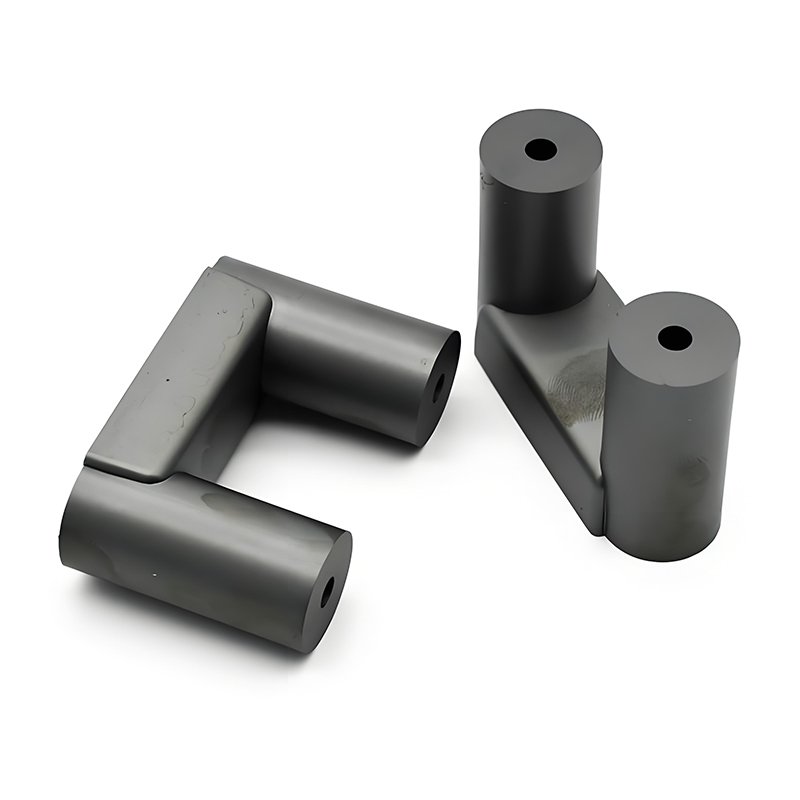
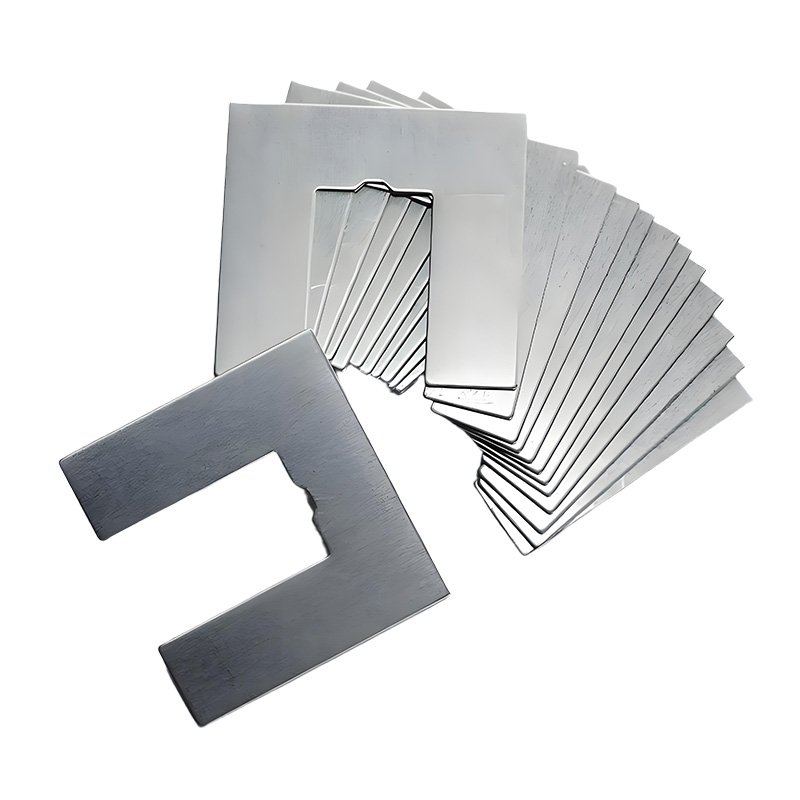
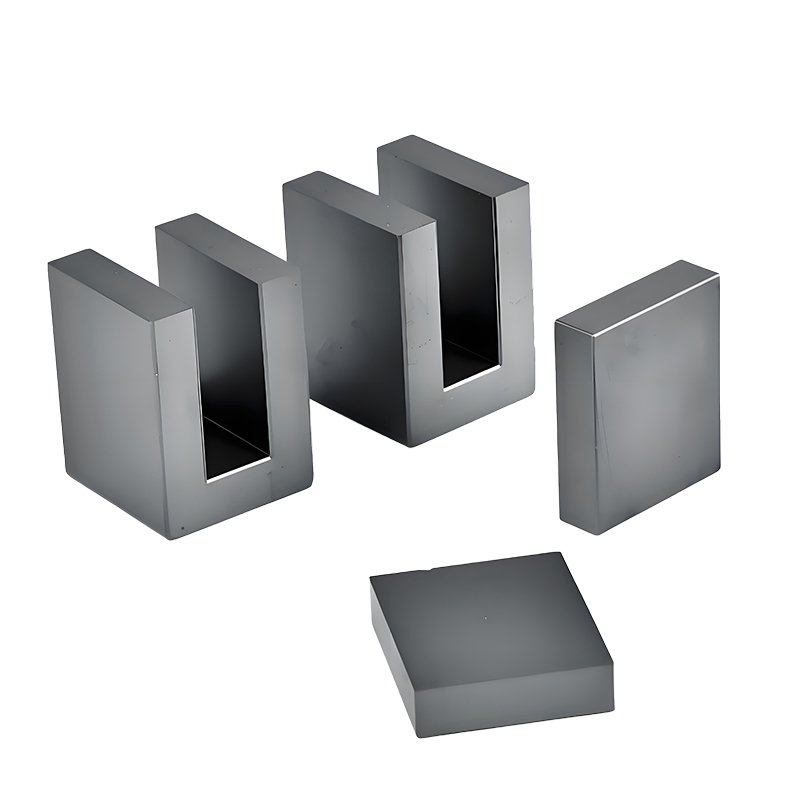
At Senbo, we focus on making UI-shaped core laminations, which are a basic part of magnetic circuits. These cores are special because of their unique shape, making them a great choice instead of older core types for many different uses.
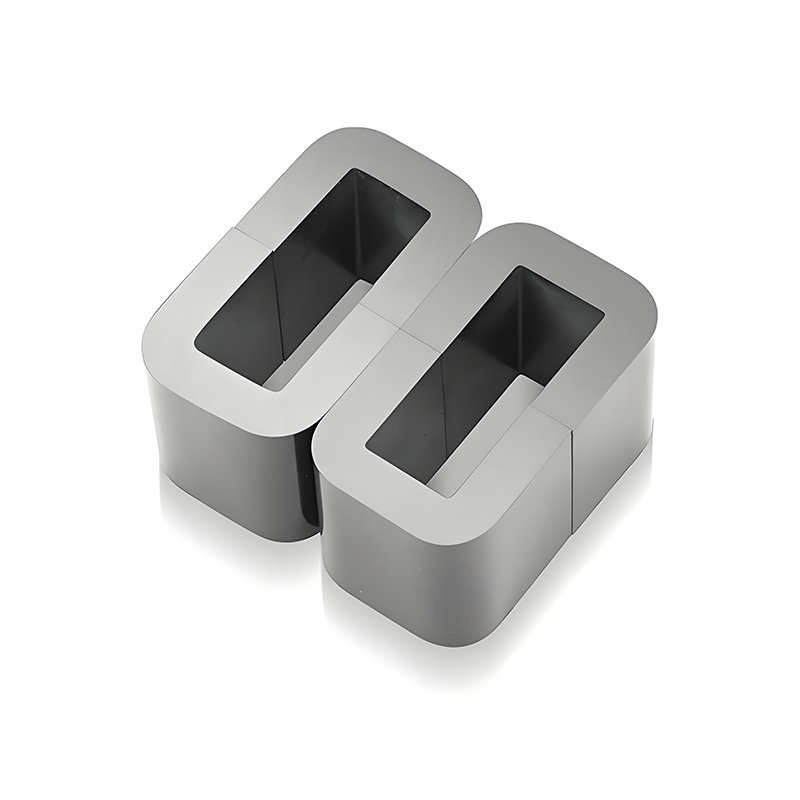
A UI core is cleverly made from two separate layered parts: the ‘U’ section and the ‘I’ section. The ‘U’ section, a U-shaped stack of layers, makes a non-stop path for magnetism with two arms that run side-by-side. The ‘I’ section, a straight bar of layers, is used to complete the magnetic loop by connecting the open ends of the ‘U’.
The way they are put together usually involves stacking the ‘U’ and ‘I’ layers, one after the other or in matched sets, to create a full magnetic loop. Coils are then wrapped around one or both arms of the ‘U’ section. This design naturally has a short and straight path for magnetism, which greatly reduces magnetic resistance (reluctance) compared to more complex E-I or C-core designs.
Getting More Bang for Your Buck with Senbo’s UI Laminations
In any manufacturing endeavor, the bottom line talks loudly. You’re constantly looking for ways to deliver top-notch products without sending your budget into orbit. This is precisely where Senbo’s ui lamination cores step into the spotlight. We’ve honed our manufacturing processes to a fine art. At Senbo, we’ve invested in precision stamping technology and optimized our material utilization, meaning less waste and more efficient production. It translates directly into a more competitive price point for a critical component.
Assembly Simplicity: Making Your Production Line Sing
The beauty of the UI design is its elegant simplicity when it comes to putting things together. Unlike, say, toroidal cores which often require specialized, sometimes finicky, winding machinery to thread copper wire through a closed loop, the UI geometry is far more accommodating.
At Senbo, we craft our ‘U’ and ‘I’ pieces with tight tolerances. This precision means that when your team is ready to assemble, it’s a breeze. Typically, your coils are pre-wound onto a bobbin – a relatively straightforward and quick operation. Then, our ‘U’ and ‘I’ laminations are simply brought together around this bobbin. It’s almost like a satisfying click as two puzzle pieces fit perfectly. These are then secured, often by clamping, welding, or even by being potted within an enclosure.
Our Lamination Stacks Spotlight
Introduction to Segmented Stator Lamination Stacks
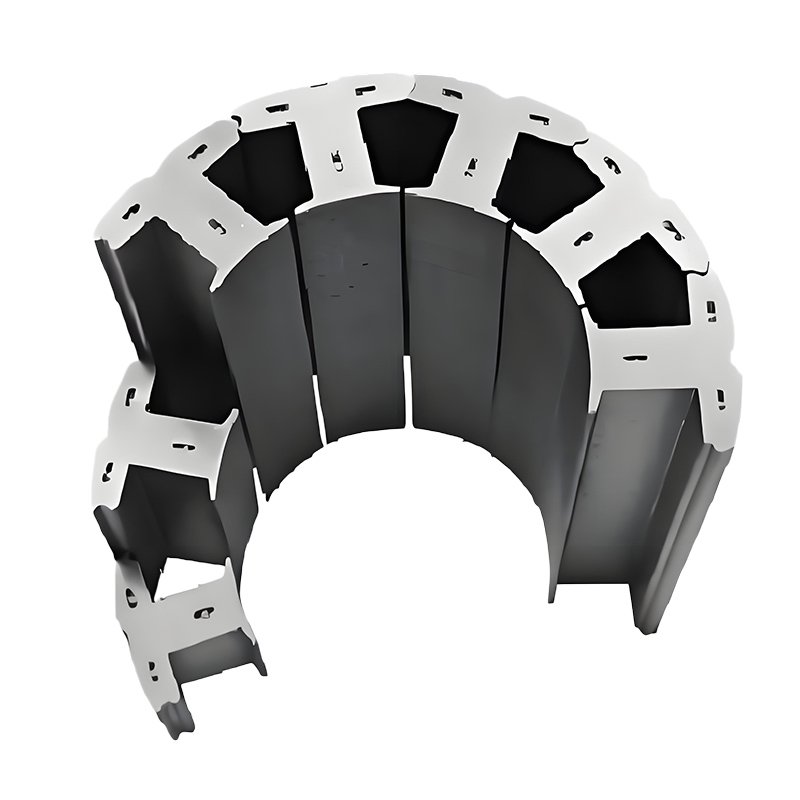
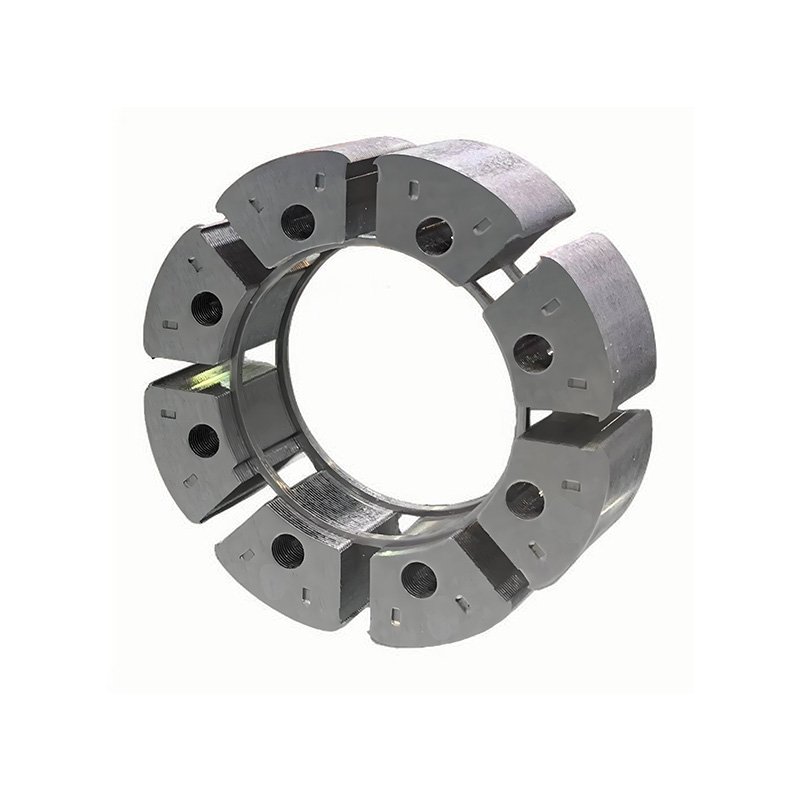
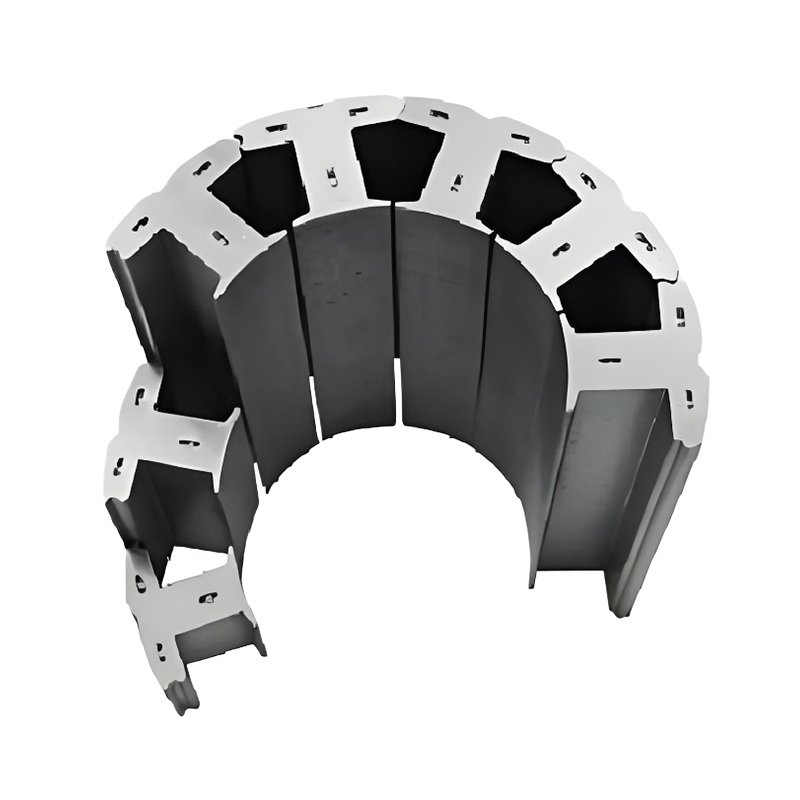
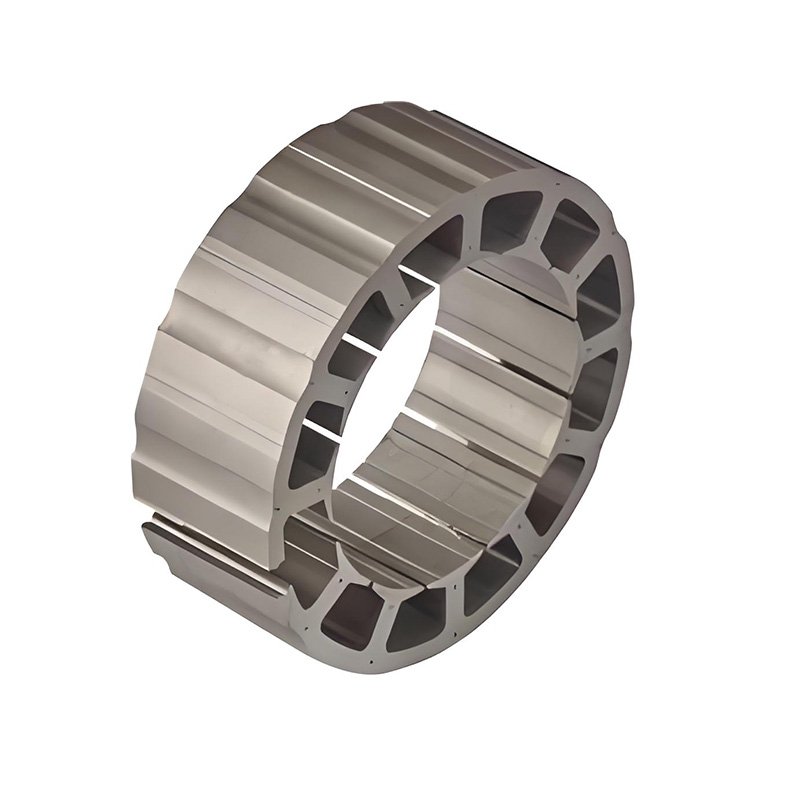
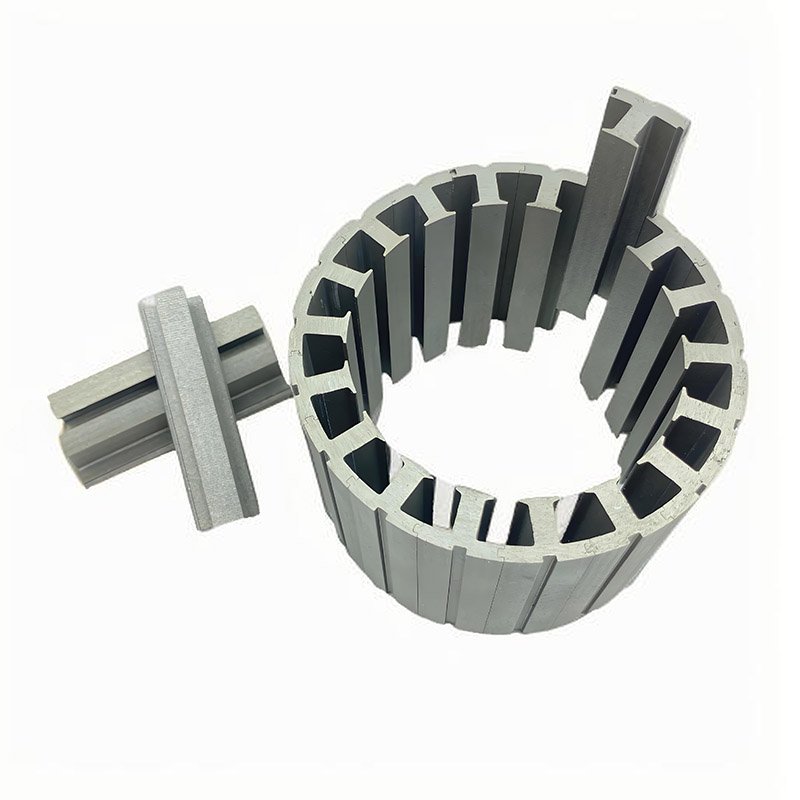
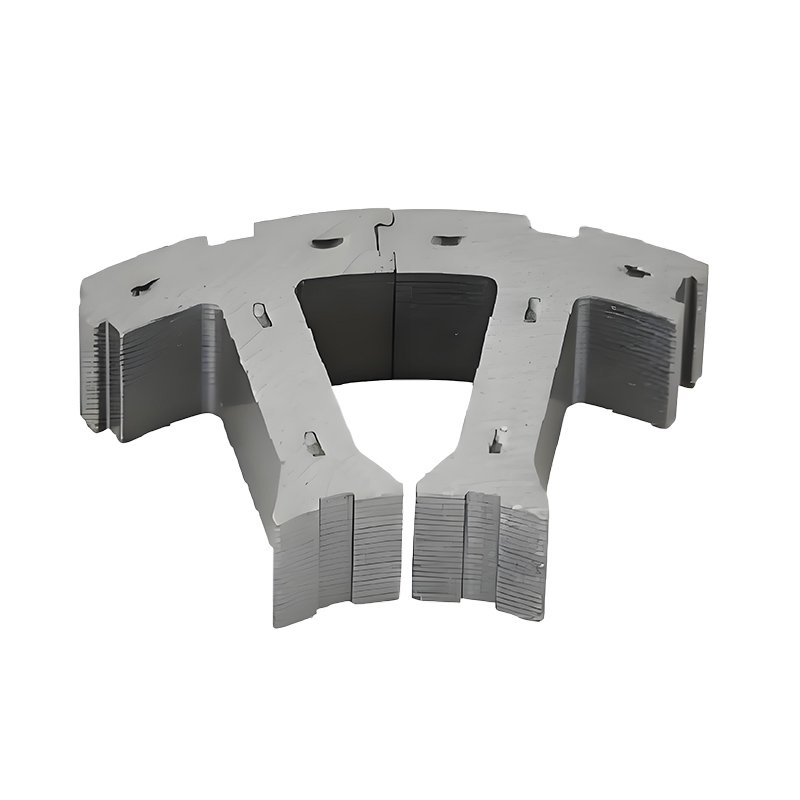
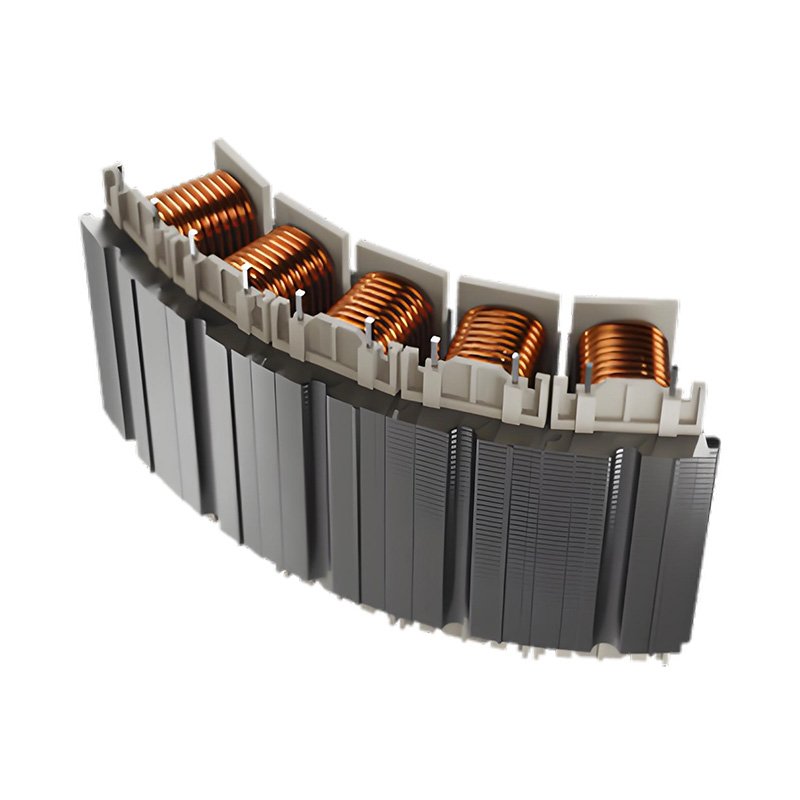
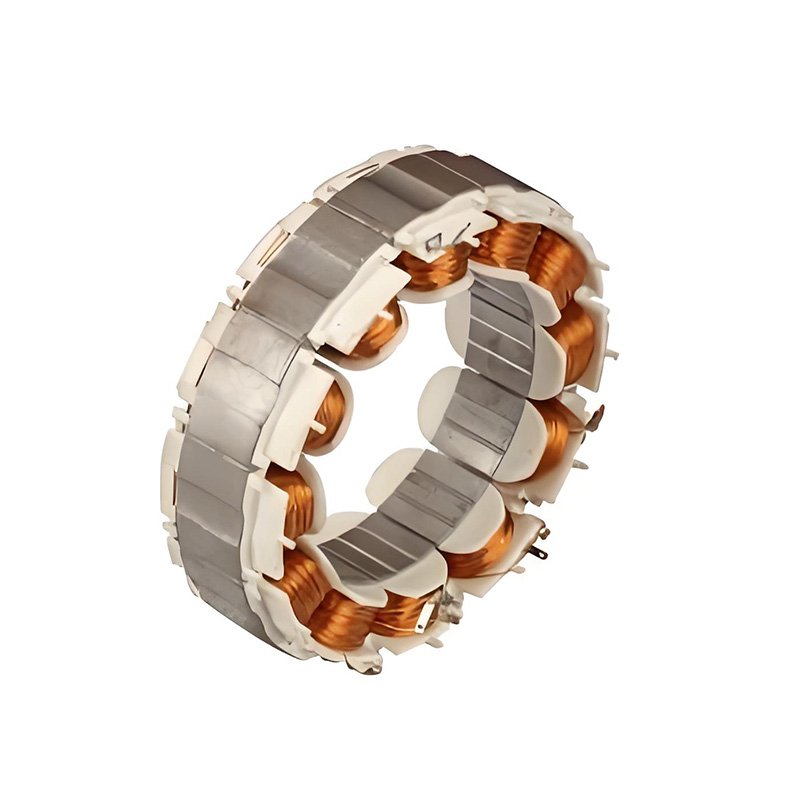
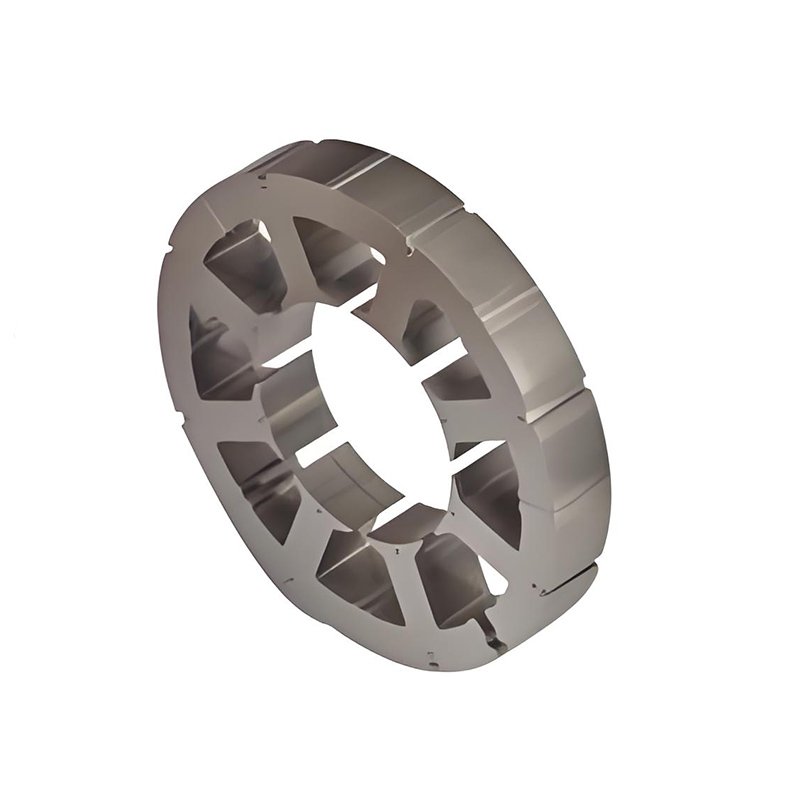
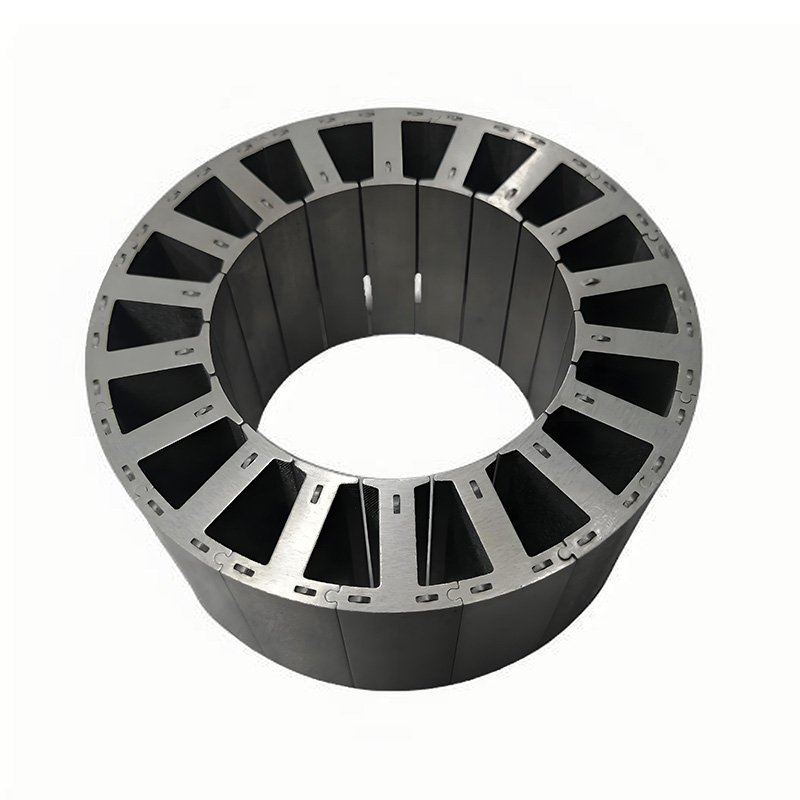
Segmented Stator Laminations are a new way to build the stator core of an electric motor. Unlike the usual full-ring laminations, which are stamped out as one solid ring, segmented stators are built from separate, curved pieces. Each piece, usually made of thin, coated electrical steel sheets stacked together, is carefully designed to get the best magnetic results and reduce wasted energy. These individual pieces are then put together with great accuracy to create the full stator core, often using clever interlocking or dovetail joints for strong mechanical support.
Slashing Material Waste
When we at Senbo manufacture segmented stator laminations, we’re stamping out smaller, often geometrically simpler, individual pieces. This allows for much more efficient nesting of these shapes on the steel sheet. This reduction in scrap isn’t trivial; it can be quite significant, directly cutting down your material costs. That’s a direct boost to your bottom line and a nod to more sustainable manufacturing. We’ve seen clients in the appliance sector, constantly battling tight margins, find this benefit particularly compelling.
Use in Many Different Motor Types
Senbo’s segmented laminations are designed to work with a wide range of motor types and layouts:
- Radial Flux Machines: The most common motor type, where the magnetic field flows outward from the center. Segmented designs in these motors make it easier to add windings and manage heat.
- Axial Flux Machines: Motors where the magnetic field flows along the motor’s axis (from front to back). Segmented stators are especially useful here, allowing for high power in a small package.
- Permanent Magnet Synchronous Machines (PMSMs): Get big benefits from segmented stators because they allow for more copper in the slots (higher slot fill factors), lower energy loss in the core, and better heat management. This is important for EV motors and powerful industrial machines.
- Synchronous Reluctance Machines (SynRMs): Segmented designs can improve the magnetic saliency ratio, which gives the motor more torque and higher efficiency.
Choosing the right way to segment the stator is a very important design choice. It depends on things like the motor’s size, its running speed, how much power it needs to produce, and how many will be made. Senbo’s engineering team works closely with our customers to find the best lamination design, making sure the chosen layout gives top performance and is easy to make.
Our Lamination Stacks Spotlight
The Senbo Material Advantage
Senbo predominantly utilizes high-grade silicon steel, often referred to as electrical steel for adding a small percentage of silicon (typically between 1-4%) to the iron alloy significantly boosts its electrical resistivity. This intrinsic property of the material itself gives eddy currents another hurdle to overcome, further diminishing their impact.
But silicon steel brings more to the table:
Excellent Magnetic Permeability: This means the material readily allows magnetic flux to pass through it, which is essential for a strong and effective magnetic field in the motor.
Reduced Hysteresis Losses: Silicon steel alloys are formulated to minimize these losses too, contributing further to overall motor efficiency.
By carefully selecting the grade of silicon steel, Senbo ensures that your induction motor core – whether it’s for the stator core of an induction motor or the rotor core of an induction motor – possesses the optimal magnetic properties with the lowest possible core losses.
New Lamination Stacks for Induction Motor Materials We Use
when EV motors run at very high speeds (hundreds of Hz to several kHz) and under strong magnetic fields, regular silicon steels have problems. This is because they lose more energy as heat, especially from eddy current losses and anomalous losses. To get past the problems with regular steels, new and better materials are becoming more popular. They offer better magnetic abilities at high speeds.
Amorphous Metals
Amorphous metals, like those from Metglas and Hitachi Amorphous, are made of atoms arranged randomly, like glass, not in a neat crystal pattern. This special structure gets rid of grain boundaries, which are a big reason for energy loss and the creation of eddy currents.
- Less Core Loss: Amorphous metals have energy losses that are 70–80% lower than regular silicon steel at speeds above 400 Hz. This makes them a very good choice for high-speed EV motors (10,000–20,000 rpm). This could make the whole motor 1–2% more efficient, especially when it isn’t running at full power or is at high speeds.
- Saturation Flux Density (Bs): They can’t handle as much magnetic field as silicon steel, around 1.2 T. This can mean the core needs to be bigger to get the same amount of turning force.
- Mechanical Problems: Amorphous metals are naturally brittle and break easily. This makes it very hard to stamp, stack, and handle them when building a core. Because they are brittle, the layers can’t be too thin (usually 20–30 μm), and it’s harder for machines to stack them. This means more material gets wasted and you need special tools.
- Stacking Factor: The stacking factor for amorphous layers is usually 0.85–0.88. This is lower than the 0.95 for silicon steel because of the insulation coatings and the uneven surfaces of the thin strips.
- Heat Transfer: Amorphous metals are much worse at moving heat (5–10 W/m·K) compared to silicon steel (about 25–30 W/m·K). This stops heat from escaping easily and makes it more likely for small areas to get too hot.
Nanocrystalline Alloys
Nanocrystalline alloys, like Finemet (Fe73.5Si13.5B9Nb3Cu1), Vitroperm, and Nanoperm, are made mostly of iron and have a structure of extremely tiny crystals held within a random, non-crystal structure. This special structure brings together the good points of both amorphous and regular crystal materials.
Saturation Flux Density (Bs): They can handle a magnetic field of about 1.2–1.35 T. This is better than amorphous alloys but not as good as high-quality silicon steels.
Permeability: They are very responsive to magnetic fields. This ability stays high even at very high speeds (up to several hundred kHz), much better than silicon steels. This makes them perfect for fast, high-frequency motor systems.
Core Loss: At 1.5 T and 400 Hz, their energy loss is very low (10–20 W/kg), much lower than the best NOES grades (30–50 W/kg). At 10 kHz, nanocrystalline losses are still under 100 W/kg, while the energy loss in silicon steel becomes too high to be practical (>500 W/kg).
Temperature Stability: They keep their good magnetic abilities up to 120–150°C. New research shows they can be stable up to 180°C by adding small amounts of other metals.
Manufacturing: They are made as thin strips (18–30 μm), like amorphous metals, which makes stacking and handling them difficult. Laser welding and special glue are making it possible to create stacks with many layers.
Annealing: They need a very specific heat treatment (500–600°C in a magnetic field) to get the best performance.
Cost: Right now, they cost 3–5 times more per kg than high-quality NOES. But, we are seeing that they can save money for the whole system (by making motors smaller and lighter, and needing less cooling).
Our Lamination Stacks Spotlight
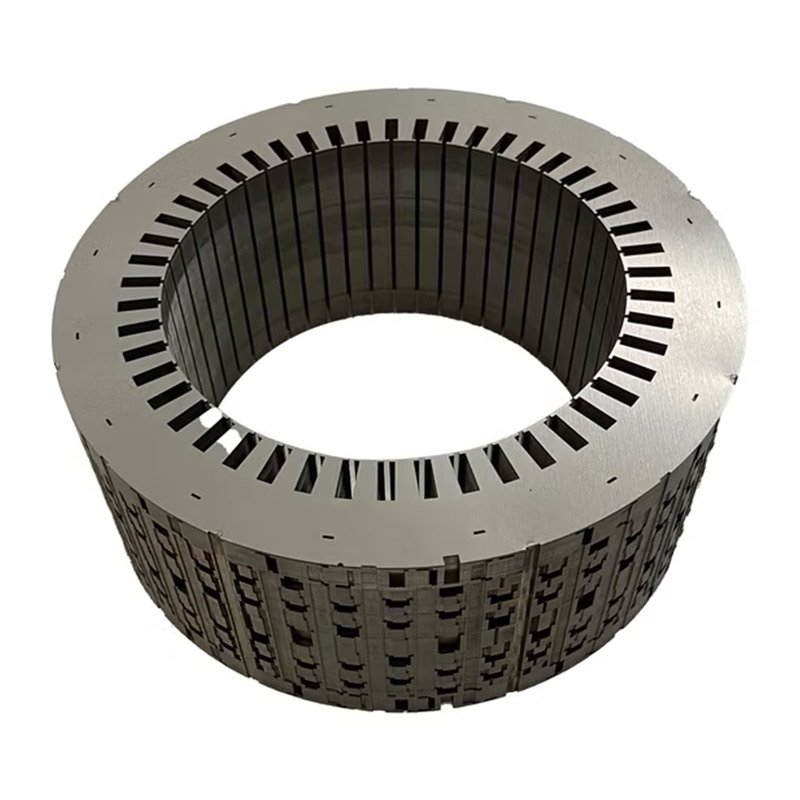
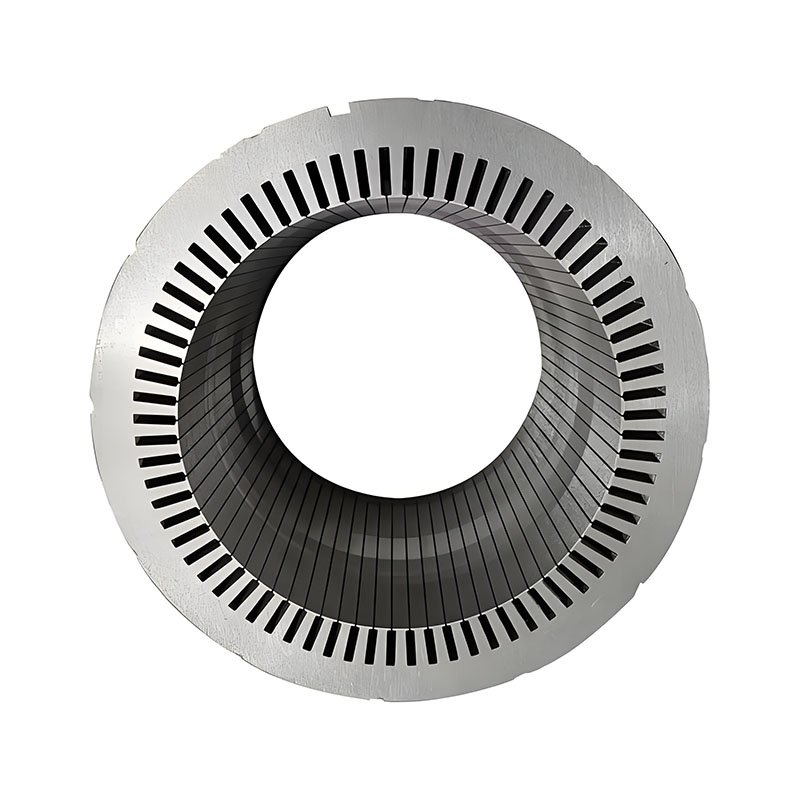
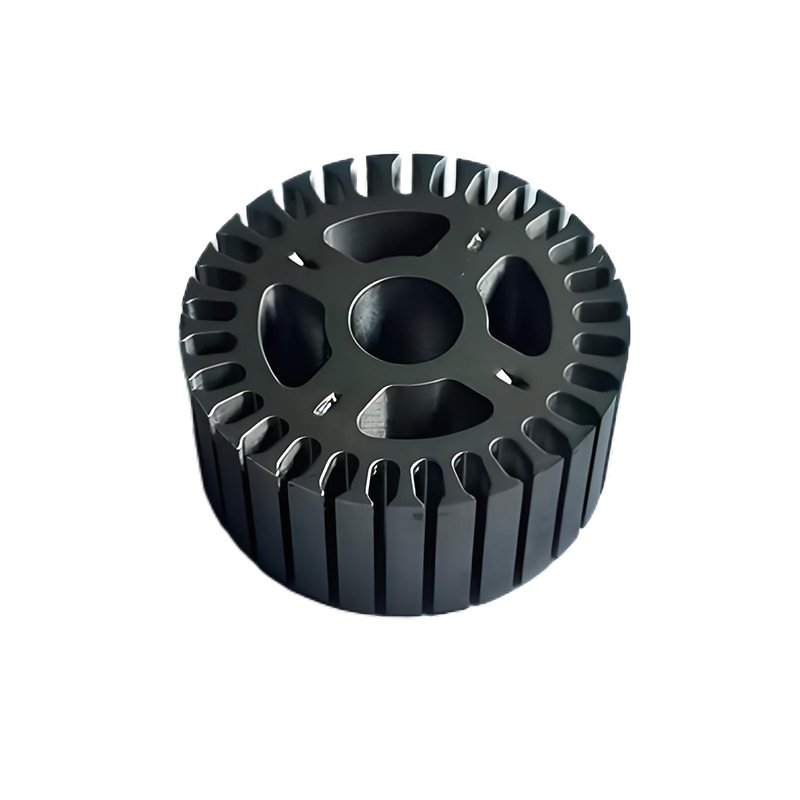
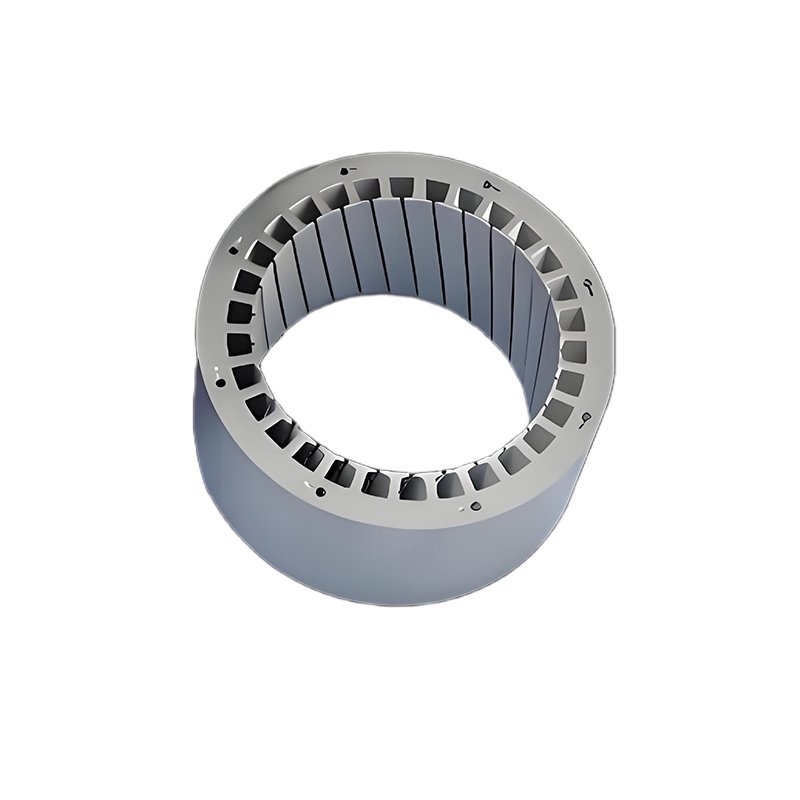
Why Senbo Banks on Premium Silicon Steel for Your Armature Core
At Senbo, we predominantly utilize high-grade silicon steel (often referred to as electrical steel) which is specifically alloyed and processed for electromagnetic applications, offering a powerful combination of properties:
- Putting the Brakes on Wasteful Currents (High Electrical Resistivity): Adding silicon to iron (typically up to around 3-4%) significantly increases the material’s electrical resistivity. It’s an extra layer of defense against those energy losses.
- Keeping the Good Energy Flowing (Excellent Magnetic Permeability and Low Hysteresis Loss): Silicon steel retains good magnetic permeability, meaning it readily allows magnetic fields to pass through it. Furthermore, silicon steel is processed to have low hysteresis loss. Specialized silicon steels, particularly grain-oriented types for some applications, help minimize this too.
Senbo sources its silicon steel from reputable mills, ensuring consistent quality and magnetic performance, giving your armature core the best possible foundation.
Lamination Material Selection and Properties
The choice of material for armature core laminations is a basic and important decision that greatly affects the magnetic, electrical, and physical abilities of the final machine. Senbo offers a wide variety of materials, each chosen and prepared to meet the needs of a specific use.
Material Grades and Chemical Composition
We work with many types of electrical steel, each known for its special mix of chemicals, mainly the amount of silicon and control of unwanted elements (C, S, N, Al), which directly affects its magnetic and physical properties:
- Standard Non-Oriented Electrical Steels (NOES): Grades such as M19, M27, and M36 (per ASTM A677/A683) are commonly used. They usually have 2.0–3.5% silicon by weight.
- High-Silicon Steels: With up to 6.5% Si, these steels provide better resistance to electricity and lower energy loss in the core, making them good for uses with high frequencies.
- Cobalt-Iron Alloys: Materials like Hiperco 50A (49% Co) are used more and more in aerospace and high-frequency uses because of their excellent magnetic capacity and lower core losses.
- Amorphous and Nanocrystalline Alloys: These new, improved materials (e.g., Hitachi Metglas, VAC Vitroperm, Finemet, Nanoperm) have extremely low energy loss in the core, especially at high frequencies, but have certain physical and production challenges.
Processing Effects: Annealing, Coatings, and Rolling
The final magnetic properties are very affected by how the materials are processed:
Annealing: High-temperature annealing (800–900°C, in an H2 atmosphere) is necessary to remove stress and help the material’s internal structure grow. This makes it better at conducting magnetic fields and lowers energy loss.
Surface Insulation Coatings:These coatings (phosphate, organic, or inorganic) are very important for preventing electricity from flowing between layers. They stop short circuits between the layers, but their type and thickness can change how easy it is to punch and how tightly the layers stack.
Cold Rolling: Rolling the material to make it thinner (<0.20 mm) makes it work better at high frequencies but also makes it more expensive to produce and harder to handle.
Our Lamination Stacks Spotlight
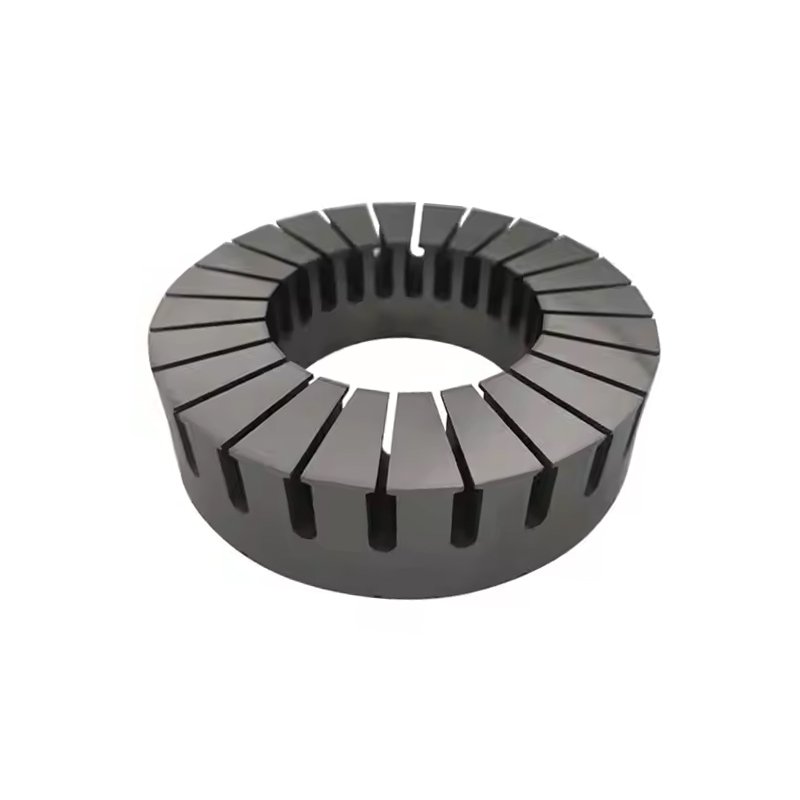
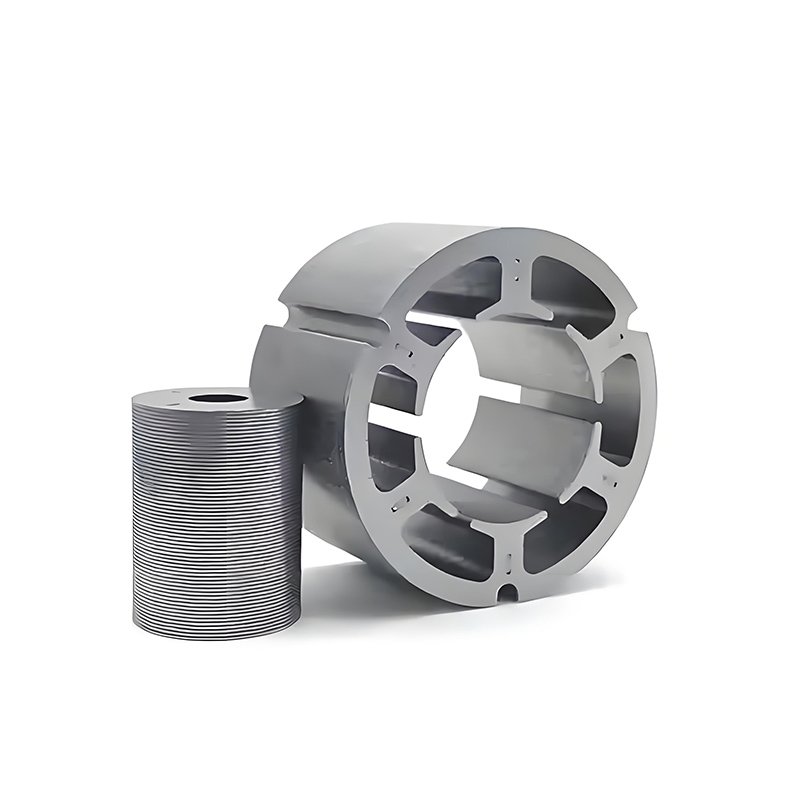
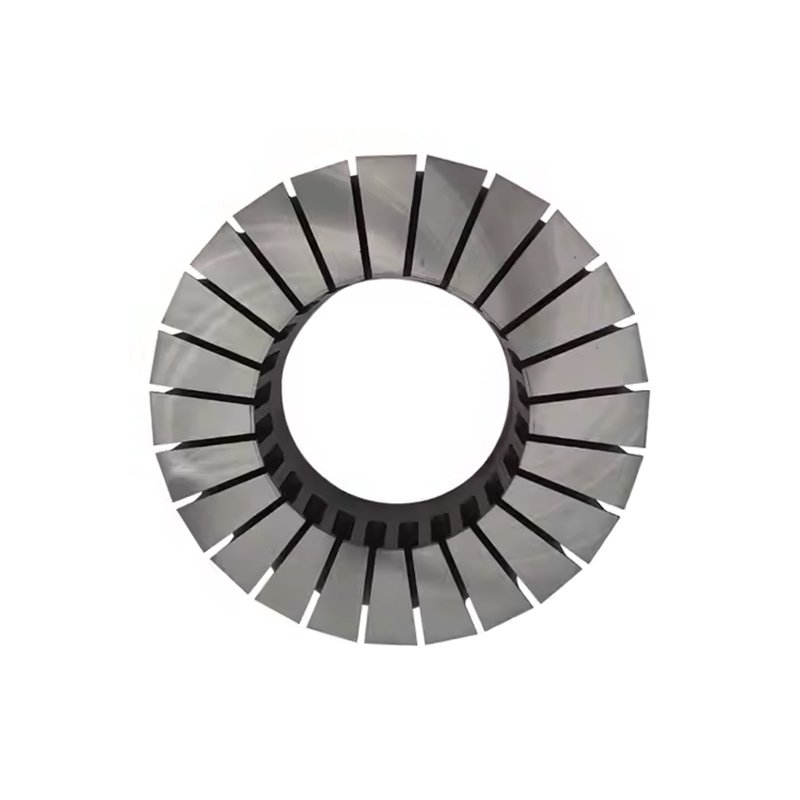
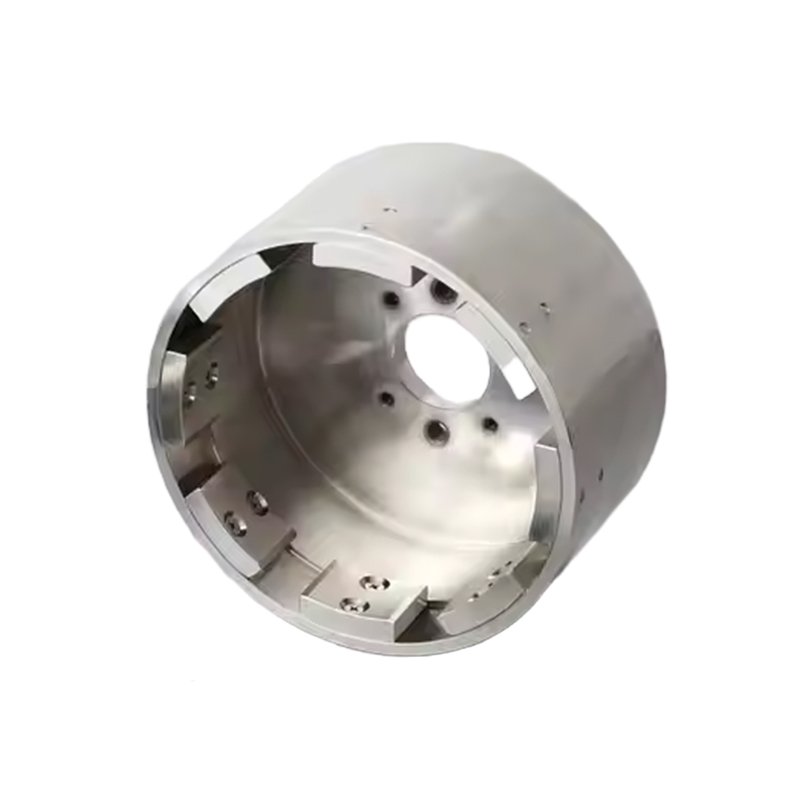
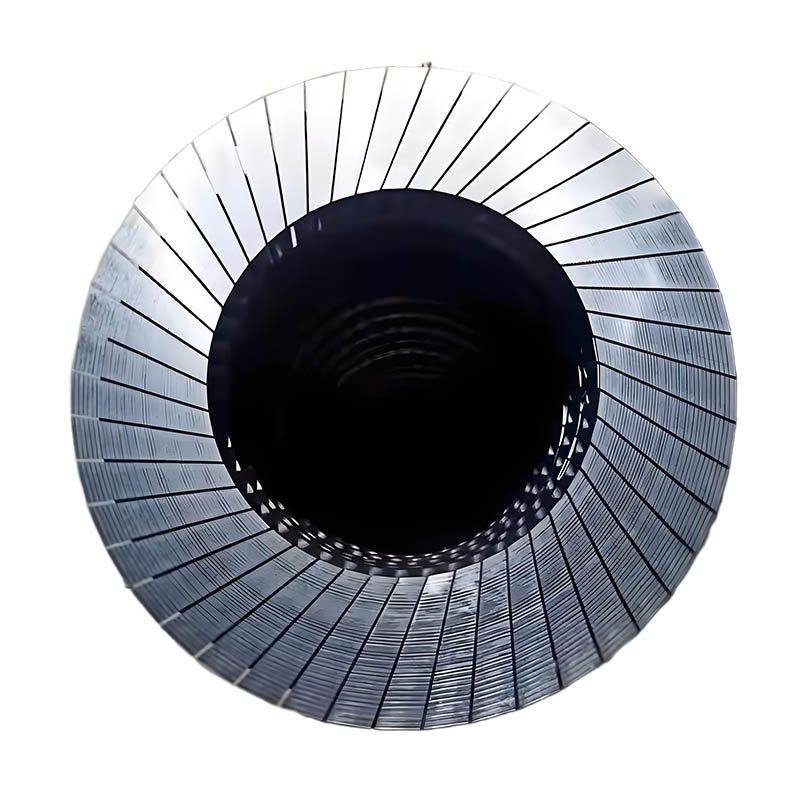
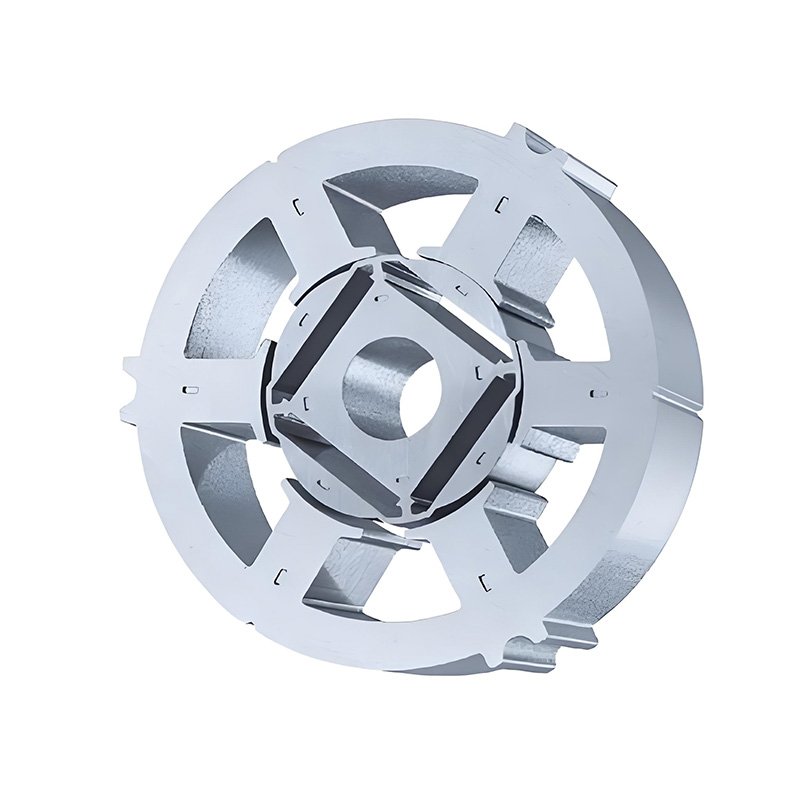
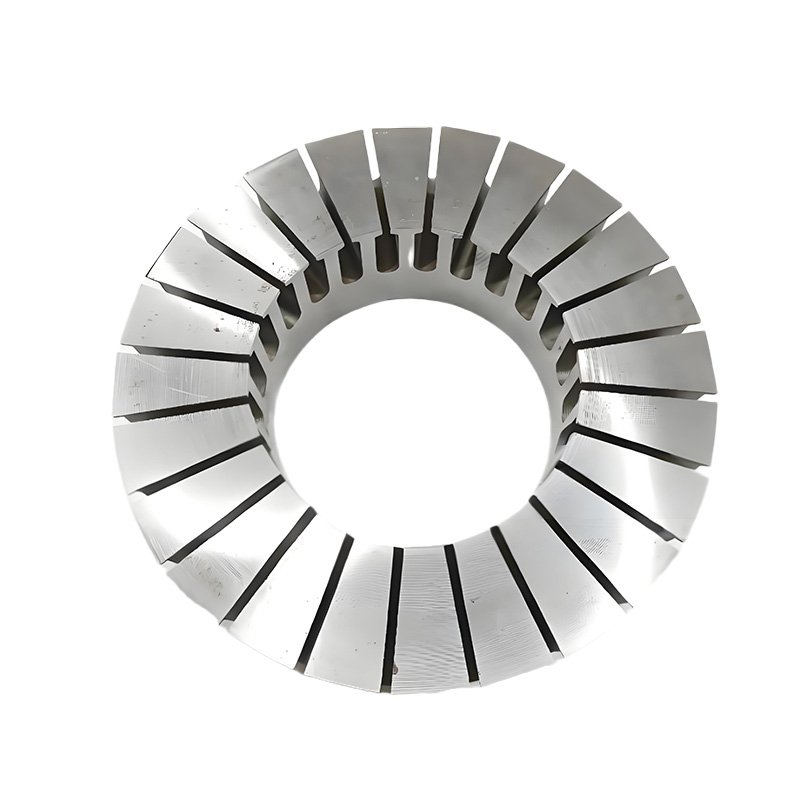
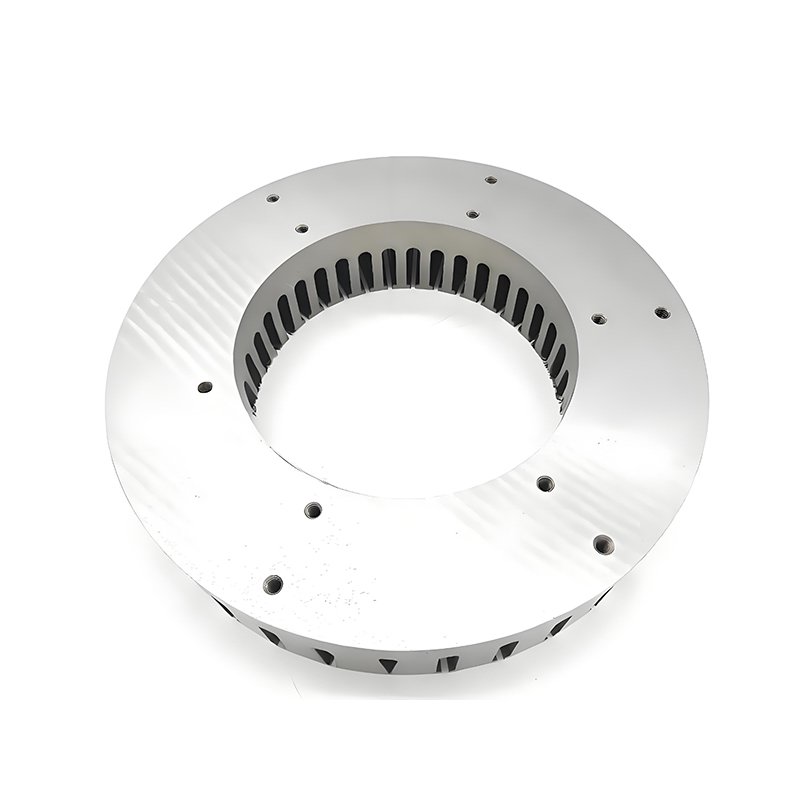
A Simple Guide to Axial Flux Stator Laminations
Axial flux electric machines are a major change in motor design, offering amazing smallness and power. At their center, axial flux stator laminations are carefully made magnetic metal parts that guide and focus the magnetic field in a line with the machine’s spinning axis. Unlike regular radial flux machines where the field flows out from the center, the axial setup allows for a flat, disc-like shape, making them perfect for uses where space is tight.
The main job of axial flux stator laminations is to create the magnetic path for the stator windings, reducing energy losses from eddy currents and hysteresis, while also giving strength and support to the coils. Their special shape allows for a shorter magnetic path and a bigger airgap area compared to radial flux designs. This naturally results in more torque for their size and better efficiency. This key benefit is why they are being used more and more quickly in many fast-growing areas.
Tape-Wound Cores: The Smooth Expressway for Magnetic Flux
At Senbo, we employ advanced tension control and proprietary insulation techniques during winding to ensure that each layer remains electrically isolated. Furthermore, we understand the mechanical stresses involved in forming these wound cores into their final, often complex, slotted shapes. Our post-processing treatments, including precision annealing, are designed to relieve these stresses and restore the steel’s optimal magnetic properties, ensuring those lab-condition benefits translate to your real-world motor.
Segmented Stator Cores: Design Freedom Meets Cooling Finesse
Another compelling strategy for crafting an axial flux stator is to build it from multiple, individually laminated segments. The challenge with segmented cores lies in precision and assembly. If segments don’t fit together perfectly, you can introduce unwanted air gaps, increasing reluctance and potentially creating localized magnetic saturation or noise. At Senbo, our state-of-the-art stamping and laser-cutting facilities produce segments with exceptionally tight tolerances. We also collaborate closely with our clients on inter-segment locking features and assembly protocols to ensure excellent magnetic continuity across the entire axial flux motor stator. Our rigorous quality control, including advanced optical inspection, guarantees that each segment meets your exact specifications, paving the way for a seamless and high-performing final assembly.
The Material Question: Not All Steel Carries Flux Equally
At Senbo, we maintain a comprehensive inventory of high-quality electrical steels from globally recognized mills, including popular grades like M270-35A, M19-29G, and specialized thin-gauge options for high-frequency applications. Our engineers work hand-in-hand with your design team to understand your specific operating conditions – speed range, flux densities, thermal constraints, and cost targets. We can help you navigate the trade-offs. For instance, while a super-thin lamination might look great on paper for eddy current reduction, we can help assess if the added cost and potential reduction in stacking factor provide a genuine net benefit for your specific axial flux motor stator design.
Our Lamination Stacks Spotlight
Senbo’s Material Mastery: The Right Steel for Your Spin
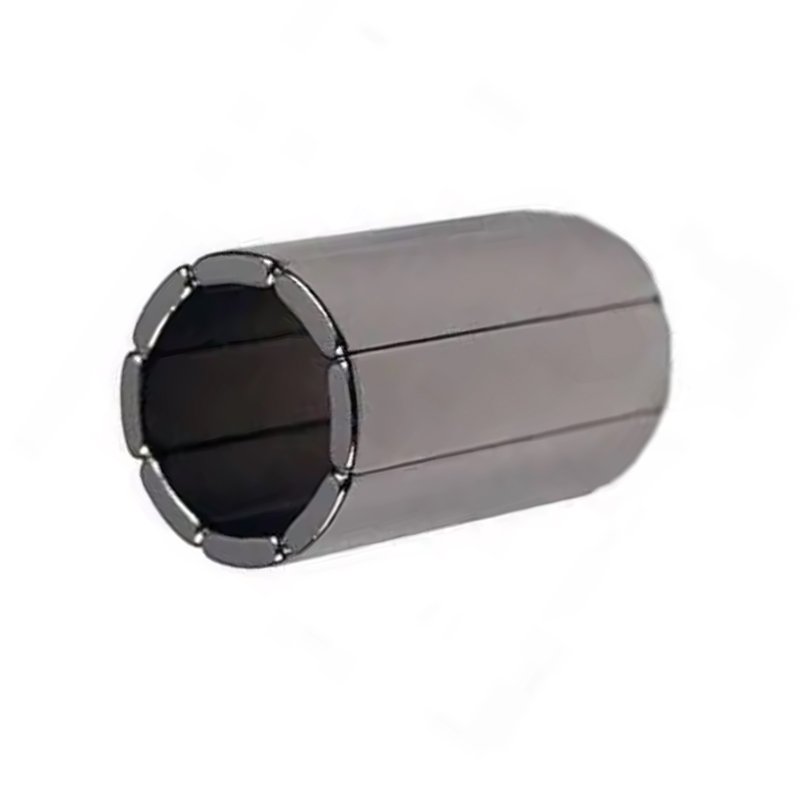
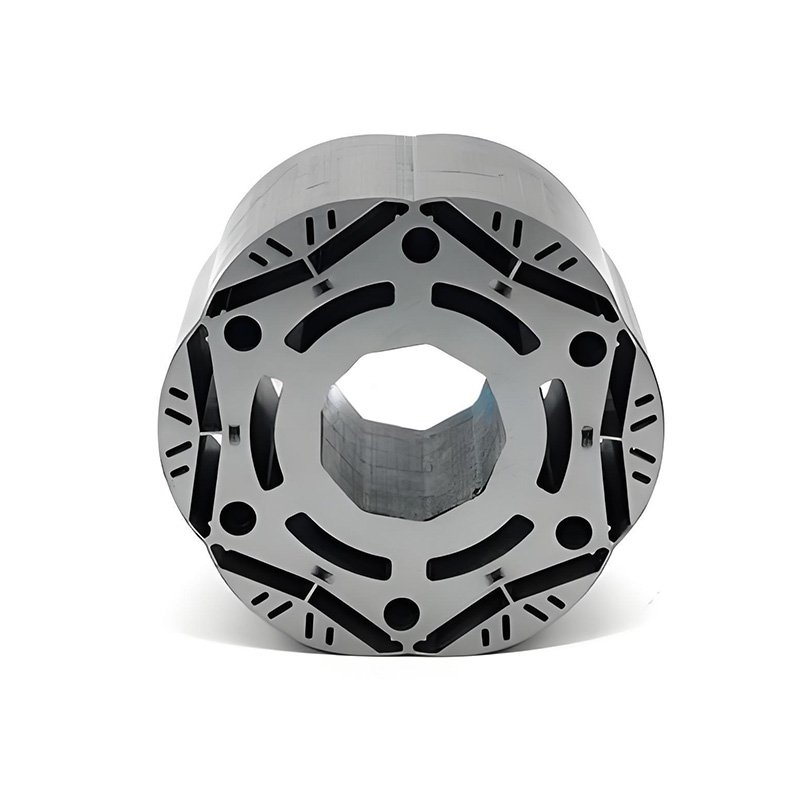
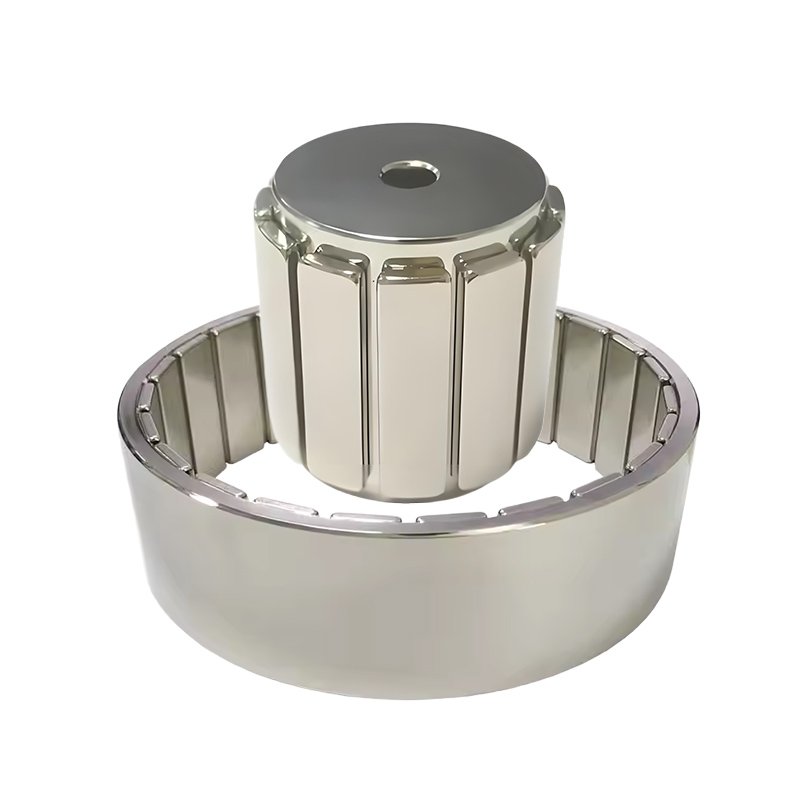
At Senbo, we guide you through Choosing the lamination material that matches the material’s characteristics to your motor’s job description, your performance targets, and your budget, ensuring the heart of your permanent magnet motor stator and rotor is perfectly tuned.
It’s Not Just the Material, It’s the Craft: Thickness & Insulation at Senbo
Having the right electrical steel is just the start. Senbo knows how to process it into your finished permanent magnet motor rotor or stator stack.
Lamination Thickness
Senbo’s manufacturing prowess allows us to expertly handle a wide spectrum of thicknesses, from robust 0.65mm laminations for cost-sensitive, lower-speed motors, all the way down to ultra-thin 0.1mm materials for the most demanding high-frequency applications. But it’s a balancing act. More, thinner laminations for a given stack height can mean slightly higher assembly costs and a lower “stacking factor” (the actual amount of iron versus the total volume, due to insulation taking up space). We work with you to find that sweet spot for your permanent magnet motor stator and rotor.
Insulation Integrity
Each lamination in a stack must be electrically isolated from its neighbors. If this insulation fails, they’ll flow merrily, losses will spike, and your motor will heat up. At Senbo, we utilize a range of industry-standard interlaminar insulation coatings (like C3, C5, and C6 coatings as defined by ASTM A976 standards).
- C3 Coating: Often an organic varnish, good for general purposes.
- C5 Coating: An inorganic coating, better for higher temperatures and for stress-relief annealing after stamping. Senbo often recommends this for more demanding thermal scenarios.
- C6 Coating: A thicker inorganic coating, sometimes used for even more robust insulation or where some level of self-bonding is desired during curing. Our coating application and curing processes are meticulously controlled to ensure uniform coverage and optimal dielectric strength. We don’t cut corners here, because a tiny flaw in insulation can have big consequences for your motor.
Our Lamination Stacks Spotlight
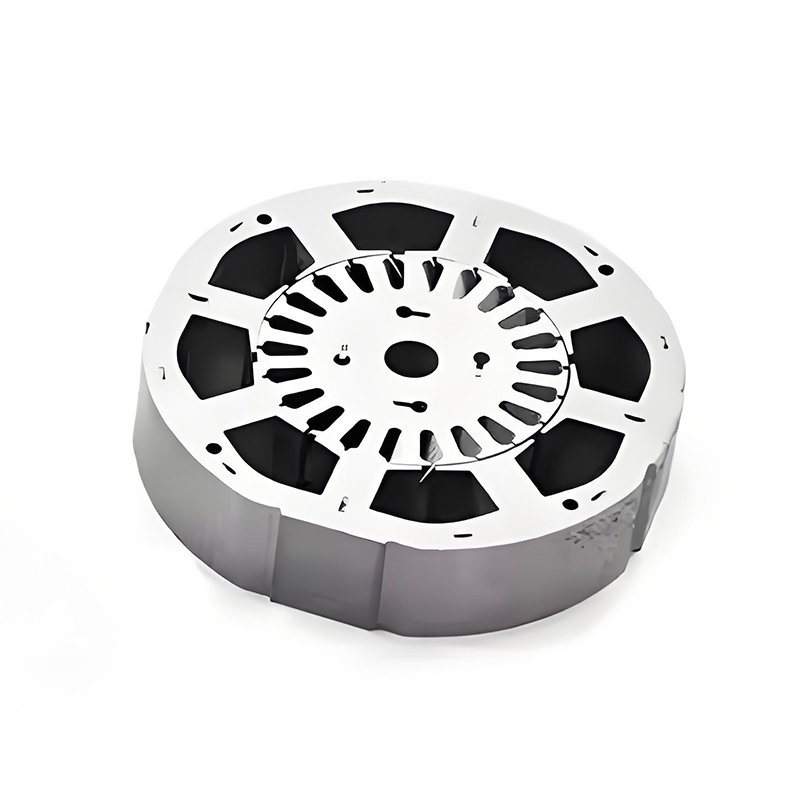
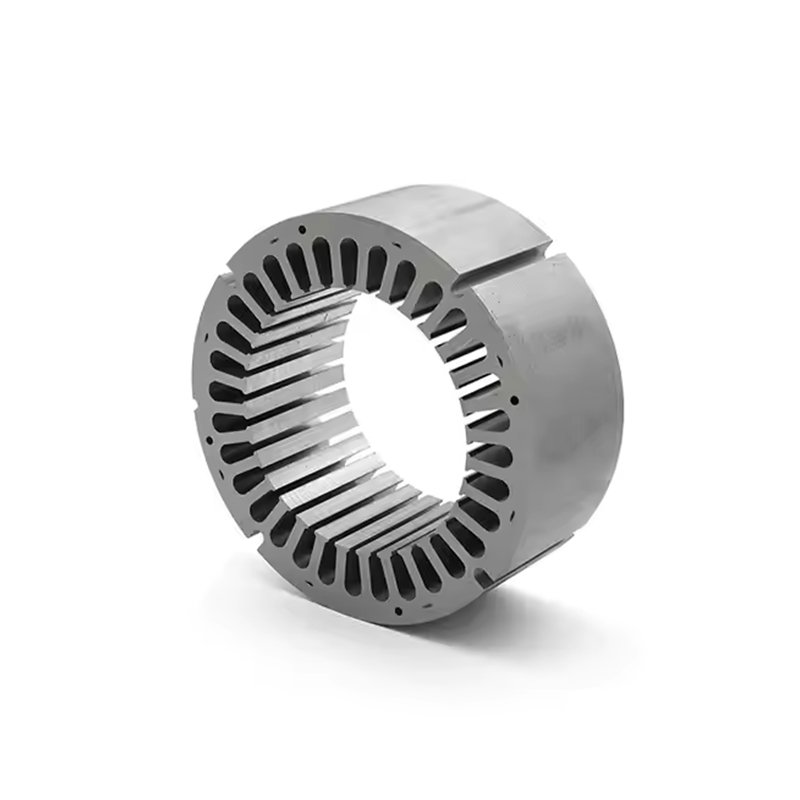
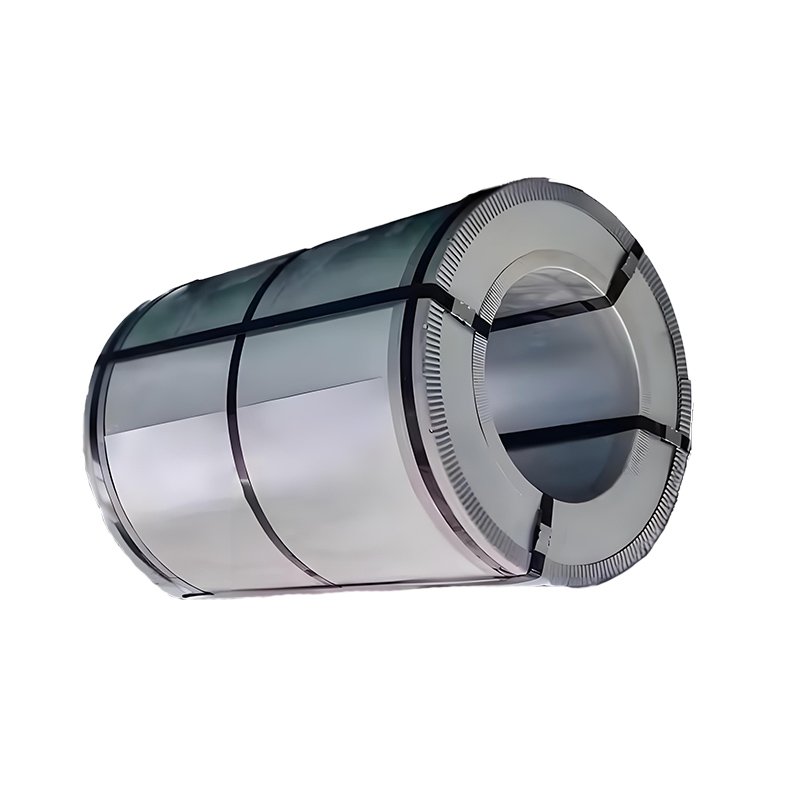
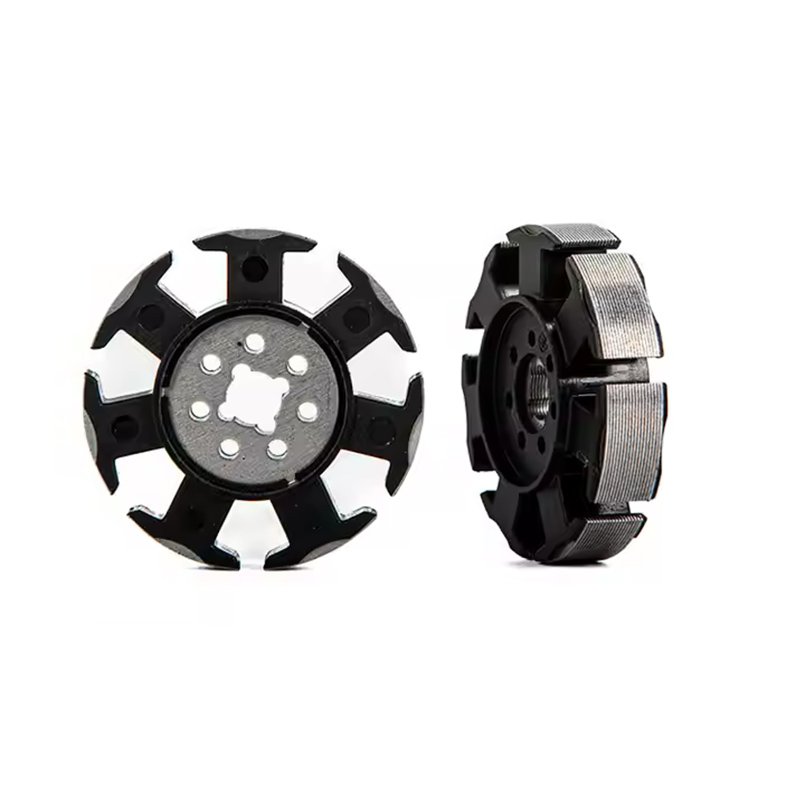
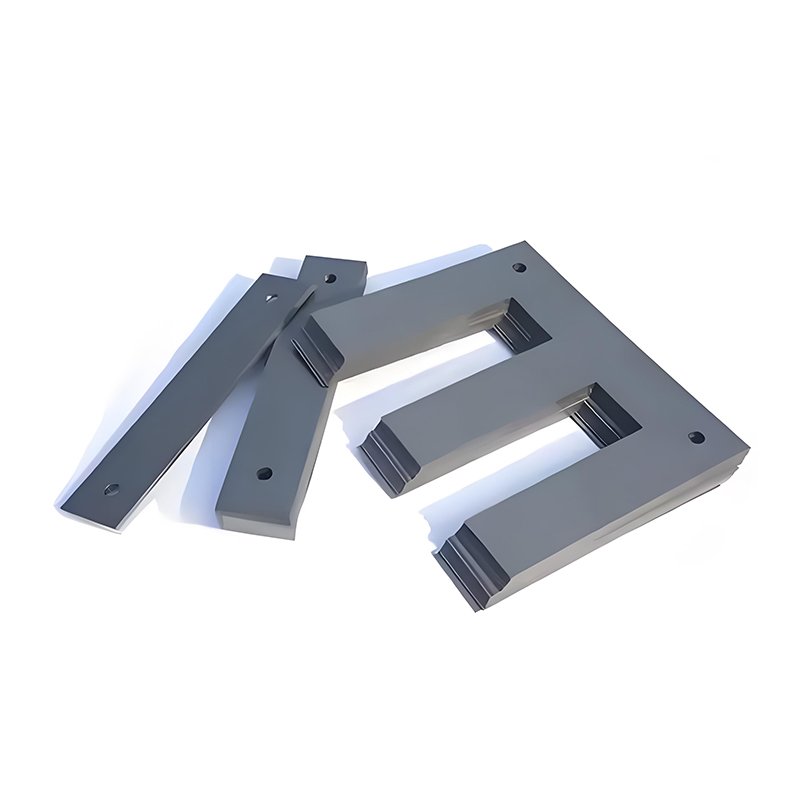
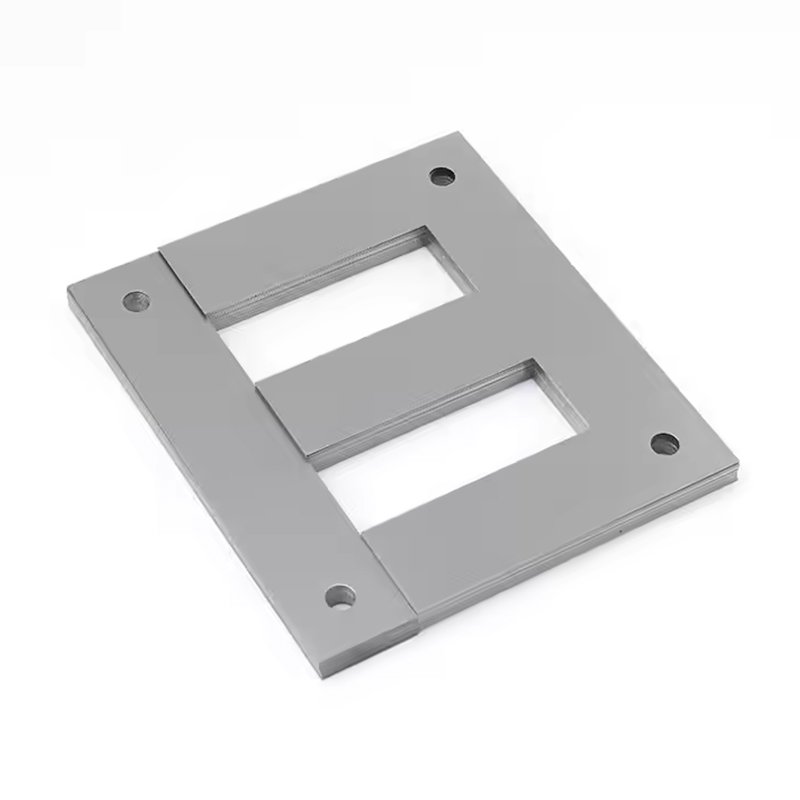
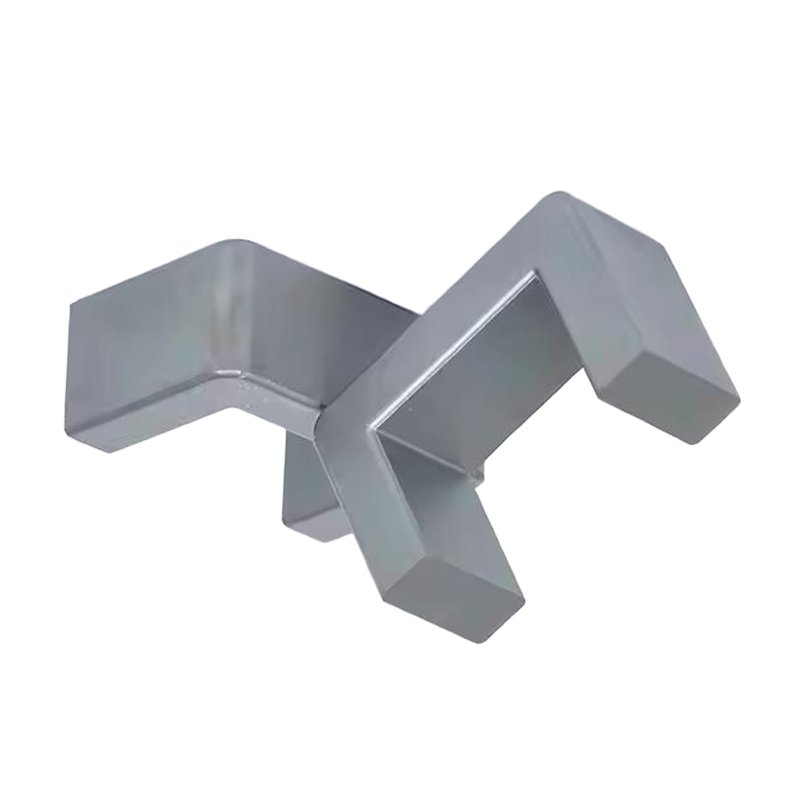
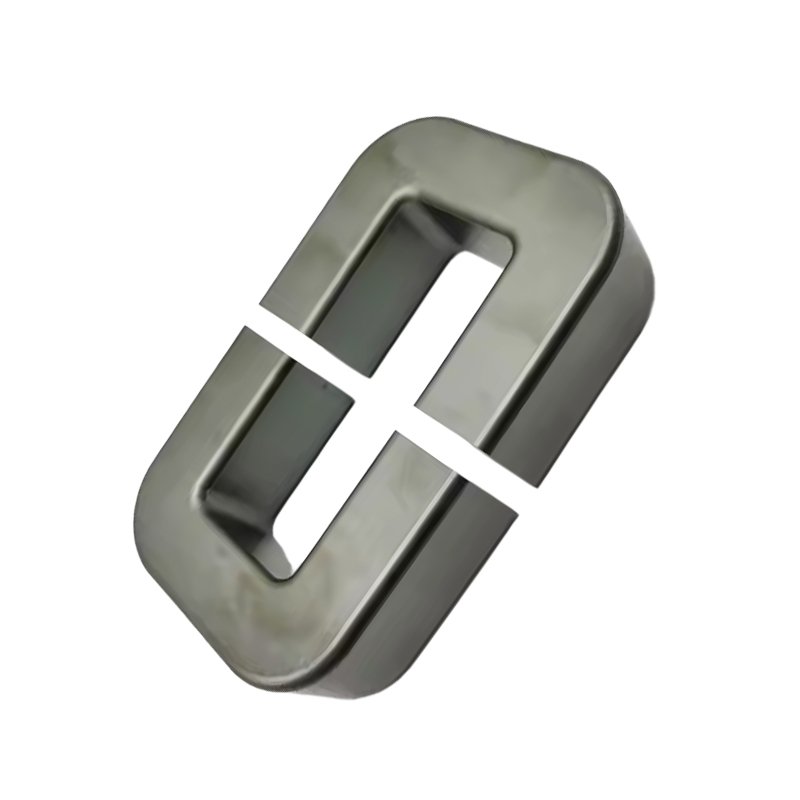
Excellent Magnetic Permeability of Our Laminations for Soft Iron Cores
Permeability is a measure of how easily a material can support the formation of a magnetic field within itself. At Senbo, the precise composition of our laminated soft iron and our meticulous manufacturing processes are all geared towards maximizing this crucial permeability, giving your designs the magnetic muscle they need.
For Transformers
You need to efficiently transfer energy from one coil of wire (the primary) to another (the secondary) using a magnetic field. A high-permeability core means your transformer can be smaller, lighter, and more effective. Senbo’s cores ensure that this magnetic handshake between coils is as firm as possible.
For Inductors
These components store energy in a magnetic field. A high-permeability core allows you to achieve a desired inductance value with fewer turns of wire. Fewer turns mean less copper, lower resistance, and again, a smaller, more efficient component.
For Motors and Generators
These devices rely on strong magnetic fields to either produce motion (motors) or generate electricity (generators). A laminated soft iron core with high permeability amplifies the magnetic field created by the current-carrying coils, leading to more torque in a motor or more voltage from a generator, all for the same amount of input current or mechanical effort.
Partnering with Senbo: Your Go-To for Laminated Soft Iron Excellence
When you choose Senbo, you’re not just buying a component; you’re investing in decades of specialized experience, cutting-edge manufacturing capabilities, and an unyielding commitment to quality. We understand that the performance of your final product often hinges on the quality of its core components, and we take that responsibility seriously.
Whether you need standard E-I laminations by the ton, intricately shaped custom laminated soft iron cores for a groundbreaking new motor design, or expert advice on selecting the optimal laminated soft iron material for your specific scenario, our team is ready to collaborate. We thrive on challenges and are dedicated to helping you achieve superior efficiency, reliability, and performance in your electrical and electronic devices.